
Core Update Case Studies: How Businesses Successfully Adapt and Enhance Commercial Value

Core Update Practical Case Studies: How Businesses Successfully Apply Them
Imagine your business website traffic not only remaining stable but increasing after a search engine core update, with conversion rates rising by 30%. This isn't a dream; it's an achievable goal.
In recent years, Google core updates have become more frequent and impactful. Each update is like a digital earthquake, causing significant fluctuations in the rankings of many Taiwanese business websites and even directly impacting online operations. As an SEO beginner, content marketer, or website manager, do you feel anxious about this but struggle to find specific, actionable guidance and local success stories?
You are not alone. Many view core updates as mere ranking crises, but we should see them as valuable opportunities for a "website health check." This article is born precisely to address your pain points.
We will dissect three practical case studies of Taiwanese businesses successfully navigating core updates, providing you with a complete framework from impact assessment and strategic planning to concrete execution. You will learn not just emergency SEO techniques, but how to use this opportunity to systematically strengthen your website's content and overall health, make critical decisions, and thereby turn a crisis into an opportunity, building long-term advantages in the fiercely competitive search results.
Now, let's delve deeper into how you can not only help your website safely weather the next update but also benefit from it, achieving steady growth.
Core Update Response Strategy Planning
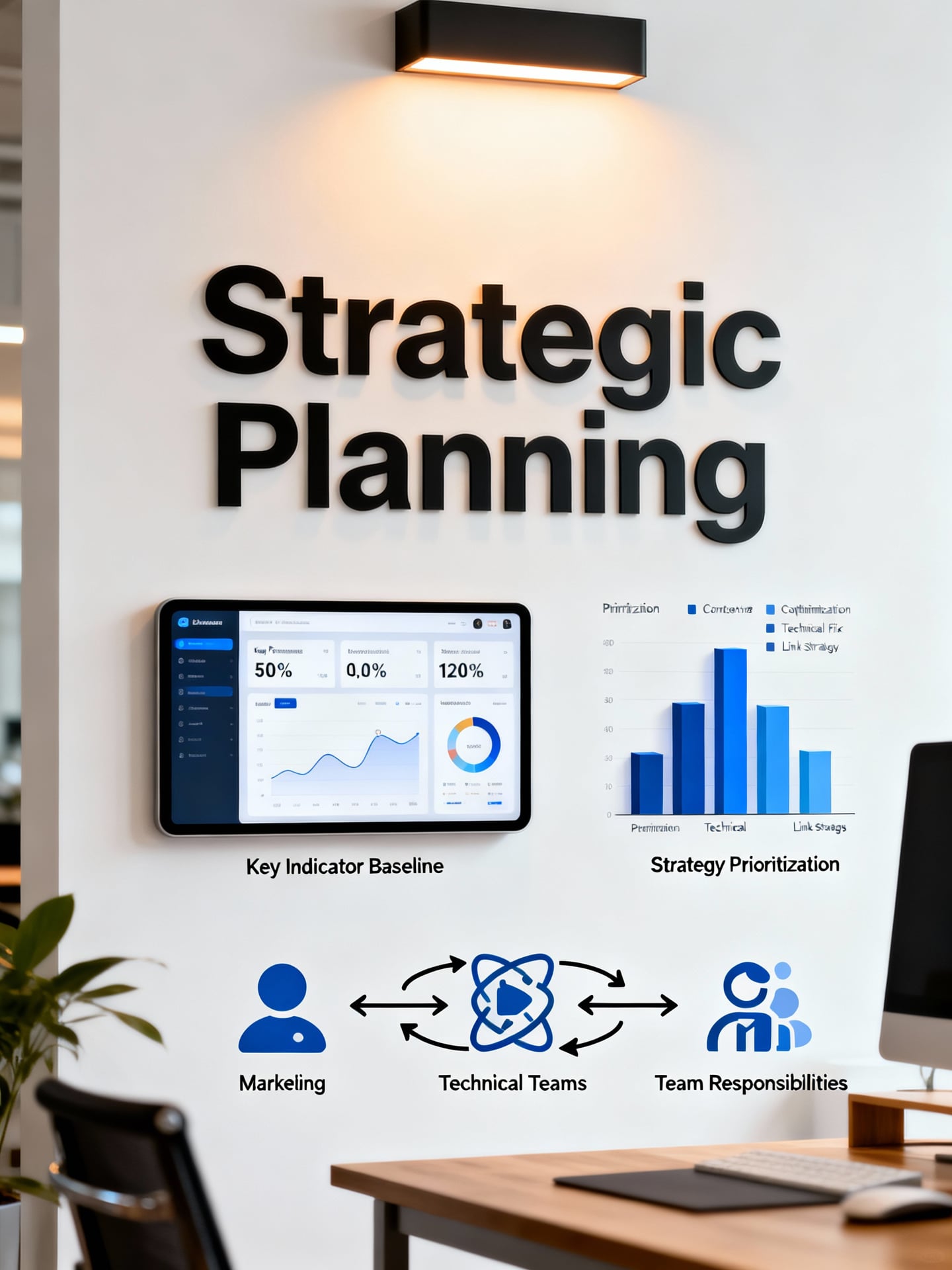
Facing Google's core updates, many businesses feel at a loss. According to the renowned SEO agency Moz, the key to handling core updates lies in "prevention is better than cure," emphasizing the need to build a solid website foundation *before* an update. However, another school of practical experts, like Marie Haynes, argues that the speed of response and data interpretation capabilities *after* a core update are more critical. My analysis is that these two approaches are actually complementary. For SEO beginners and website operators, I strongly recommend adopting a dual-track strategy of "preemptive reinforcement" and "post-update agility," which can maximize the reduction of ranking fluctuation risks brought by core updates.
Pre-Update Risk Assessment and Benchmarking
Before a core update arrives, the primary task is to conduct a comprehensive risk assessment. This is not just about guessing which pages might be affected, but systematically using analytical tools like Google Analytics and Search Console to establish clear baselines for the website's core key performance indicators (KPIs). For example, you should record the current rankings, organic traffic, click-through rates, and conversion rates of important pages. According to a Search Engine Land survey, over 70% of businesses fail to effectively assess the impact after a core update precisely because they lack pre-update benchmark data. I recommend you track data for at least your top 20 traffic-driving pages; this will form the decision-making foundation for all subsequent contingency plans.
Developing a Data-Driven Contingency Plan
When a core update occurs, the response plan should not be based on guesswork. A good plan must be data-driven. This means you need to plan the priority of content optimization, technical fixes, and link-building strategies based on changes in the benchmark data. In practice, two common approaches exist: one is the "comprehensive check-up method," examining all pages with traffic declines one by one; the other is the "focused breakthrough method," concentrating resources on rescuing core business pages experiencing a sharp traffic drop. From an efficiency standpoint, I recommend the latter. First, conduct an in-depth content evaluation and strengthen E-A-T (Expertise, Authoritativeness, Trustworthiness) for the pages most significantly impacting revenue; this often yields the fastest recovery results.
Cross-Department Collaboration and Resource Allocation
Responding to a core update is absolutely not a one-person job for the SEO specialist; it requires cross-departmental collaboration. You must clearly define the responsibilities and communication processes for the marketing, technical, and content teams. For example, the technical team handles experience metrics like Core Web Vitals; the content team is responsible for optimizing article quality and keyword semantics; the marketing team monitors brand search and public sentiment. Based on my experience, establishing a weekly review "Core Update War Room" and using a shared dashboard to track the recovery status of KPI benchmarks can significantly improve collaboration efficiency and transparency.
Local Advantage
For Taiwanese businesses, responding to core updates holds a key localized advantage. First, in terms of content optimization, they can perform in-depth Traditional Chinese semantic analysis and incorporate local cultural references (e.g., festivals, language habits), creating a barrier difficult for international competitors to replicate. Second, servers located locally or in neighboring regions can provide faster website speeds and lower latency, directly benefiting the user experience metrics valued in core updates. The successful case study businesses precisely leveraged these "local connections" to deepen trust with Taiwanese users, thereby solidifying their post-update rankings.
In summary, strategic planning for core updates is a marathon combining data, collaboration, and local insight. Establishing benchmarks, prioritizing based on data, and ensuring each team understands its role are the surefire ways to turn the impact of an update into an opportunity for optimization.
Technical Architecture and Content Health Strengthening Implementation
Core updates are not merely algorithmic adjustments; they represent a comprehensive review of a website's overall health. A successful core update response strategy must simultaneously strengthen both technical architecture and content health. The following provides specific operational guidance from three practical perspectives.
Website Core Web Vitals Optimization Steps
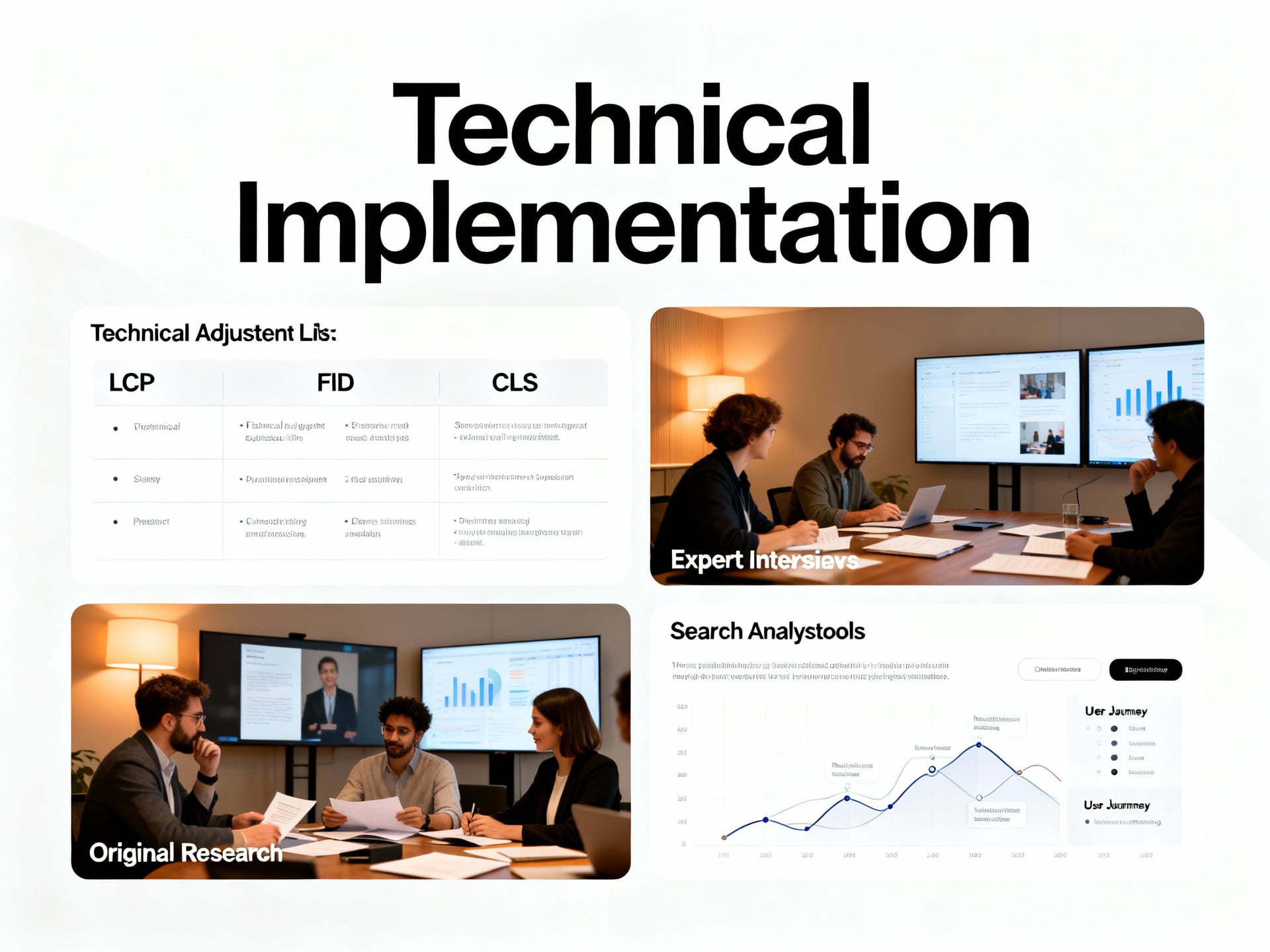
Core Web Vitals are key technical signals for assessing website experience during core updates. Regarding the optimization of LCP (Largest Contentful Paint), FID (First Input Delay), and CLS (Cumulative Layout Shift), the industry primarily holds two viewpoints: one advocates starting from the server-side and CDN, such as compressing images, enabling caching, and upgrading hosting plans; the other emphasizes streamlining front-end code, like removing unused JavaScript and lazy-loading non-critical resources.
My analysis is that for most small and medium-sized enterprise websites in Taiwan, the return on investment for front-end optimization is often higher. I recommend prioritizing the following technical adjustment checklist:
- For LCP: Optimize the "Largest Contentful Element" (usually the main image or banner) by implementing image best practices (converting to WebP format, setting correct dimensions).
- For FID: Break down long tasks, use Web Workers for complex computations, and ensure third-party scripts do not block the main thread.
- For CLS: Reserve space for image and video elements (set width and height attributes) to avoid sudden layout shifts caused by ads or dynamically loaded content.
1waySEO Reminder
During a core update, prioritizing fixes for "site-wide technical issues" (such as mobile page speed) over single-page issues often yields more significant results. Start by using PageSpeed Insights to test sample pages. If issues are widespread, prioritize them as highest priority. This ensures your technical SEO foundation is solid, allowing you to face the update in the best possible state.
Methods for Enhancing Content Depth Under the EEAT Principle
Following core updates, the weight of content EEAT (Expertise, Authoritativeness, Trustworthiness, Experience) has significantly increased. There are two mainstream approaches to enhancing authoritativeness: one is conducting expert interviews, citing insights from industry leaders; the other is performing original research, such as publishing a market survey report on AI-powered SEO writing tools in Taiwan.
Based on my experience, for teams with limited resources, "expert interviews" are a more feasible starting point. You can contact professors from local university computer science departments or columnists from well-known tech media outlets, integrating their viewpoints into your "core update guide" content. This not only enhances the content's professionalism but also increases opportunities for acquiring natural backlinks.
Practical Matching of User Intent and Content Structure
Core updates place greater emphasis on whether content can fully satisfy user search intent. In practice, there are two main tools for analyzing user intent: the "Search Analytics" report in Google Search Console, and keyword research tools (like Ahrefs, SEMrush). The former tells you which queries users actually used to find you, while the latter helps you understand the commercial intent behind the queries (informational, navigational, transactional).
From a practical standpoint, I recommend restructuring your content according to this process: First, use tools to identify high-traffic but high-bounce-rate pages related to "core updates." Next, analyze the intent behind these queries and reorganize the content structure. For example, for informational queries like "core update tips," create a clear, step-by-step tutorial guide. For transactional queries like "core update services," clearly showcase success cases and service plans within the content to guide a complete conversion journey.
Section Summary
Facing a core update, technical optimization is the cornerstone for stabilizing rankings, while EEAT and intent matching are the engines for upward breakthroughs. It is essential to proceed on both tracks, systematically reviewing and strengthening your website.
Monitoring, Iteration, and Long-Term Maintenance Process
After implementing a core update, the work is not finished. The real challenge lies in monitoring its impact, interpreting the data, and transforming response strategies into sustainable maintenance processes. This is a critical phase transitioning from a "one-time project" to "ongoing optimization."
Building a Real-Time Monitoring Dashboard During the Update
Creating a dedicated monitoring dashboard is the first priority. Based on data from Google Analytics and Search Console, you should set up automated alerts to closely monitor ranking and traffic anomalies for pages related to the core update. Industry practices vary: some experts advocate monitoring all keyword ranking changes for comprehensiveness. However, in practice, I recommend focusing on "core keywords" and high-value pages directly related to the core update theme to avoid data overload. My analysis is that an accurate dashboard should reflect the positive or negative signals from the core update in real-time, allowing you to quickly grasp the overall situation.
Data Interpretation and Timing for Tactical Adjustments
When data starts to fluctuate, interpretation becomes key. It's crucial to distinguish between "normal search fluctuations" and "core update signals requiring immediate intervention." According to Google's official documentation, minor ranking fluctuations in the weeks following an update are common. However, multiple experienced SEO consultants point out that if traffic for pages related to the core update theme drops sharply by more than 20% in a short period, this is usually a strong warning sign requiring immediate review of content quality and relevance. From a practical standpoint, I recommend adopting a "48-hour observation period": if the change is not drastic, observe for two days first; if the trend continues to worsen, immediately initiate the iterative optimization process, such as enhancing content depth or adjusting internal link structures.
Institutionalizing the Response Process into Routine Maintenance
A successful response to a core update should not be a one-time reaction. You need to establish an institutionalized SEO maintenance mechanism. This includes setting up quarterly SEO health checks to systematically assess the long-term impact of core updates and the overall performance evaluation of the website. Some companies prefer monthly fine-tuning, but based on my experience, for global adjustments like core updates, conducting strategic reviews on a quarterly basis is more appropriate. This captures long-term trends without losing direction due to frequent changes. I strongly recommend documenting the response records, data analysis, and tactical adjustments for each core update to build institutional knowledge. This will make future update responses more composed and effective.
Important Notes
Note: When using AI tools to assist in generating content related to core updates, it is essential to ensure the content's originality and depth, avoiding the production of thin content. Search engines can now detect AI-generated text that lacks deep human refinement and unique value. Over-reliance without value enhancement may lead to content being flagged as low-quality during a core update, posing ranking risks.
In summary, monitoring and maintenance after a core update is a dynamic process of iterative optimization. By building dashboards, accurately interpreting data, and institutionalizing the process, you can transform the challenge of updates into a cornerstone for the long-term health of your website.
Conclusion
Through the three practical case studies and step-by-step tutorials from Taiwanese enterprises above, we can clearly see that the key to successfully navigating core updates is not to scramble for a response only after an update occurs. It is a systematic process encompassing "strategic planning," "technical and content enhancement," and "monitoring and iteration."
The true core value lies in this: businesses should view SEO as dynamic asset management, shifting from passively patching problems to proactively building a robust website foundation. This means consistently providing high-quality content that aligns with user search intent and ensuring a solid technical architecture. When you internalize these tasks as part of daily operations, each core update is no longer a threat but an excellent opportunity to examine your own weaknesses and widen the gap with your competitors.
Now is the perfect time to take action. Immediately review your website's core metrics and content strategy, and start planning your customized update response blueprint. If you require professional website health diagnostics and strategic consultation, feel free to contact our expert team for a comprehensive check-up of your digital assets, ensuring you are well-prepared to steadily meet every evolution in search.
Frequently Asked Questions
1. What is a core update? How will it affect my website?
A core update is a major update to Google's search algorithm, designed to improve the quality and relevance of search results. It reassesses a website's overall quality, expertise, and user experience, which can lead to significant ranking fluctuations. The impact depends on your website's current health: if your content is high-quality and your technical infrastructure is sound, you may see improvements; conversely, if your content is weak or the user experience is poor, rankings may drop. This is not a penalty but a re-evaluation, emphasizing the long-term importance of building your site according to E-E-A-T (Experience, Expertise, Authoritativeness, Trustworthiness) principles.
2. What technical and content health aspects should businesses prioritize strengthening before a core update arrives?
We recommend prioritizing three key areas for improvement: First, conduct a comprehensive technical SEO audit to ensure there are no major issues with site speed, mobile-friendliness, structured data, or indexing status. Second, systematically review your core content and, following E-E-A-T principles, enhance its professional authority by adding author credentials, citing sources, and including original data or case studies. Finally, optimize the user experience by improving content readability, navigation logic, and interactive design. This is an ongoing process; we recommend establishing a regular review mechanism rather than applying one-time fixes.
3. If my website's rankings drop after a core update, what specific steps should I take to respond and recover?
Stay calm and diagnose step by step: First, use Google Search Console to analyze the affected queries and pages to determine if it's a specific content issue or a site-wide problem. Second, objectively review the affected pages against Google's Quality Rater Guidelines, checking for deficiencies in content depth, expertise, or how well they satisfy user intent. Third, create an improvement plan, prioritizing the fixing of technical errors and systematically enhancing content value (e.g., adding examples, updating information, strengthening professional endorsements). Avoid making only superficial adjustments; focus on fundamental quality improvements and allow for an observation period of several weeks to months.
4. For SEO beginners, what long-term monitoring and maintenance habits should be established after a core update?
We recommend establishing three core habits: First, regularly (e.g., weekly) review the Performance and Coverage reports in Search Console, paying attention to traffic trends and index health. Second, conduct a content audit quarterly to assess the relevance and quality of older content, deciding whether to update, merge, or remove it. Third, stay updated on official announcements and professional analyses in the SEO field to understand algorithm trends. At the same time, cultivate a "user-centric" mindset, focusing on creating content that genuinely solves problems. This is the most robust long-term strategy for weathering algorithm changes.
Further Reading
相關文章

Review SEO Case Study Analysis: Complete Guide to Ranking Improvement for Taiwanese Websites

How to Turn Keyword Rankings into Actual Conversions? Taiwan SEO Practical Strategy Analysis

Practical Strategies to Improve Website Ranking: 3 Key Steps and Success Stories
