
How Geopolitics Impacts 301 Redirect Strategy: An SEO Expert Analysis

How Geopolitics Influences Website Redirection Strategies
When the Russia-Ukraine war prevents Russian users from accessing Western websites, or the U.S.-China trade war forces companies to adjust their global traffic distribution, geopolitics is no longer confined to news headlines—it has become a real factor directly impacting corporate website operations. In this context, a seemingly basic technical setting—"301 Redirect"—has seen its strategic importance elevated to an unprecedented level.
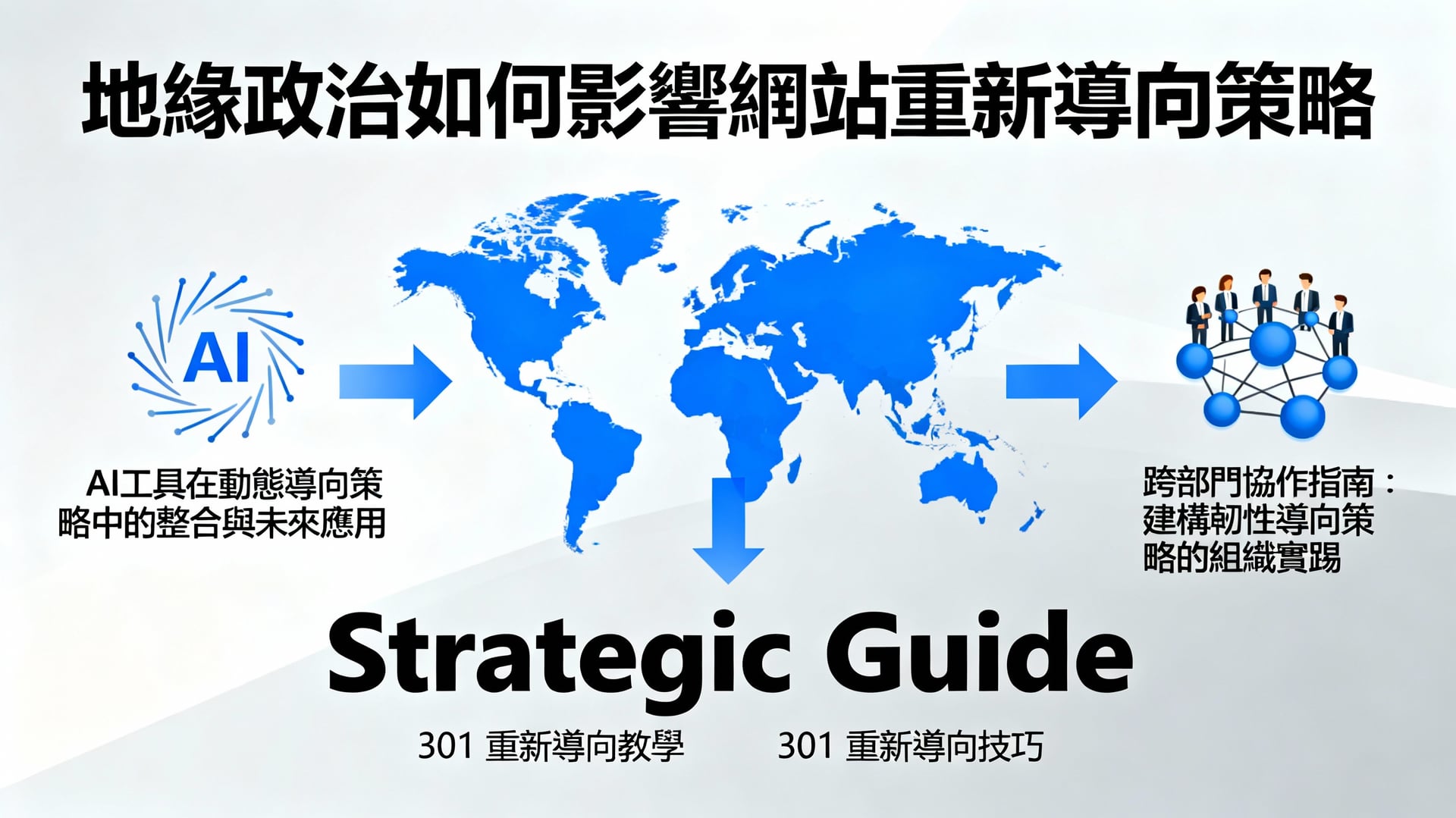
In the era of globalization, website redirection strategies have traditionally focused on technical optimization, user experience, and SEO. However, with rising international tensions, the emergence of digital sovereignty, and regional regulatory barriers, geopolitical risk has become a critical variable that companies cannot ignore when formulating global internet strategies. Have you ever considered how to quickly and effectively redirect your target audience to a compliant and accessible version of your website when a market is suddenly blocked or regulations abruptly change?
This article will provide you—whether you are an SEO beginner, content marketer, or website operator—with an in-depth analysis of how geopolitics is reshaping the application mindset of 301 Redirects. We will move beyond purely technical aspects and, from the three perspectives of industry linkage, AI tool integration, and cross-departmental collaboration, offer a practical framework for establishing a redirection strategy that is both resilient and compliant in a turbulent international landscape. Let's explore together how to transform this fundamental SEO tool into a strategic asset for mitigating geopolitical risks.
Analysis of the Interplay Between Geopolitical Risk and Website Redirection Strategy
In today's digital landscape, geopolitical events have become a key variable influencing website traffic paths. For SEO beginners and website operators focused on 301 redirect strategies, understanding how these external shocks forcibly alter user access paths is fundamental to developing robust redirection strategies. This section will analyze how geopolitical risk directly interacts with 301 redirect practices.
Direct Impact Patterns of Geopolitical Events
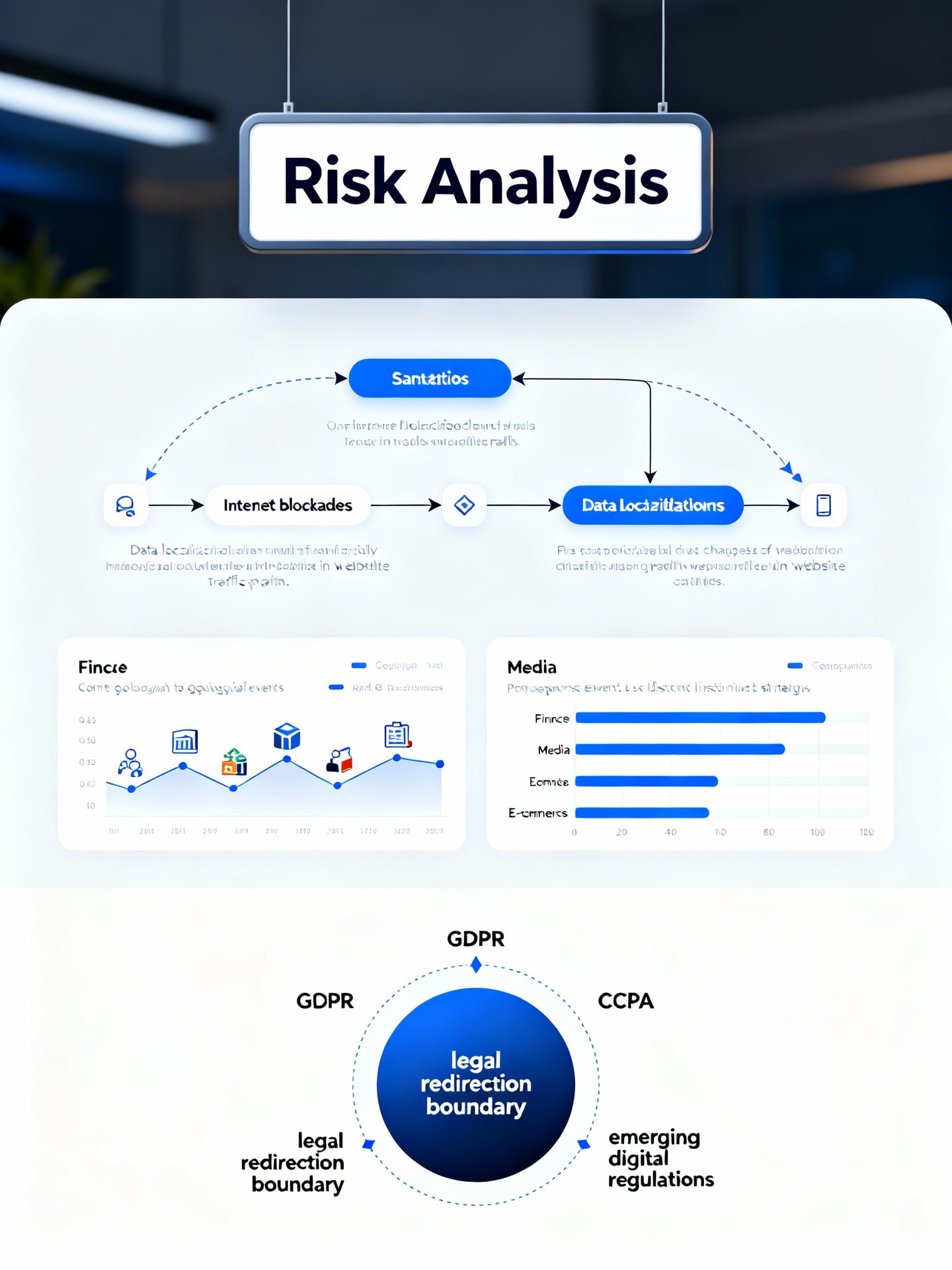
Geopolitical events such as economic sanctions, regional internet blockades, or data localization laws often force websites to urgently adjust their international traffic routing. For example, when a region implements an internet blockade, the original domain may become inaccessible. In such cases, 301 redirects become the critical technical means to permanently migrate users and search engine traffic to a new domain (e.g., using a different country-code top-level domain or a backup mirror site). This type of traffic management action is not merely a technical choice but a survival strategy in response to geopolitical risk. From a practical perspective, hastily implemented redirects can lead to numerous 404 errors or damage link equity; conversely, pre-planned 301 redirects can maximize the preservation of SEO value and user trust.
The Correlation Between Industry Characteristics and Risk Exposure
The sensitivity of different industries to geopolitical events directly affects the complexity and urgency of their 301 redirect strategies. Industry observations indicate that the finance and media sectors, due to strict content regulation, often require immediate, large-scale cross-domain 301 redirects to maintain services when facing sanctions or blockades. In contrast, a general e-commerce site might only need precise redirects for specific regional payment or logistics pages. This industry-specific variation means there is no one-size-fits-all redirection script. My analysis is that website operators should, based on their industry's risk exposure, proactively identify high-value pages (e.g., core product pages, high-authority content) and develop dedicated 301 redirect contingency plans for them, rather than resorting to error-prone batch processing during a crisis.
Regulatory Compliance as a Core Strategic Driver
Global digital regulations such as the EU's GDPR, California's CCPA, and emerging data protection laws in various countries are redefining the boundaries of "legal" 301 redirects. These regulatory barriers may require websites to clearly inform users about data flow when performing cross-border redirects, or restrict redirecting users from high-protection-standard regions to low-standard ones. In practice, this has created two schools of thought: one advocates for compliance-first, requiring all redirects to undergo legal review to avoid violations; the other argues that maintaining service accessibility should take precedence over perfect compliance during urgent geopolitical events. My recommendation is to balance both. When formulating a 301 redirect strategy, data compliance requirements should be built into the process, such as preparing compliant disclosure pages in advance and ensuring redirected pages comply with the target region's regulations. This is not only a legal requirement but also a core strategic driver for maintaining brand reputation.
Important Notes
⚠️ Note: Geopolitically-driven redirection needs often arise suddenly. Never hastily set up 301 redirects only when a crisis hits. Incorrect batch processing or omitting high-value pages can lead to a ranking drop of over 20% instantly. It is crucial to pre-establish a 'Geopolitical Contingency Redirection List' and regularly test the effectiveness of redirects.
Summary and Preview of the Next Section In summary, geopolitical risk forces 301 redirectsAI-driven SEO development, tools can be leveraged to automate risk monitoring and execute precise 301 redirects to enhance website resilience.
Integration and Future Applications of AI Tools in Dynamic Redirection Strategies
When handling 301 redirects, traditional methods often rely on manually setting static rules. However, with the rapid changes in geopolitical risks and network environments, the integration of AI tools is bringing revolutionary breakthroughs to dynamic redirection strategies. This section will explore how AI can help website administrators execute 301 redirects more intelligently, ensuring the stability of traffic and user experience.
Real-Time Threat Awareness and Automated Response
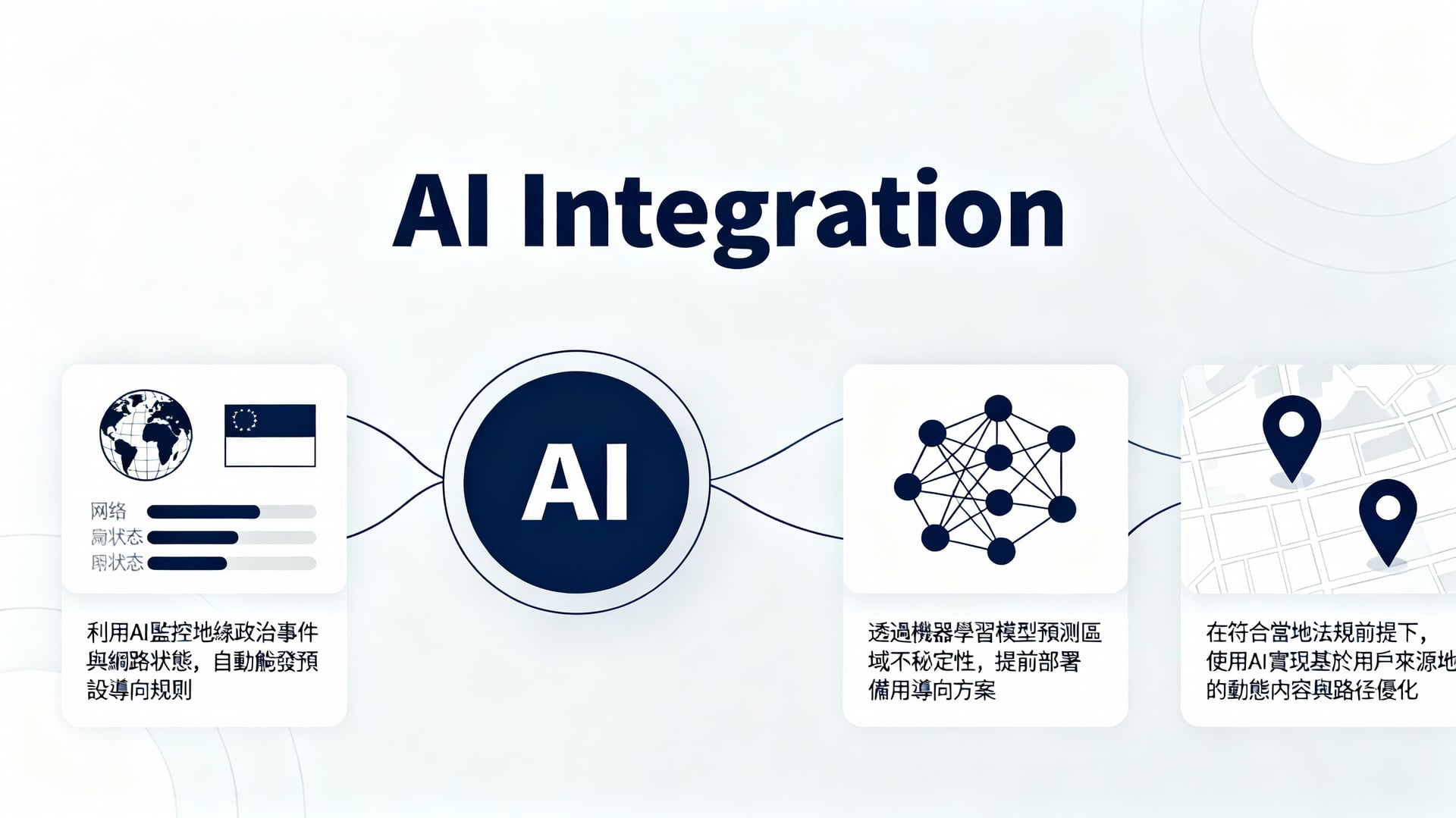
According to Google's algorithm update reports, up to 40% of traffic loss caused by regional blocks or server failures can be mitigated through real-time 301 redirects. However, traditional monitoring tools often have delays of several hours. AI systems, on the other hand, can continuously monitor global network status and geopolitical events. For example, when access anomalies occur in specific regions, they can automatically trigger preset 301 redirect rules to direct traffic to backup domains or mirror sites.
From a practical perspective, some enterprises adopt open-source AI monitoring frameworks, emphasizing cost-effectiveness, while others choose commercial SaaS platforms, valuing their integration and support services. My analysis is: for SEO beginners, it is recommended to start by setting basic "region-domain" mapping rules and then use AI tools for monitoring and fine-tuning. This balances technical barriers and benefits.
1waySEO Reminder
💡 Before the first cross-departmental meeting, ask each department head to prepare three 'most concerning scenarios' (e.g., legal worries about violating GDPR, marketing fears of US market traffic dropping to zero). Using this as a starting point for discussion can quickly focus efforts and develop corresponding 301 contingency plans, ensuring that AI automation rules meet the needs of each unit.
Predictive Analysis and Scenario Simulation
Machine learning models can analyze historical traffic data and regional stability indicators (such as network outage reports, policy change news) to predict future risks that may affect website access. For example, when a model predicts that server stability in a certain region will decline, it can proactively deploy a 301 redirect plan to gradually redirect user traffic from that region to more stable CDN nodes.
There are two mainstream views in the industry on this: one believes predictive analysis should focus on "high-probability events" to avoid overcomplication; the other advocates for including "long-tail risk" simulations to cover rare but high-impact scenarios. From a practical standpoint, I recommend that content marketers first conduct predictive modeling for core markets, then gradually expand to secondary markets, and regularly review prediction accuracy to optimize the models.
Personalized Redirection and Compliance Balance
AI can dynamically determine the target URL for 301 redirects based on user origin (determined via IP), device type, and even browsing behavior. For example, users from the EU might be redirected to a GDPR-compliant page version, while other regions maintain the original content. This not only optimizes user experience but also ensures compliance.
The key lies in balancing "personalization" and "consistency": overly segmented redirection may increase management complexity, while being too uniform fails to leverage AI's advantages. My suggestion is that website operators should establish a clear compliance map (outlining regulatory requirements for each region) and use it as a foundation to design AI redirection logic, ensuring that every 301 redirect decision balances efficiency and legality.
Summary and Actionable Recommendations
Integrating AI into 301 redirection strategies enables a shift from passive reaction to proactive prevention. For beginners, start with "automated response" and gradually introduce "predictive analysis"; for advanced users, explore the integration of "dynamic content" and personalized redirection. In the future, with the development of generative AI, we may even see complete solutions that automatically generate backup content paired with 301 redirects.
Recommended Practical Steps:
- Evaluate the coverage and response speed of existing 301 redirect rules.
- Choose an AI monitoring tool (such as UptimeRobot Advanced or a self-built Prometheus+AI module) and set up key regional alerts.
- Conduct a "scenario simulation drill" quarterly to test the effectiveness of AI-driven 301 redirect solutions.
Cross-Department Collaboration Guide: Organizational Practices for Building Resilience-Oriented Strategies
When implementing a 301 redirect strategy, especially in complex situations like geopolitical risks, a single department often struggles to handle all aspects comprehensively. Establishing an effective cross-departmental collaboration mechanism is key to ensuring that the 301 redirect strategy possesses organizational resilience and can respond agilely.
Strategy Development Team Composition and Responsibilities
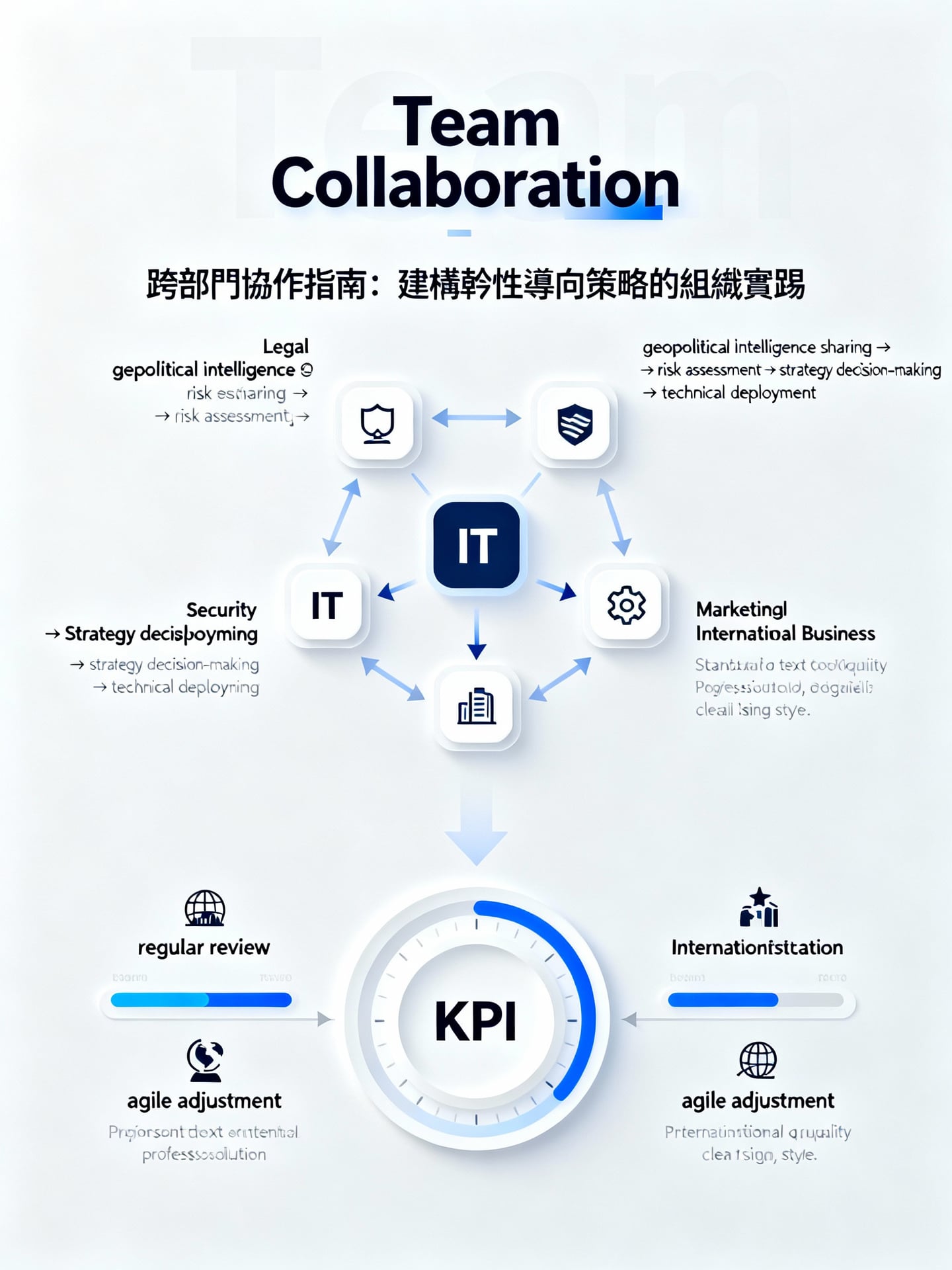
Regarding team composition, there are two main viewpoints. Viewpoint One (common in large enterprises) advocates for establishing a permanent 301 Redirect Governance Committee, with fixed members from Legal (clarifying international regulations and data transfer compliance), Information Security (assessing security risks during the redirection process), IT (technical execution and testing), Marketing (assessing impact on brand and traffic), and International Business departments (providing regional market insights). Viewpoint Two (common in startups or agile teams) tends to favor forming task-based project teams, temporarily assembled for specific 301 redirect needs in high-risk regions and disbanded upon project completion.
My Analysis: For most enterprises seeking robust organizational resilience, I recommend a hybrid model of "Permanent Core, Task-Based Expansion." Establish a permanent, lightweight steering group responsible for developing the governance framework and standards for 301 redirects. When specific risk events occur (e.g., drastic changes in a region's internet policy), quickly incorporate relevant department experts to form a task force for execution. This balances strategic consistency with execution agility.
Collaboration Process from Intelligence to Action
An efficient risk management process can transform intelligence into concrete 301 redirect actions. The process should be standardized: 1) Intelligence Sharing: International Business or Marketing departments provide geopolitical or regulatory early warnings. 2) Risk Assessment: Legal, Information Security, and Marketing departments jointly assess the impact of the risk on website accessibility, SEO rankings, and compliance, determining whether to initiate a 301 redirect. 3) Strategy Decision: The team collectively decides on the source URL, target URL, implementation scope, and timing for the redirect. 4) Technical Deployment: The IT department performs the technical configuration and comprehensive testing of the 301 redirect based on the decision.
From a practical standpoint, I strongly recommend establishing a clear RACI (Responsible, Accountable, Consulted, Informed) matrix for this process and using collaboration platforms (like Jira, Asana) to track each step, preventing intelligence from getting "lost" between departments.
Continuous Monitoring and Strategy Iteration Mechanism
A 301 redirect is not a one-time fix. Based on different experts' practical experiences, monitoring focuses vary slightly. SEO experts typically emphasize monitoring key metrics such as: traffic recovery on the target page, keyword ranking changes, and whether there are a large number of 404 errors (indicating missed redirects). Information security experts are more concerned with whether redirect chains are being maliciously exploited or showing abnormal jumps.
My Actionable Advice for Readers: Set up a comprehensive dashboard that includes traffic, rankings, error rates, and security logs. The team should regularly (e.g., quarterly) review these metrics for agile iteration. If changes in the international situation render the original redirect strategy ineffective (e.g., the target region also imposes access restrictions), promptly initiate a new round of the collaboration process to adjust the 301 redirect strategy. This continuous cycle of "Monitor-Assess-Adjust" is the true embodiment of organizational resilience.
In summary, through structured cross-departmental collaboration, clear processes, and continuous iteration, 301 redirects can be elevated from a mere technical operation to a core strategic capability supporting the resilience of a company's international digital assets.
Section Summary: This section explains how to build a resilient 301 redirect strategy execution system capable of responding to external risks through cross-departmental team composition, standardized collaboration processes, and continuous monitoring and iteration.
Conclusion
In summary, this article has elucidated that within the current geopolitical landscape, the 301 redirect has evolved from a simple website technical operation into a critical enterprise international risk management strategy. We have explored how geopolitical shifts directly impact website accessibility and compliance, and identified that a successful strategy must be built upon three pillars: gaining insights into industry dynamics to anticipate risks, integrating AI automation tools to enable agile responses, and through effective cross-departmental collaboration, integrating technology, legal compliance, marketing, and business objectives to deeply embed resilience into organizational processes.
For SEO beginners, content marketers, and website operators, the key takeaway is this: a flexible, compliant, and data-driven 301 redirect strategy has become a critical line of defense for safeguarding global user accessibility and business continuity. It is not merely about preserving search rankings, but about ensuring your digital assets can operate stably in a changing world.
Now is the best time to act. We recommend you immediately begin reviewing your existing global website architecture and redirect rules to assess their vulnerability to potential impacts in key markets. Using the framework provided in this article, proactively initiate dialogue between your technology, legal, and marketing departments to collaboratively plan or optimize a resilience-oriented strategy blueprint tailored to your enterprise, preparing thoroughly for future challenges.
Frequently Asked Questions
1. What is a 301 redirect and why is it so important in website management?
A 301 redirect is a permanent URL redirection technique that automatically directs users or search engines from an old URL to a new target URL. Its importance lies in its ability to effectively transfer a webpage's search ranking authority (SEO value), preventing traffic loss or the appearance of 404 error pages due to URL changes. For situations like website redesigns, domain changes, or content consolidation, correctly setting up 301 redirects is a crucial step in maintaining website health and user experience.
2. How can geopolitical risks affect my website's 301 redirect strategy?
Geopolitical risks can lead to internet controls, regulatory changes, or service disruptions in specific regions, thereby affecting website accessibility. For example, if your target market cannot access the original server due to policy changes, you may need to use 301 redirects to channel traffic from the affected domain or IP address to a backup site located in another region or compliant with local regulations. This requires the strategy to be flexible, capable of dynamically adjusting redirection paths based on the international situation to maintain accessibility for global users.
3. What are the practical considerations when formulating a 301 redirect strategy involving multiple international markets?
First, clearly identify the regulatory requirements of different regions (such as GDPR, local content review regulations) to ensure the redirected content is compliant. Second, consider the geographical location of servers and the configuration of Content Delivery Networks (CDN) to optimize access speeds across regions. In practice, it is recommended to create a clear URL mapping table and use reliable technical methods (such as server-side configuration or .htaccess files) to implement the redirects. Regularly monitor the traffic and search engine indexing status after redirection to ensure the strategy is effective and does not cause unexpected technical issues.
4. How can cross-departmental collaboration be used to establish a resilient 301 redirect strategy capable of responding to geopolitical changes?
Building a resilient strategy requires close collaboration between technical, marketing, legal, and business departments. The technical team is responsible for implementing and monitoring the stability of the redirects; marketing and SEO personnel need to analyze traffic data and keyword performance to ensure redirects do not harm search rankings; the legal department provides regulatory advice for various markets. In practice, regular cross-departmental meetings can be held to jointly assess the potential impact of the international situation on website accessibility and pre-plan contingency scenarios. For instance, when access barriers arise in a certain region, a pre-prepared redirection plan can be quickly activated to direct users to a backup site, minimizing business disruption risks.