
Latest SEO Techniques: Practical Strategies to Boost Website Traffic in 2024

How to Use the Latest SEO Techniques to Increase Traffic
Has your website traffic plateaued? Even after investing significant time in optimization, your search rankings just can't seem to break through? This might be because you're still using outdated SEO methods.
As Google's algorithms evolve at an astonishing pace, traditional strategies like keyword stuffing and building large volumes of low-quality links are not only ineffective but can also get your website penalized. Today, the core of modern SEO has shifted to being "user-centric," emphasizing high-quality content, smooth page experience, and a solid technical foundation. However, many business owners and marketing partners remain stuck in old mindsets, causing their hard work to fail to translate into traffic growth, which can be incredibly frustrating.
Don't worry, that's precisely why we've written this article. We will reveal the latest SEO trends for 2024, focusing on strategies that are truly effective and actionable. Whether you're a beginner just getting started with SEO or a content marketer looking to break through a bottleneck, this guide will provide clear step-by-step instructions and practical tool recommendations to help you systematically improve your website's visibility and traffic while avoiding common optimization pitfalls.
Now, let's keep up with the pace of the latest SEO and unlock your website's traffic potential.
Core SEO Strategy: A Complete Framework from Fundamentals to Advanced
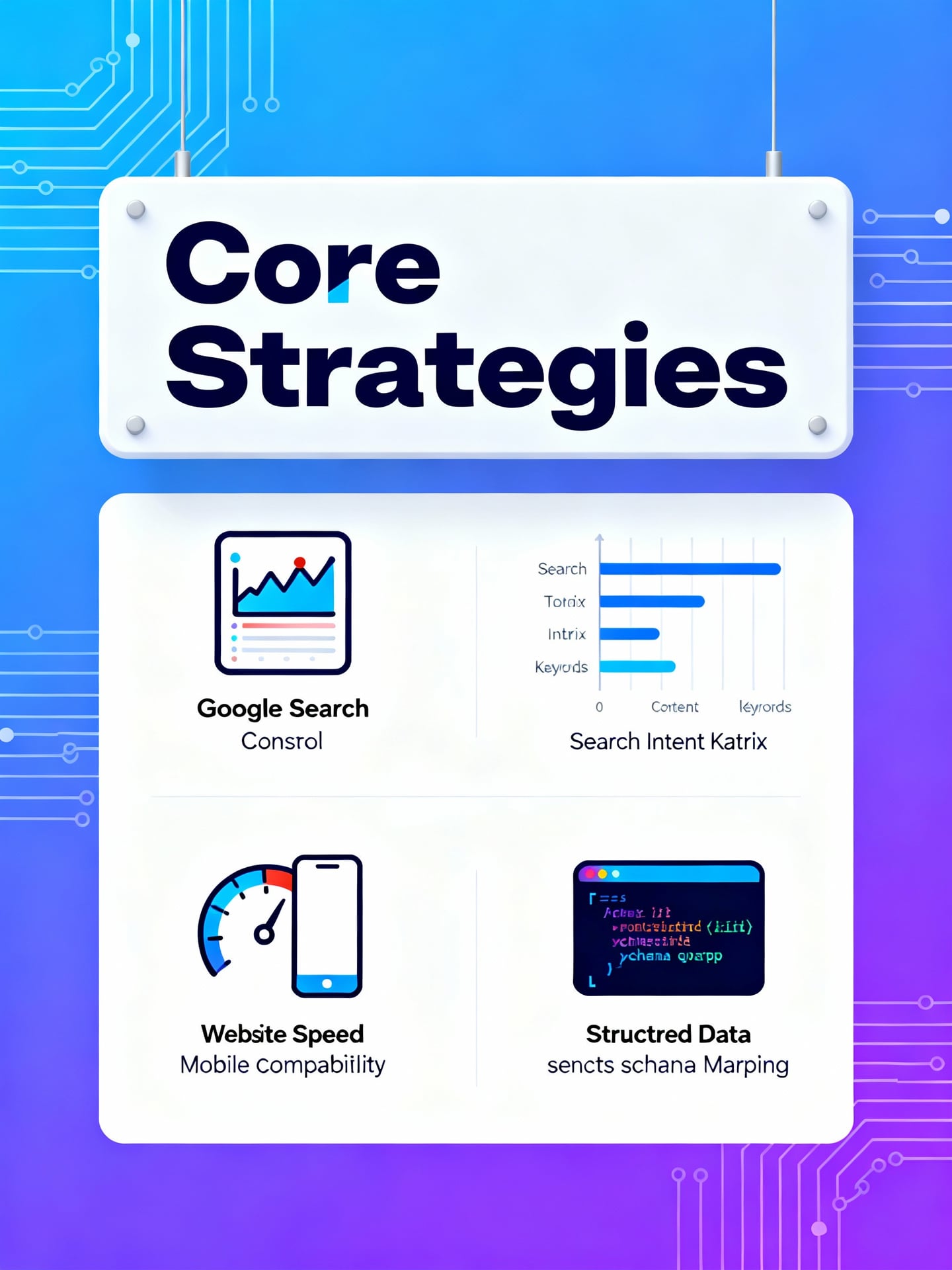
In 2026, mastering the latest SEO trends means building a complete strategic framework from fundamentals to advanced levels. This framework not only helps beginners establish a solid foundation but also enables advanced marketers to continuously optimize and break through traffic bottlenecks. The following will be divided into three key aspects, combining different perspectives and practical advice to analyze the core of current latest SEO strategies for you.
Key Checkpoints for Technical SEO
Technical SEO is the cornerstone of latest SEO strategies. According to Google's official documentation, regularly using Google Search Console to diagnose technical issues (such as index coverage, crawl errors) is the primary task. However, third-party SEO tools (like Ahrefs, SEMrush) emphasize automated monitoring and historical data comparison. My analysis is: beginners should prioritize mastering Search Console's free resources to understand basic error reports; for website owners, I recommend combining tools for in-depth diagnostics, especially for optimizing website speed and mobile device compatibility. In practice, compressing images, enabling caching, and using AMP or Core Web Vitals optimization tools are all latest SEO techniques to improve technical scores in 2026.
Repositioning Content Strategy
Content strategy in latest SEO trends has shifted from "keyword stuffing" to "intent fulfillment." Academic research (such as Search Engine Journal) indicates that building a content matrix aligned with search intent requires analyzing the types of user queries (informational, commercial, transactional). However, practical SEO experts (like Brian Dean from Backlinko) emphasize the competition in content depth and authority. From my experience, beginners should first learn to use keyword planning tools to identify intent and create content that answers core questions; for content marketers, I recommend developing Topic Clusters and integrating structured data (like FAQ, How-to markup) to enhance content visibility. This is not only a key point in latest SEO tutorials but also crucial for improving ranking stability.
User Experience and Core Web Vitals
User Experience (UX) and Core Web Vitals have become core ranking factors in the latest SEO algorithms. Google's stance is clear: website speed, interactivity, and visual stability directly impact rankings. However, some industry discussions (like SEO communities) believe that UX optimization should balance business conversion goals rather than blindly pursuing metric scores. My recommendation is: for all target audiences, prioritize optimizing the three major metrics: LCP (Largest Contentful Paint), FID (First Input Delay), and CLS (Cumulative Layout Shift). Use tools like PageSpeed Insights for diagnosis and implement lazy loading, optimize CSS/JavaScript. From a practical standpoint, this is not only a latest SEO technique but also reduces bounce rates and improves user engagement.
Important Notes
Warning: In the latest SEO environment of 2026, never purchase links from unknown sources or use automated content generation tools (i.e., black hat SEO tactics). According to Google's algorithm updates, such behavior will lead to severe penalties, including significant ranking drops or even removal from search engine indexes. Adhering to white hat SEO and focusing on providing value is the sustainable approach.
In summary, the latest SEO strategy for 2026 is an integrated cyclical framework of technology, content, and experience. Beginners should start with technical checks and content intent, while advanced practitioners need to continuously optimize experience metrics and structured data.
Implementation Steps Explained: The Complete Process from Planning to Execution
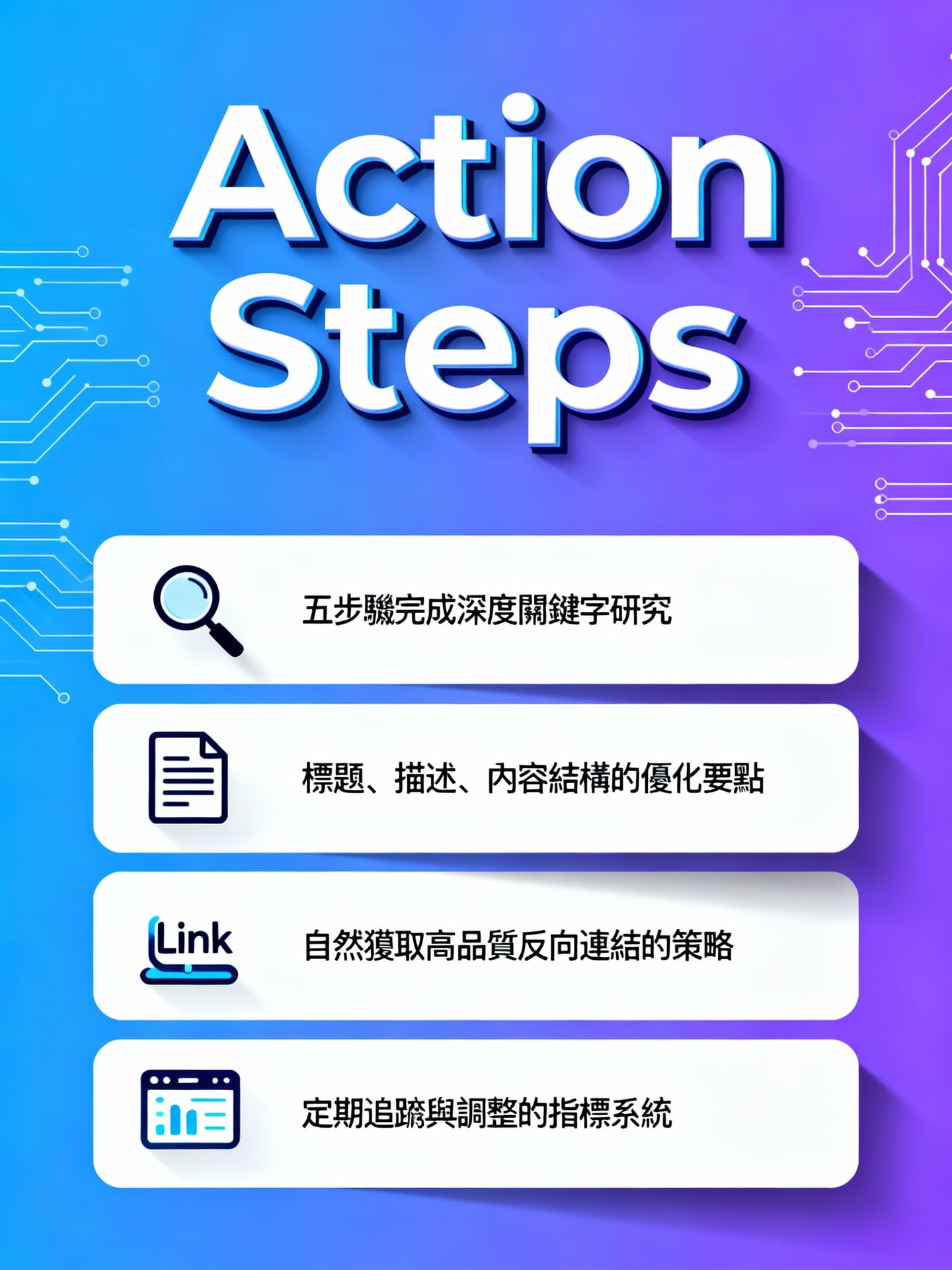
After mastering the SEO latest trends, the key lies in implementation. This section will provide a complete process from planning to execution, helping you translate theory into actual traffic growth. We will explore different expert perspectives on keyword research, on-page optimization, and link building, and provide advice based on practical experience.
Keyword Research and Content Planning Steps
An effective SEO latest strategy begins with precise keyword research. According to SEO latest tutorials, traditional methods emphasize search volume and competition analysis, while modern AI-driven tools can uncover long-tail keywords and semantically related terms. For example, Tool A might focus on historical data prediction, while Tool B uses AI to analyze user intent.
My analysis is that for SEO beginners, it's recommended to combine both: first use AI tools to quickly generate a keyword list, then complete in-depth research in five steps: 1) Define the core topic, 2) Use AI tools to expand phrases, 3) Analyze search intent (informational, navigational, transactional), 4) Evaluate competitor content gaps, 5) Prioritize based on business goals. This ensures your keyword research follows the SEO latest trends while having strategic depth.
1waySEO Reminder
Tip: When using AI to assist in content generation, be sure to add your unique industry insights, real user cases, or local data. This is the "original value" that AI cannot replace and is key to brand differentiation in AEO. For example, when writing content about "Taipei Cafe SEO," include actual cafe visit experiences and local customer preferences.
Specific On-Page Optimization Guidelines
On-page optimization is the core of SEO latest techniques. Regarding title and description optimization, one viewpoint believes they should precisely include the main keyword to improve relevance; another viewpoint argues that under the AEO trend, titles should focus more on click-through rates and answering user questions.
From a practical standpoint, I recommend a balanced strategy: titles must include the target keyword while being presented in a click-attracting way (e.g., using numbers, questions). In terms of content structure, the SEO latest approach emphasizes using clear heading hierarchy (H1, H2, H3), internal linking, and adding descriptive Alt text to images. These on-page optimization points help search engines and users better understand the content.
Effective Methods for External Link Building
Backlink building strategies have evolved with SEO latest developments. The traditional view focused on directory submissions and article exchanges, while modern SEO latest tutorials emphasize "natural acquisition." Method one suggests attracting links by creating outstanding "cornerstone content"; method two recommends proactive digital PR to build relationships with relevant websites.
Based on experience, I believe "value first" is most effective. Instead of exchanging a large number of low-quality links, focus on producing original research, data reports, or in-depth guides with citation value, and through appropriate promotion, encourage other websites to voluntarily reference them. This is a sustainable strategy that aligns with SEO latest trends and can acquire high-quality backlinks. At the same time, make good use of SEO tools to monitor the health of your link profile.
Finally, all SEO latest efforts need to be verified through performance tracking. It is recommended to establish a metrics dashboard including organic traffic, keyword rankings, click-through rate, and conversion rate. Regularly reviewing this data and making adjustments based on performance is the key closed-loop for breaking through traffic bottlenecks.
This section detailed the complete process for executing a SEO latest strategy. Next, we will explore how to use localization strategies and advanced AI applications to further amplify your SEO results.
Emerging Trends and Tool Applications: Mastering the Future's Traffic Code
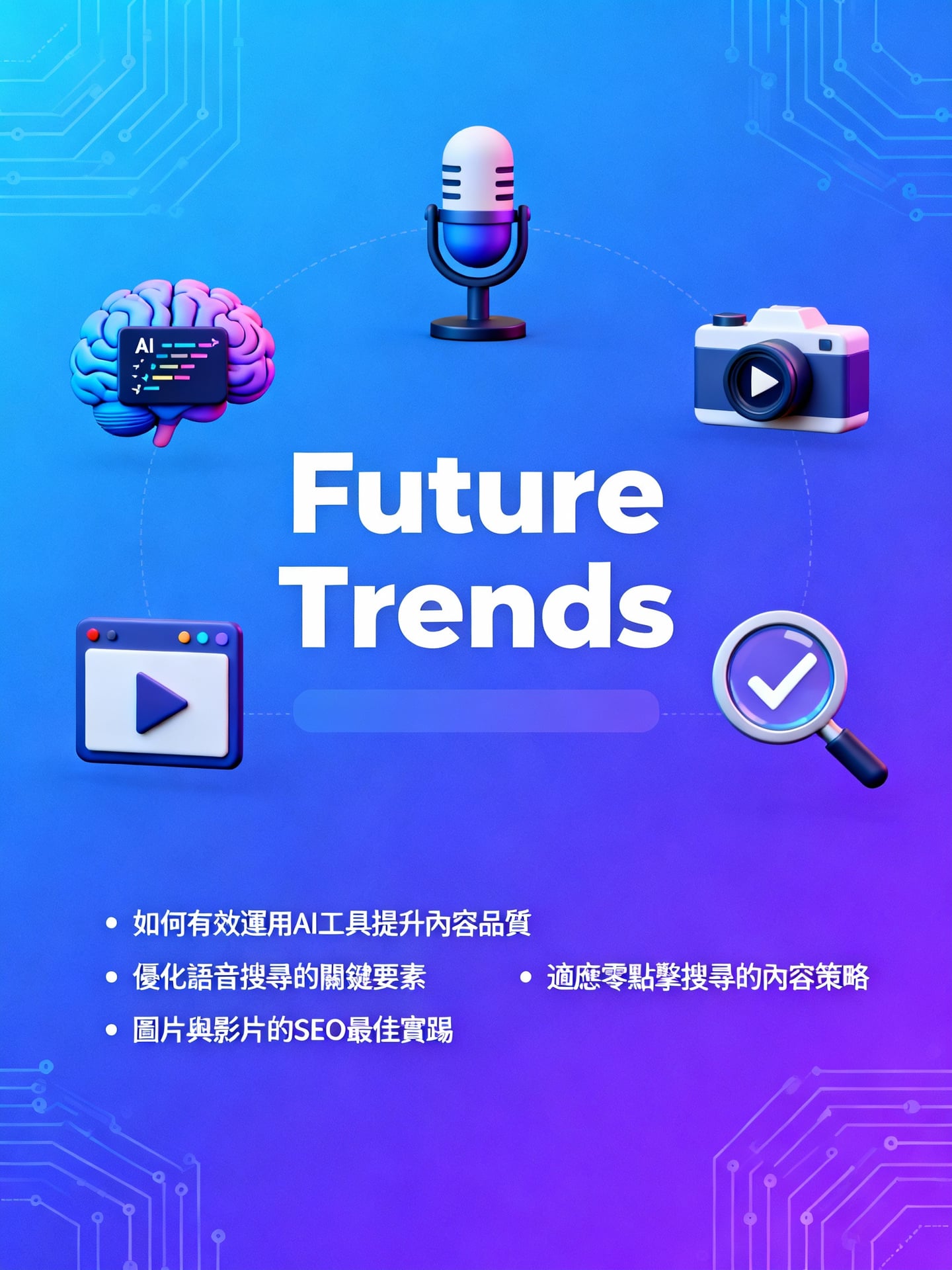
When exploring the latest SEO trends, we find that AI, voice search, and visual search are reshaping ranking rules. These tools are not just technological innovations; they are at the core of content strategy. The following will analyze from multiple perspectives and provide practical advice.
Practical Techniques for AI-Assisted Content Creation
Regarding AI content creation, the industry holds different views. Some experts believe AI tools (like ChatGPT, Jasper) can quickly generate large volumes of drafts, improving efficiency. However, content marketers often point out that AI output may lack depth and emotional connection, requiring human refinement. My analysis is: AI should serve as an "assistant brain," not a replacement. I recommend beginners first use AI for keyword research and outline drafting, then infuse personal insights and local case studies. This can effectively enhance content quality and latest SEO rankings. For example, for the topic "AI writing for SEO," one can compare the output results of different tools to choose the solution best suited to the brand's tone.
Integration Strategy for Voice Search and Local SEO
The integration of voice search and local SEO is a key aspect of latest SEO. According to surveys, voice queries are often natural questions (e.g., "Where is the best coffee shop in Taipei?"), which differs from traditional keywords. On the other hand, local optimization emphasizes physical information (like address, business hours). From a practical standpoint, the two need to be combined: optimize long-tail keywords like "service + area name," and ensure Google Business Profile information is complete. I recommend website operators simulate user conversational queries, create FAQ pages, and actively manage local reviews. This can significantly increase exposure in voice search.
Preparation Work for Visual Search
The rise of visual search (like Google Lens) drives demand for multimedia SEO. SEO best practices for images and videos include: using descriptive file names, adding ALT text, and providing structured data. However, some hold the view that high-quality original visual content is more important than optimization techniques. Based on experience, I believe both are indispensable. For beginners, start by optimizing existing images, for example, incorporating latest SEO-related keywords into ALT text, and writing detailed descriptions when uploading videos to adapt to the zero-click search trend, making content more prominent in search results.
Local Advantage
In Taiwan, latest SEO strategies must consider local characteristics. Taiwanese users heavily rely on Google and local life platforms (like Google Maps), which presents opportunities for SMEs. Leveraging long-tail keywords like "service + area name" (e.g., "Taipei web design") and perfecting business information on map platforms can often yield more precise, higher-converting traffic compared to large international brands. Combining local SEO with voice search optimization can better target regional customer groups and break through traffic bottlenecks.
In summary, mastering latest SEO trends requires integrating AI tools, voice and visual search, and strengthening local connections. The next section will delve into data analysis and continuous optimization strategies.
Conclusion
In summary, the key to mastering the latest SEO trends lies in establishing a comprehensive optimization cycle that integrates "technical architecture," "content strategy," and "user experience." This article has systematically broken down how to use AI-driven AEO and localization strategies to effectively break through traffic bottlenecks, covering everything from core strategies and implementation steps to emerging tools. Remember, SEO is not a one-time project but a long-term marathon requiring continuous learning, testing, and adjustment.
Take Action Now: Starting today, review your website and choose at least one of the latest optimization techniques mentioned in this article to implement. Whether it's improving your site's core architecture or creating AI-assisted Q&A content, observe the traffic changes within 30 days after putting it into practice. You will gain a deeper understanding of the value these trends bring.
If you need more professional guidance during this process, feel free to contact the expert team at 1waySEO at any time. Let us help you transform the latest SEO knowledge into tangible growth momentum.
Frequently Asked Questions
1. For SEO beginners, what are the essential core concepts of the latest 2026 SEO foundational strategies that must be mastered?
The latest 2026 SEO foundational strategies have shifted from traditional keyword stuffing to a user-intent-centric approach. Beginners must master three core concepts: First, understand the operational logic of AEO (Answer Engine Optimization), focusing on directly answering the searcher's questions. Second, learn to utilize AI tools (like ChatGPT, Claude) to assist with content generation and optimization, improving efficiency. Third, prioritize localization strategies, adjusting content based on the search habits and culture of specific regions. These fundamentals will help you build a website structure that aligns with the latest search engine algorithms.
2. Within the 2026 SEO trends, what advanced AI-driven strategies can significantly improve a website's search ranking?
Advanced AI-driven strategies in 2026 focus on deep integration and automation. First, it's recommended to use AI for semantic analysis and content gap detection, automatically identifying unmet user queries and generating highly relevant content. Second, employ machine learning models to predict search trends, allowing for early positioning on potential hot topics. Furthermore, AI tools can be used to implement personalized content dynamic adjustments, optimizing page elements in real-time based on user behavior. These strategies require integration with professional SEO knowledge for monitoring and fine-tuning to effectively break through traffic bottlenecks and enhance ranking competitiveness.
3. How can one practically apply the latest localized SEO strategies to attract target audiences in specific regions?
Applying the latest localization strategies requires a multi-faceted approach: First, use AI tools to analyze search keyword variations, dialect usage, and cultural preferences in the target region, adjusting content language accordingly. Second, ensure the website's technical aspects comply with local standards, such as load speed optimization, mobile device compatibility, and local server deployment. Furthermore, actively build local backlinks by collaborating with regional websites or social media. Finally, integrate local business information (like Google My Business) and encourage users to generate localized reviews. During implementation, it's advisable to use data analytics tools to continuously track performance and dynamically adjust the strategy.
4. Facing the rapidly changing SEO environment of 2026, how should website operators plan a continuous learning and implementation process?
It is recommended to establish a systematic learning and implementation cycle: Regularly monitor search engine official announcements (like Google algorithm updates) each quarter and track industry trends through professional communities or tools. Schedule weekly time to test emerging AI tools and SEO techniques, such as experimenting with different AEO content formats or structured data markup. Simultaneously, create a key metrics dashboard to track traffic sources, user behavior, and conversion rate changes. Most importantly, maintain a hands-on spirit by applying the latest learned techniques to small-scale tests (like a single webpage or category), and only roll them out comprehensively after verifying effectiveness, forming a positive cycle of continuous optimization.
相關文章

SEO Case Study: Master Search Engine Optimization Techniques to Boost Rankings

The Complete SEO Guide: Practical Strategies and Techniques from Beginner to Expert

SEO for Beginners: A Practical Guide and Key Steps to Get Started
