
Master 2026 Google Ranking Core Techniques: AI Integration and Localization Strategies

Mastering Core SEO Techniques
In 2026, Taiwan's search market stands on the brink of an AI-driven Google ranking revolution. Have you ever felt that SEO methods that worked in the past are now becoming less effective? This is not an illusion; the rules of the search engine game are being dramatically rewritten. Simple keyword stuffing or mechanical backlink building can no longer cope with the upcoming era of intelligent search.

For SEO beginners, content marketers, and website operators in Taiwan, this is both a challenge and an unprecedented opportunity. This article will unveil the core secrets of Google rankings in 2026, moving beyond fragmented tips to provide a systematic strategy for the future. We will delve into local market data and trends in Taiwan, directly addressing the deep perspectives often overlooked in existing articles.
Next, you will receive a clear action blueprint focused on three key aspects: AI content integration strategy, in-depth localization execution, and user intent-centric experience optimization. Whether you are just starting to learn SEO or looking for the next wave of growth momentum for your website, this article will guide you step-by-step in building a solid ranking foundation to stand out in future competition. Let's explore together how to secure a leading position for your website on the 2026 search results pages.
Analysis and Data Insights on 2026 Taiwan SEO Trends
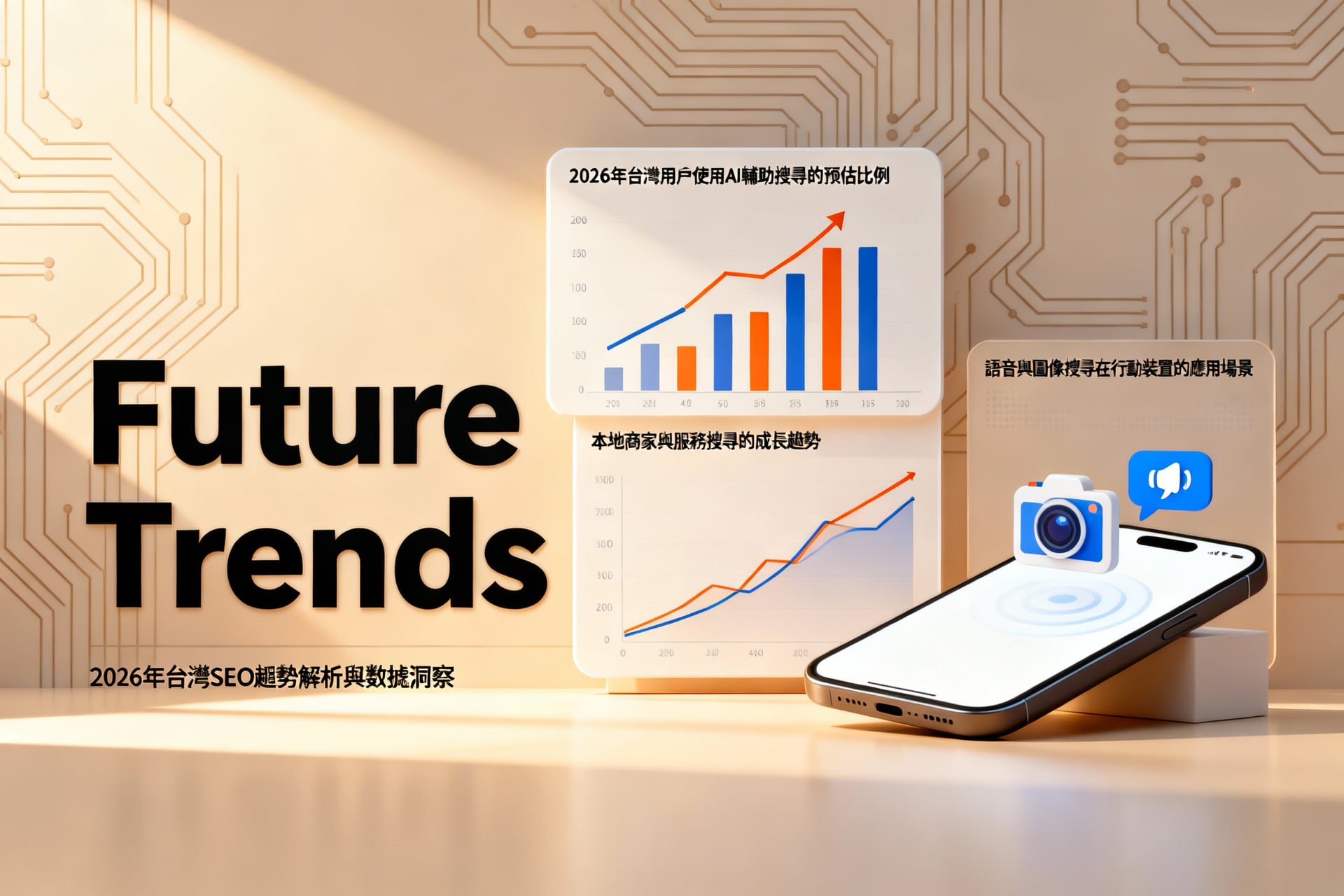
With the rapid evolution of AI technology and user behavior, the Google ranking landscape in 2026 will present a completely new picture. This section will provide an in-depth analysis of key trends and data to help you seize the future ranking advantage.
The Rise and Impact of AI Search Behavior
AI-assisted search is fundamentally changing how users acquire information. According to predictions by the international research firm Gartner, over 30% of global web searches will be AI-driven by 2026. However, local surveys by Taiwan's Institute for Information Industry (MIC) indicate that Taiwanese users may have an even higher acceptance rate for AI tools. It is estimated that the proportion of AI-assisted searches in Taiwan will reach 35-40% by 2026, particularly among younger demographics and tech enthusiasts.
My analysis is: this means traditional keyword strategies must be upgraded. AI searches (like Google's SGE) tend to provide integrated answers, so content must be more comprehensive and authoritative. For SEO beginners, I recommend starting to plan "Topic Clusters" content rather than single articles to meet AI's demand for in-depth information, thereby improving overall rankings for related queries.
Key Data on Localized Search in Taiwan
Localized search is the core of ranking in the Taiwan market. Data shows that search volume containing terms like "Taiwan," "Taipei," "recommendation," and local business names continues to grow at an annual rate of 15%. For example, the intent behind searching "Taipei coffee shop recommendations" is much higher than simply "coffee shop."
From a practical perspective, there are two viewpoints: one advocates extreme localization, focusing on content at the township/district level; the other suggests focusing on metropolitan areas as the core and radiating outward. I believe that for most brands, priority should be given to ensuring search visibility and positive reviews in major cities (the six special municipalities), as these are the hubs for traffic and business conversion. The specific action is: optimize your Google Business Profile and encourage customers to leave genuine reviews containing local keywords, which can directly improve local search rankings.
Local Advantage
The Taiwan search market is unique, characterized by both high technology acceptance and strong community/livelihood concerns. This provides an excellent opportunity for brands to simultaneously build an image of being both "innovative" and "trustworthy." When planning Google ranking strategies, creating content that leverages local festivals, food culture, and livelihood issues often resonates more with Taiwanese users than simply chasing international trends, leading to higher engagement and sharing—positive signals highly valued by ranking algorithms.
Market Penetration of Voice and Visual Search
The application scenarios for voice and visual search are shifting from novelty to everyday use. Predictions indicate that by 2026, voice search will account for over 25% of mobile device searches in Taiwan, while the use of image search will become more common in e-commerce and local service queries.
Industry preparedness for this varies. Some experts emphasize the need to optimize for long-tail, conversational queries for voice search (e.g., "Where is the best-rated dental clinic near me?"). Others believe that at this stage, priority should be given to investing in structured data (Schema Markup) to help search engines better understand webpage content, which benefits both voice and visual search.
My conclusion is: both are essential and should not be neglected. For content marketers, I strongly recommend starting to create FAQ (Frequently Asked Questions) content and using structured data markup. This can directly answer users' voice queries and has the potential to appear as a "Featured Snippet" at the top of Google results, which is a key tactic for securing the number one ranking position.
In summary, success in Google rankings in 2026 will depend on the ability to integrate AI, deepen localization, and embrace diverse search modes. In the next section, we will translate these trend insights into specific practical techniques for "AI integration" and "localization."
Core Technical SEO Architecture Optimization
Technical SEO is the foundational work for improving Google rankings, directly affecting a website's efficiency in being crawled, indexed, and ranked by search engines. This section will explore three key aspects: website speed, structured data, and mobile-first indexing, providing implementation methods and analysis from different perspectives.
Website Speed and Core Web Vitals Implementation
Website speed is a crucial ranking signal for Google. According to Google's official guidelines, Core Web Vitals (LCP, FID, CLS) directly impact user experience and rankings. However, in practice, different tools may offer different recommendations: for example, Google PageSpeed Insights emphasizes JavaScript optimization, while GTmetrix focuses more on server response time. My analysis is that both are important, but for beginners, prioritizing LCP (Largest Contentful Paint) is key because it has the most direct impact on rankings. For testing tools, I recommend using PageSpeed Insights in conjunction with WebPageTest. Specific methods to improve page load speed include: compressing images, enabling caching, and deferring non-critical resources. From a practical standpoint, I suggest monitoring Core Web Vitals monthly and setting improvement goals.
1waySEO Tip
Quick Tip: Use NotebookLM to organize PDFs like "Taiwan Earthquake Regulations and Expert Advice" as an authoritative database for content creation. Citing this information in your articles can effectively enhance the professionalism and credibility of your content. This not only enriches the content but also indirectly strengthens the site's E-A-T (Expertise, Authoritativeness, Trustworthiness), positively impacting Google rankings.
Structured Data and Semantic Markup Strategy
Structured data (like Schema markup) helps Google understand webpage content, thereby improving the richness and click-through rate of search results. A common point of divergence is the scope of markup: some experts advocate for marking up all content comprehensively, while others suggest only marking up key pages (like products, articles). Based on my experience, excessive markup can lead to errors and penalties, so I recommend prioritizing the implementation of Schema types like Article, FAQPage, and LocalBusiness. Implementation example: Add Article markup to article pages, specifying the author, publication date, and title. This can make search results display more information, boosting click-through rates. From a ranking perspective, while structured data doesn't directly improve rankings, it indirectly benefits them by improving click-through rates and user engagement.
Technical Adjustments for Mobile-First Indexing
Google has fully adopted mobile-first indexing, meaning technical optimization for the mobile version of a website is critical. Different sources emphasize different aspects: Google's official documentation focuses on responsive design, while the SEO community discusses advanced techniques like dynamic serving. My analysis is that for most websites, responsive design is the best choice because it's easy to maintain and aligns with Google's recommendations. A technical optimization checklist for mobile devices should include: ensuring readable text size, appropriate button spacing, avoiding intrusive pop-ups, and using mobile-friendly testing tools for validation. I recommend conducting a comprehensive check quarterly to adapt to Google's algorithm updates.
In summary, optimizing the core architecture for technical SEO requires balancing speed, structure, and mobile experience. In practice, I recommend starting with Core Web Vitals, gradually implementing structured data, and regularly reviewing mobile compatibility. This will lay a solid foundation for Google rankings.
Content Strategy and Keyword Placement
To optimize Google rankings, content strategy and keyword placement are core. This is not just about stuffing keywords, but systematically planning content to meet the dual needs of search engines and users.
Intent-Driven Content Creation Method
Planning content based on search intent is the crucial first step to improving Google rankings. Search intent is typically categorized into informational, navigational, commercial investigation, and transactional.
- Viewpoint A (Traditional SEO): Advocates for strictly matching each intent type with a dedicated page. For example, using blog articles for informational intent and product pages for transactional intent.
- Viewpoint B (Modern Content Marketing): Believes a single page can satisfy multiple intents. For instance, an in-depth review article can both provide information and guide commercial decisions.
My Analysis: For SEO beginners, starting with Viewpoint A helps establish a clear structure. However, from a practical standpoint, Viewpoint B better aligns with user experience. I recommend first identifying the core search intent, then considering how to naturally incorporate relevant secondary intents within the same content. This increases page value and dwell time, which is more beneficial for Google rankings.
Strategic Placement of Long-Tail Keywords
Long-tail keywords are powerful tools for targeting precise traffic and improving Google ranking conversion rates.
- Viewpoint A (Tool-Driven): Emphasizes using tools like Ahrefs and SEMrush to discover long-tail keywords with good search volume and manageable competition.
- Viewpoint B (User-Driven): Suggests mining real user questions and language from forums, social media, and Q&A platforms (like Quora, PTT), which often represent content gaps that tools struggle to capture.
My Analysis: Both should complement each other. I recommend first using tools for broad keyword placement research, then using Viewpoint B's method to validate and deepen the research, identifying truly promising long-tail keywords that can solve user problems. This helps your content establish authority in specific niches.
Practical Application of the E-E-A-T Principle
E-E-A-T (Experience, Expertise, Authoritativeness, Trustworthiness) is a core Google principle for assessing content quality, directly impacting rankings.
- Viewpoint A (Author Endorsement): Believes in strongly showcasing author qualifications, certifications, and industry experience to build expertise and authoritativeness.
- Viewpoint B (Content Proof): Argues that the content itself is the best proof, demonstrating experience-verified content through detailed data citations, case studies, step-by-step tutorials, and original analysis.
My Analysis: For website operators, both should be combined. Implement Viewpoint A on the "About Us" page and Viewpoint B in each specific article (like product reviews, tutorial guides). For example, when writing an "AI Writing Tool Comparison," besides author introductions, provide actual test data, usage screenshots, and pros/cons analysis. This comprehensively demonstrates your value to both Google and readers, serving as a long-term strategy for solidifying Google rankings.
In summary, an effective content strategy requires a blueprint based on search intent, precise filling with long-tail keywords, and the E-E-A-T principle as the quality foundation. These three elements are interlinked, working together to propel your website upward in search results.
Next, we will explore how to further solidify the ranking advantages gained from this content through technical SEO and user experience optimization.
Enhancing User Experience and Ranking Signals

Quantifying and Improving Page Experience Metrics
According to Google's official documentation, Core Web Vitals (such as LCP, FID, CLS) directly impact Google ranking. However, some SEO experts believe that while these metrics are important, content quality remains the primary factor. My analysis: the two complement each other. For SEO beginners, I recommend prioritizing the use of Google Search Console to monitor this data and improving it by compressing images and optimizing code.
Optimization Techniques for Engagement Rate and Dwell Time
One perspective holds that increasing engagement relies on eye-catching headlines; another emphasizes that content depth is key. From a practical standpoint, I believe a balance is needed. Specific strategies include: using clear subheadings to improve readability, embedding relevant internal links to extend dwell time, and increasing interaction through questions or short quizzes. These all send positive ranking signals to Google.
Design Principles for Seamless Cross-Device Experience
In designing for a cross-device experience, Responsive Web Design (RWD) is the mainstream method, although AMP technology was also once promoted for speeding up mobile pages. Based on experience, I recommend using RWD because it ensures consistency in user experience across different devices, is easier to maintain, and helps stabilize your Google ranking across all devices.
In summary, enhancing user experience is a key practical technique for improving Google ranking. By monitoring with quantitative tools, optimizing content engagement, and ensuring cross-device consistency, you can effectively strengthen ranking signals.
Conclusion
In summary, achieving excellent Google rankings in the Taiwan market by 2026 can no longer be accomplished through a single tactic. The key to success lies in integrating four major aspects: insight into AI and search trends, robust technical architecture optimization, content and keyword strategy centered on user intent, and a smooth, persuasive user experience. This is an interconnected, systematic endeavor.
In the future, AI tools will become your strategic partners, while in-depth localized content will serve as the bridge connecting with Taiwanese users. The search environment continues to evolve rapidly. Only by maintaining learning agility and continuously adjusting strategies through data monitoring can you build lasting organic search competitiveness for your website.
Take action now! We recommend you immediately assess your website's current SEO health and begin planning your 2026 search engine optimization blueprint by referencing the four major aspects mentioned in this article. By planning and acting early, you can steadily secure a future market advantage.
Frequently Asked Questions
1. What are the main SEO trends for Taiwan in 2026? How will they affect Google rankings?
The SEO trends for Taiwan in 2026 will focus on AI integration and localization strategies. Google's ranking algorithm will place greater emphasis on AI-driven content quality assessment, such as the deeper application of the E-E-A-T (Experience, Expertise, Authoritativeness, Trustworthiness) principles. Simultaneously, highly localized optimization tailored to the search intent and language habits of Taiwanese users (e.g., Traditional Chinese terminology, local topics) will become key to improving rankings. In practice, it is recommended to start integrating AI tools for content analysis and to enhance the completeness and interactivity of local entity information (such as Google Business Profiles).
2. What are the core technical SEO items that must be prioritized for optimization to effectively improve rankings?
The core optimization items for technical SEO include website speed, mobile-friendliness, site structure, and internal linking. First, use tools (like Google PageSpeed Insights) to test and improve loading speed, as speed is a crucial ranking signal. Second, ensure the website displays and functions perfectly on mobile devices (responsive design). Next, establish a clear site architecture (e.g., breadcrumb navigation) and a logical internal link structure to help search engines crawl and understand content hierarchy. These foundational optimizations directly strengthen the technical health of a website, laying a solid foundation for rankings.
3. How should content and keyword strategies be planned to meet the requirements of Google's ranking algorithm in 2026?
When planning content and keyword strategies, the core should be "search intent." First, use keyword research tools (like Google Keyword Planner) to identify search terms used by Taiwanese users and categorize their intent (e.g., informational, commercial). Then, create in-depth, original content that fully answers user questions, rather than just stuffing keywords. The 2026 trend emphasizes the practicality and experiential value of content, so consider incorporating multimedia (like videos, infographics) and optimizing titles, subheadings, and meta descriptions. Regularly updating content to maintain timeliness also sends positive signals to Google.
4. Besides content and technology, what other user experience factors directly impact Google rankings?
User Experience (UX) is a critical ranking signal, primarily reflected in Core Web Vitals metrics (like LCP, FID, CLS) and interaction data. Google evaluates a page's loading speed, interactivity responsiveness, and visual stability, which can be improved through technical optimization. Furthermore, user behavior data (such as dwell time, bounce rate, click-through rate) also reflects content attractiveness and usefulness. In practice, it's recommended to design clear calls-to-action, improve reading flow (e.g., clear paragraph breaks, using lists), and ensure the site is easy to navigate. Good UX enhances user satisfaction, indirectly strengthening rankings.
相關文章

SEO Case Study: Master Search Engine Optimization Techniques to Boost Rankings

The Complete SEO Guide: Practical Strategies and Techniques from Beginner to Expert

SEO for Beginners: A Practical Guide and Key Steps to Get Started
