
SEO Career Planning Guide: Complete Roadmap from Training to Employment

SEO Career Planning: A Complete Guide from Training to Employment
In this era of booming digital marketing, have you also noticed the rapidly increasing market demand for SEO professionals? However, many enthusiastic beginners, content marketers, or website operators feel lost between the myriad of SEO training courses and actual employment. You've learned the techniques, but how do you transform that knowledge into a high-paying and stable career? This gap is precisely the key obstacle where many people get stuck.

This article will provide you with a complete guide specifically designed for the Taiwanese market. We will delve into how to start by choosing the right SEO training for you, systematically build core skills, and further deepen your expertise based on your personal background (whether you're a marketing novice or a career changer). More importantly, we will combine real-world case studies from local Taiwanese industries and the latest AI trends to outline a clear development path for you, helping you avoid job-hunting pitfalls and seamlessly transition your training into the employment market.
A successful SEO career is far more than just taking a couple of courses. The key lies in combining systematic training, personalized skill development, and a deep understanding of the local market. Next, we will guide you step-by-step, from entry-level to employment, to build your own action blueprint. Are you ready to start planning your SEO career?
SEO Career Starting Point: Systematic Training and Core Skill Building
Analysis of the SEO Foundational Knowledge Framework
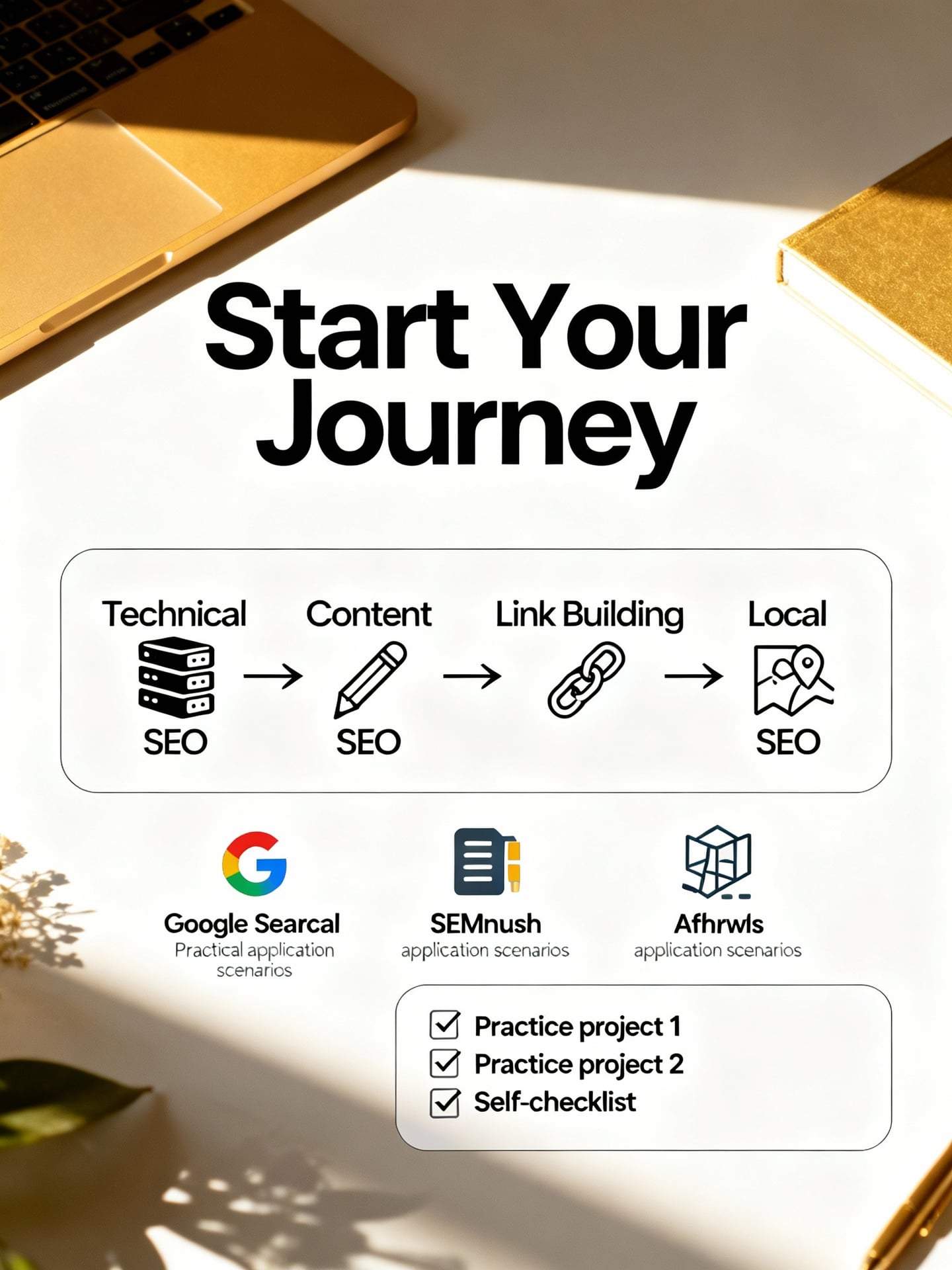
The starting point of SEO training lies in establishing a clear knowledge framework. Based on common teaching models in the industry, there are primarily two perspectives: the first starts with "Technical SEO," emphasizing that website health is the cornerstone of rankings; the second begins with "Content SEO," believing that high-quality content is the core of attracting traffic. My analysis is that for SEO beginners in Taiwan, a modular learning path is recommended: first understand Technical SEO (such as site speed, structured data) to ensure the website can be correctly read by search engines, then focus on Content SEO (keyword research, content optimization), and extend to link building and local SEO. From a practical standpoint, I recommend first grasping the interrelationships between modules, rather than pursuing depth in a single area, as this can help you see the overall value of SEO more quickly.
Quick Tip
【For the Complete Beginner】If you have no background in marketing or technology, it's recommended to start with 'Content Understanding' and 'Data Logic'. Don't rush into studying complex programming. Try spending a month managing a blog with a clear theme and learn to observe basic data using Google Search Console. This will be the most intuitive starting point for understanding the value of SEO.
Key Tools and Technical Implementation Primer
Effective SEO training must combine hands-on tool practice. Mainstream tools like Google Search Console (free), SEMrush, and Ahrefs (paid) each have their focus: Search Console provides official data and is the foundation for understanding search performance; SEMrush excels at keyword research and competitive analysis; Ahrefs is renowned for its link database. Based on my experience, beginners should first master Search Console, as it teaches you to interpret core metrics like indexing and click-through rates. Next, you can choose a paid tool for in-depth training, such as using SEMrush for keyword mapping exercises or using Ahrefs to analyze competitors' link strategies. I suggest integrating tool learning into specific scenarios, for example, "performing keyword optimization for a product page," rather than learning features in isolation.
Learning Methods from Theory to Practice
To ensure the learning effectiveness of SEO training, it's essential to design practice projects that move from theory to implementation. One viewpoint advocates simulating enterprise projects, such as planning a complete SEO strategy for a virtual brand; another suggests starting with a personal blog for continuous optimization experiments. I believe the latter is more feasible for content marketers or website managers. You can create a self-assessment checklist including: publishing one article per week optimized for long-tail keywords, analyzing Search Console query reports monthly, and performing a website speed test quarterly. Based on practical feedback, this method solidly builds core skills and allows you to concretely observe changes in rankings and traffic.
In summary, systematic SEO training requires a structured knowledge path, scenario-based practice with tools, and trackable implementation projects. Through progressive learning, you will be able to firmly establish the foundational capabilities needed for an SEO career.
In-Depth Career-Oriented Analysis: Taiwan's SEO Job Market Demand and Personal Positioning
Deconstructing SEO Job Types and Skill Requirements in Taiwanese Companies
According to data from Taiwanese job banks, SEO positions are primarily categorized into four main types, each with significantly different requirements for post-training skills. Agencies typically demand rapid execution and multi-project management capabilities, emphasizing the practical application of SEO training techniques like keyword research, technical SEO, and report generation. In-house brand teams place greater importance on content strategy and brand visibility enhancement, requiring the integration of content optimization and link-building skills from SEO training instruction with overall marketing strategies.
In contrast, e-commerce platforms have SEO needs highly focused on conversion rates and product page optimization, while startups may expect SEO professionals to possess both data analysis and automation tool application skills. From a practical standpoint, agencies serve as a fast track for newcomers to accumulate broad experience, whereas in-house roles are better suited for job seekers looking to deepen their knowledge in a specific industry.
Matching Strategy for Personal Background and Career Goals
Your existing background will determine the most effective entry point for SEO training. Based on interviews with senior industry managers, individuals with a marketing background should strengthen their training in technical SEO and data analysis modules to fill skill gaps; those with an engineering background need to prioritize enhancing their SEO training instruction in content strategy and keyword planning to translate technical prowess into business impact.
My recommendation is: if your goal is to become a well-rounded consultant, you should choose a comprehensive SEO training course covering strategy, technology, and content; if you aim for quick employment, you can opt for a focused training program targeting the specific skill sets required by your desired industry (e.g., e-commerce). The key for beginners to advanced learners lies in identifying the intersection between "existing strengths" and "market demand" and systematically strengthening skills through training.
Salary Levels and Career Development Roadmap
The career development path for SEO talent in Taiwan typically follows the trajectory of "Specialist → Senior Specialist → Manager → Consultant/Director." According to a 2023 industry survey, Specialists earn a monthly salary of approximately NT$35,000-45,000, with key performance indicators (KPIs) often focused on keyword ranking improvements and traffic growth; Senior Specialists (NT$45,000-60,000) need to start taking responsibility for strategy planning and performance analysis.
However, promotion criteria vary across companies. Some organizations value certifications and training hours, while others base decisions solely on project outcomes. From my experience, to advance to the Manager level (NT$60,000-80,000+), in addition to outstanding performance, one typically needs to demonstrate team management and client (or internal department) communication skills. These are often underemphasized yet crucial soft skills in SEO training.
Important Note
【Risk Reminder】Over-reliance on AI-generated content without human calibration and value addition is now considered a low-quality signal by search engines. Learning AI tools is for efficiency gains and creative assistance, not to completely replace your strategic thinking and professional judgment. When job hunting, demonstrating your 'ability to master AI tools' is far more valuable than merely 'using AI tools'.
Summary and Actionable Recommendations
Based on the above analysis, your personal positioning should begin with a clear understanding of market demand, building capabilities through targeted SEO training. I recommend that beginners can start by targeting "SEO Specialist" positions, choosing a company that offers diverse hands-on opportunities. After joining, continuously enhance strategic thinking and data interpretation skills through advanced training to pave the way for long-term career development.
Section Summary: This section deconstructs the specific demands for SEO talent across various types of Taiwanese enterprises, guides you in planning your skill development path based on your personal background, and provides clear references for career progression levels and salaries to help you achieve precise career positioning.
Crafting a Personalized Learning Roadmap: A Practical Plan from Beginner to Employment

Assessing Your Starting Point: Taking Stock of Your Current Skills and Resources
Before starting your SEO training, an objective assessment is key. There are two common industry perspectives: one emphasizes technical foundations (like HTML, understanding website architecture), while the other prioritizes content and analytical skills (like keyword research, GA4 interpretation). My analysis is that both are indispensable, but beginners should first establish an "actionable" knowledge framework. I recommend you use the following simple assessment table to rate yourself on a scale of 1-5:
- Technical Understanding (website crawling principles, tag usage)
- Content Strategy (keyword planning, headline writing)
- Analytical Tools (GA4, Search Console operation)
- Weekly Time Available for Learning (hours) This will help you focus on your weaknesses. For example, if your score for analytical tools is low, you should prioritize scheduling relevant SEO training modules.
Setting Milestones: Phased Learning Goals and Portfolio Building
When planning your learning path, there are two common views on timelines: the intensive 3-6 month crash course approach and the steady 6-12 month deep-dive approach. The crash course advocates rapidly accumulating work through high-intensity practical application; the deep-dive approach suggests allowing time to digest new trends like AI tools (e.g., ChatGPT for SEO). From a practical standpoint, I recommend a compromise: complete foundational training and one comprehensive website audit report project in the first 3 months; advance to executing small projects (like planning a keyword strategy for a local business) in the subsequent 3-6 months. At each stage, be sure to produce a "demonstrable" portfolio, such as before-and-after keyword ranking comparisons or traffic growth reports. This is the concrete application of SEO training techniques.
Job Preparation: Resume Optimization, Portfolio Presentation, and Interview Strategy
To transform your learning outcomes into job-seeking advantages, you need to present them strategically. For your resume, instead of listing all SEO training courses, highlight 1-2 core project results, for example: "Increased Brand A's organic traffic by 30% through local keyword optimization." For your portfolio, it's recommended to include diverse case studies, such as technical aspects (website speed optimization report) and content aspects (blog post ranking tracking). In interview preparation, industry managers typically value two things: first, problem-solving ability (prepare a case study on how you diagnosed and fixed an SEO issue), and second, awareness of trends (like how AI can assist content generation). I strongly recommend mock practice, preparing data-driven responses for common questions like "How do you measure SEO effectiveness?"
Local Advantage
【Taiwan Market Insight】 When planning your SEO training and job search strategy, pay special attention to the characteristics of the Taiwan market. Compared to the international market's pursuit of broad brand awareness, Taiwanese SME owners often place greater emphasis on SEO's "immediate results" and "local visibility." Therefore, in your portfolio or interviews, if you can demonstrate a deep understanding and practical experience with the "local search ecosystem"—for example, how to integrate community signals from LINE Official Accounts to boost local rankings, or strategic recommendations for word-of-mouth exposure and link building on local forums (like PTT, Mobile01)—this will become a key differentiator that sets you apart from other candidates, significantly increasing your chances of being hired.
In summary, a personalized SEO training path begins with an honest self-assessment and builds practical skills through phased project accumulation. Finally, by translating these results into language and case studies that employers understand, you can confidently enter the SEO job market. In the next section, we will delve into how to choose the most suitable SEO training resources and further education channels for you.
In-Depth Case Studies of Taiwan's Local Industries: Practical Applications and Challenges of SEO Strategies
When conducting SEO training in Taiwan, understanding how different industries apply SEO is crucial. This article will use three specific Taiwanese case studies to illustrate how business models dictate the formulation of SEO strategies, and analyze localization challenges and transferable experiences.
SEO Optimization Priorities for B2B Manufacturing Websites
The SEO goal for B2B manufacturing is typically to generate high-quality inquiries. According to a report by the Taiwanese SEO consultancy "awoo," B2B SEO should focus on technical content and solution pages. However, senior instructor Li Minghua emphasizes in SEO training and teaching that many companies over-optimize product pages while neglecting the long-tail keyword strategy for educational content like "industry knowledge" and "application case studies."
My analysis: These two perspectives are actually complementary. From a practical standpoint, I advise trainees in SEO training to practice planning a "problem → solution → technical specifications" content ladder for B2B clients. They should prioritize optimizing titles and meta descriptions with clear Chinese semantics to align with the search habits of Taiwanese procurement personnel.
Traffic Acquisition Strategies for Local E-commerce Platforms (e.g., PChome, momo)
The core of e-commerce SEO lies in improving transaction conversion rates. Platform official guides often emphasize optimizing product page titles, images, and reviews. However, the independent SEO training institution "SEO Academy" points out that within closed ecosystems like PChome and momo, optimizing for on-site search and external traffic to platform event pages are equally important.
From practical experience, I believe a common mistake beginners make is directly applying global e-commerce SEO techniques, overlooking the unique ranking rules of Taiwanese platforms (like momo's "Quick Search" feature). In terms of SEO training techniques, trainees should be taught to analyze competitors' product title structures and internal link building within the platform, and to utilize AI-powered SEO writing tools to quickly generate product descriptions that comply with platform formats.
Local SEO in Practice for Small and Medium-sized Service Businesses (e.g., Clinics, Restaurants)
For service businesses like clinics and restaurants, the goal of local SEO is to attract customers to the physical location. Optimizing the Google Business Profile (Google My Business) is fundamental, but opinions diverge: some experts believe in focusing all efforts on boosting Google Maps rankings; others advocate for simultaneously managing reputation content on local forums (like PTT, Dcard) and Facebook groups.
Based on my teaching experience, successful local SEO requires a dual approach. I recommend trainees in SEO training to implement the following steps: 1) Fully optimize the Google Business Profile (including services, photos, Q&A); 2) Create blog content targeting local keywords like "Taipei dentist recommendation" or "Taichung Italian restaurant"; 3) Monitor and respond to relevant discussions on local forums. At the same time, it's crucial to avoid common mistakes, such as inconsistent business information or ignoring responses to negative reviews.
Conclusion: Core SEO Training Principles Extracted from Case Studies
Looking across these industry applications, three major transferable experiences can be summarized: First, SEO strategy must be tightly aligned with business objectives (inquiries, transactions, foot traffic). Second, the Taiwanese market requires special attention to Chinese semantic understanding and local platform ecosystems. Third, competitor analysis should not be limited to websites but must encompass the entire marketing ecosystem.
For beginners currently undergoing SEO training, my specific advice is: Choose a Taiwanese industry you are familiar with and simulate creating a complete SEO proposal that includes keyword research, content planning, and local platform optimization. This will be the best way to solidify your learning.
Conclusion

In summary, a successful SEO career plan begins with systematic SEO training and a solid foundation in core skills. By understanding the actual demands of the Taiwan job market, you can position yourself more precisely. Then, by combining a personalized learning path with practical case studies from Taiwan's local industries, you can transform theory into strategic thinking for solving business problems.
Remember, the SEO field is constantly evolving, especially with the integration of AI tools reshaping workflows. Therefore, your career development will be a marathon that combines continuous learning, strategic thinking, and market insight. Investing in "training" is not just about learning techniques; it's about cultivating a growth mindset that adapts to change.
Take action now! We recommend you immediately review the assessment table in this article to take stock of your current skills. Choose a Taiwan industry case study that interests you most for in-depth research and start planning your specific learning milestones for the next three months. Every solid step of learning paves the way for your SEO career.
Frequently Asked Questions
1. What core content is typically included in SEO training? Is it suitable for complete beginners with no experience?
The core content of SEO training typically includes keyword research, website technical optimization (such as site speed, structured data), content strategy development, link building fundamentals, and using analytics tools (like Google Analytics, Search Console) to track performance. These courses are absolutely suitable for beginners. Many training programs start by teaching the basic concepts of online marketing, gradually guiding students to master practical skills, and helping newcomers build a solid SEO knowledge system through hands-on case studies.
2. What are the job opportunities in Taiwan after completing SEO training? What is the approximate salary range?
In Taiwan, common career paths after completing SEO training include: SEO Specialist at digital marketing agencies, website optimization personnel within corporate marketing departments, traffic growth specialists for e-commerce platforms, or freelance SEO consultants. Based on experience and skill level, entry-level salaries range from approximately NT$30,000 to NT$45,000. Those with 1-3 years of experience may earn between NT$45,000 and NT$60,000, while salaries for senior SEO managers or consultants can be even higher. Specific compensation varies depending on company size, industry, and individual performance.
3. How do I choose an SEO training course that's right for me? Which is better, online courses or in-person courses?
When choosing an SEO training course, it's recommended to first evaluate whether the curriculum covers practical skills (like tool operation, case analysis), the instructor's industry experience, and if it provides hands-on exercises or a certificate. Online courses offer high flexibility and are suitable for learners with limited time; in-person courses provide stronger interaction, allowing for immediate questions and networking. You can decide based on your learning style, budget, and schedule. The key is to choose a course with systematic teaching and follow-up support to ensure learning effectiveness.
4. How does the rise of AI tools (like ChatGPT) impact SEO training and future careers?
The proliferation of AI tools has indeed changed SEO workflows, for example, by assisting in generating content outlines, analyzing data trends, or automating reports. In training, there is now greater emphasis on how to leverage AI to improve efficiency while cultivating uniquely human strategic thinking and creative abilities. For future careers, SEO professionals need to learn to harness AI tools, focusing on high-level strategic planning, cross-departmental communication, and interpreting data insights. This necessitates that training content evolves with the times, integrating practical examples of AI applications to maintain competitiveness.