
SEO for Beginners: A Practical Guide and Key Steps to Get Started

SEO Beginner's Guide: A Practical Guide from Scratch
Have you ever spent a lot of time writing blog posts, only to find your content almost invisible on search engines? This is a common challenge faced by many new website owners and content marketers. It's truly frustrating to see your hard work go unnoticed.

In today's digital age, Search Engine Optimization (SEO) is undoubtedly the key to determining website traffic. However, for SEO beginners, a barrage of confusing technical terms awaits—from keyword research and backlinks to site structure, each one seems complex and difficult to grasp. You might wonder, "I have no technical background, can I really learn SEO?"
Rest assured, we completely understand your confusion. SEO is not the exclusive domain of a few experts; it's a set of practical skills that can be learned methodically. This article is written precisely for you.
This article will provide you with a practical SEO guide from the ground up. We will simplify the complex, breaking it down into clear steps with specific Taiwan website optimization case studies, guiding you hand-in-hand to build the most solid foundation of SEO knowledge. Whether you are a blogger just starting out, a website administrator for a small business, or a newcomer to the field of content marketing, you can find a clear starting point here to gradually enhance your website's visibility and organic traffic in search results. Let's embark on this journey together!
SEO Fundamentals and Preparation

For SEO beginners, understanding the fundamentals and preparing properly are the first steps to avoid detours and establish the right mindset. This section will guide you from the most basic definitions to gradually building an actionable plan.
What is SEO? Core Goal Analysis
SEO (Search Engine Optimization) is fundamentally about helping your website achieve better organic rankings in search results. Regarding its impact, there are two common perspectives: one views SEO as purely technical work focused on satisfying search engine algorithms; the other emphasizes that the essence of SEO is to provide users with valuable content and a good experience. Based on my analysis, these two aspects actually complement each other. From a practical standpoint, the core goal for SEO beginners should be: to attract targeted traffic interested in your business by optimizing your website, and ultimately drive business growth (such as brand exposure, leads, or sales). I recommend beginners first adopt a mindset of "optimizing for the user," where technical methods serve to better achieve this goal.
Setting Clear SEO Goals and Keyword Strategy
Setting goals is the starting point for SEO success. For SEO beginners, goals should not be too vague (like "improve rankings") but should be specific and measurable, for example, "Within three months, get 5 tutorial articles for beginners onto the first page of search results for relevant keywords." Next comes keyword research. Common industry practices include two approaches: one starts with your core business product or service names; the other begins with questions your target audience might search for (like "how to start SEO for beginners"). My recommendation is to combine both. First, list your core business terms, then use tools like Google Keyword Planner to expand into more specific, longer, and intent-driven long-tail keywords. These terms have less competition and are more suitable for SEO beginners to accumulate early wins and build confidence.
Important Note
⚠️ Common Beginner Mistake: Don't immediately tackle super-competitive keywords like 'insurance' or 'loans'. That's like trying to swim across the ocean as soon as you learn to swim—it's easy to get discouraged and give up. Starting with long-tail keywords related to your business and with a monthly search volume of 100-1000 will be more rewarding and can more precisely attract your initial target audience.
Website Technical Foundation Checklist
Before starting to create content, ensuring your website's foundational health is crucial. This falls under the scope of website technical SEO. Key checklist items include:
- Website Speed: A slow website drives users away and affects search rankings. You can use Google PageSpeed Insights for a free check.
- Mobile-Friendliness: In Taiwan, most people use mobile phones to access the internet, so ensuring your website works smoothly on mobile is a basic requirement.
- Website Security (HTTPS): This is now a basic ranking factor for search engines and also builds user trust.
For SEO beginners, I strongly recommend immediately setting up and getting familiar with Google Search Console. This free tool is your "website health report" in Google's eyes. It allows you to submit sitemaps, view search performance, and identify indexing issues, serving as the data foundation for all subsequent optimization work. From practical experience, spending an hour on initial setup will save you a significant amount of troubleshooting time in the future.
Summary: For SEO beginners, establishing the right mindset (optimizing for users), setting practical goals and a keyword strategy, and laying a solid technical foundation for your website are the three pillars for taking the first successful step. Next, we will delve into how to create high-quality content that meets SEO requirements.
Detailed Steps and Implementation of Content Optimization
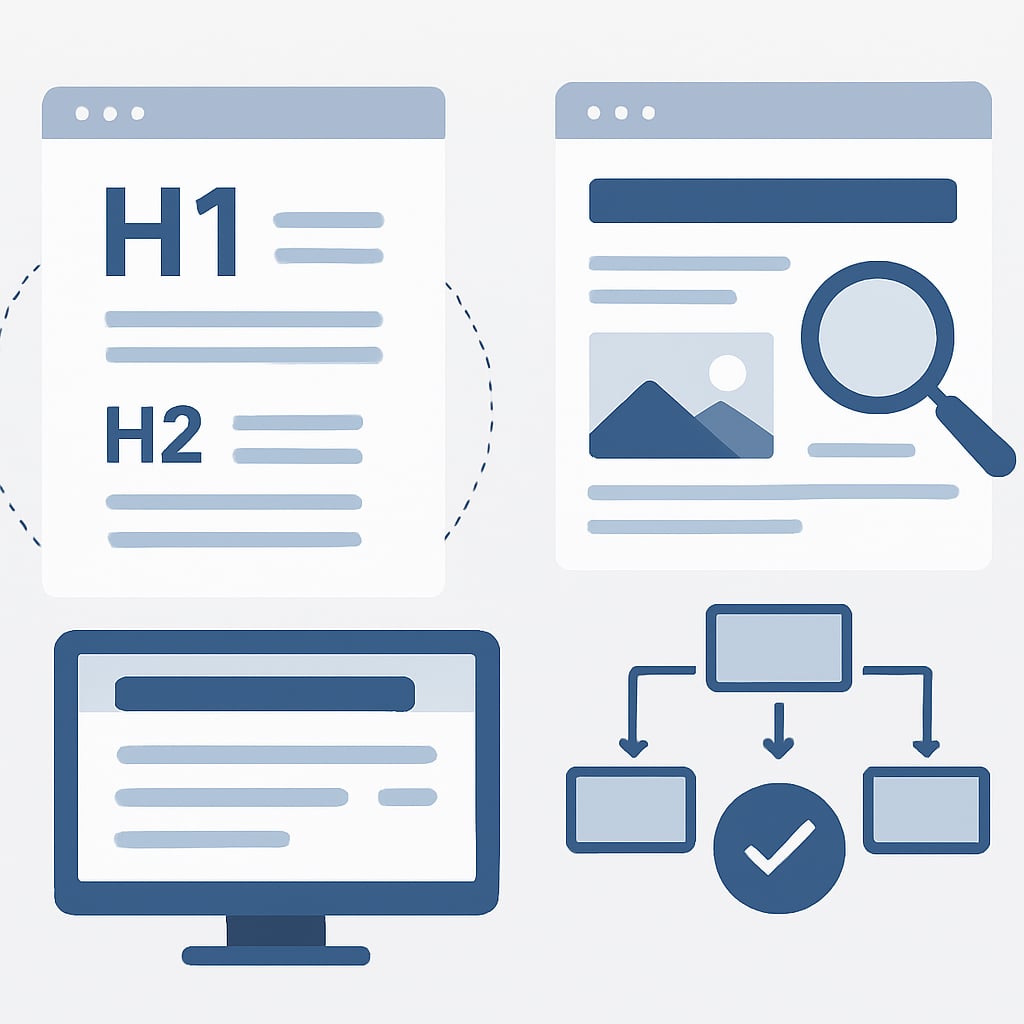
For SEO beginners, content optimization is the crucial process of transforming hard-created content into something search engines can understand and favor. This section will take a hands-on approach, guiding you step-by-step to master the core techniques.
Writing Techniques for Title and Description Tags
The Title and Meta Description are the "face" of your content on the search results page, significantly impacting click-through rates. SEO beginners often face a dilemma: should they stuff keywords or prioritize attracting clicks?
According to Google's official guidelines, titles should accurately describe the page content. However, many content marketing experts, like Brian Dean from Backlinko, emphasize that the "emotional triggers" and "curiosity gap" in titles are equally important. My analysis is: for SEO beginners, you should first ensure the title includes the primary keyword (e.g., "SEO beginner tutorial") and accurately summarizes the content. On this foundation, you can then try to optimize the copy's appeal.
Practical Demonstration: Suppose we are optimizing an article titled "Taipei Cafe Recommendations." A title that merely stuffs keywords might be: "Taipei Cafe Recommendations | Taipei Coffee | Good Coffee." A more SEO-friendly and user-friendly title could be: "【2024 Latest】TOP 10 Taipei Cafe Recommendations! The Hidden List Only Insiders Know." The latter not only includes the keyword "Taipei cafe recommendations" but also provides value (latest, TOP 10, insider knowledge) and specificity (2024).
The same principle applies to writing meta descriptions. It should be an extension of the title, concisely explaining the article's value in about 150 characters, naturally including keywords, and encouraging clicks with a call to action (e.g., "View the list now").
1waySEO Reminder
💡 Tip: Add a "Next Steps" section at the end of your article (for example: If you're interested in "Local SEO," you can refer to this article "The Complete Guide to Local Search Optimization for Small Shops") and include an internal link. This can effectively guide readers to browse further, reduce bounce rates, and Google favors these signals of good user experience.
Content Structure and Keyword Placement in Practice
A clear content structure helps search engines understand the article's flow and greatly enhances the reader's experience. The key is to skillfully use heading tags (H1, H2, H3).
- Viewpoint A (Traditional SEO): Emphasizes keyword density, suggesting precise placement of primary and secondary keywords in the H1, opening paragraph, conclusion, and several H2s.
- Viewpoint B (Modern Content Strategy): Believes the focus should be on the "topic cluster" concept, naturally using various terms and synonyms related to the core theme, rather than mechanically repeating specific keywords.
From a practical standpoint, I recommend SEO beginners adopt a compromise: place the primary keyword (e.g., "SEO beginner tips") in the H1 title; use secondary keywords or related questions (e.g., "how to choose keywords," "how long should content be") as H2 subheadings; in H3s or paragraphs, naturally incorporate more detailed related terms. This ensures a clear structure while keeping the content reading naturally and smoothly, rather than being SEO for SEO's sake.
Methods for Establishing an Internal Linking Strategy
Internal linking is the optimization aspect most accessible and effective for SEO beginners. It's like the road network within a website, guiding the flow of link juice and helping users discover more relevant content.
When planning internal links, there are two common approaches: one is linking from new articles to important older articles (directing link juice), and the other is linking from older, high-authority articles to new, relevant articles (passing on authority). My suggestion is to do both. For example, in your "Taipei Cafe Recommendations" article, when mentioning "cafes suitable for working," you can link to another article on your site titled "Taipei Free WiFi Cafes Special Feature"; conversely, you can also add a link to the former article within the latter.
Specific Evaluation Points: Ensure the anchor text of the link is descriptive (e.g., "See more Taipei afternoon tea recommendations"), not "click here"; the linked page must be highly relevant in topic; avoid excessive linking, keep it natural.
Assessing Content Readability and Value Depth
Finally, all technical optimization must be built on the foundation of "valuable content." For SEO beginners, you can self-evaluate based on a few key points: Does the article truly answer the question promised by the title? Is the information complete, accurate, and up-to-date? Are the paragraphs short and easy to read? Are bullet points, images, or tables used to aid explanation? The core of Google's E-A-T (Expertise, Authoritativeness, Trustworthiness) principle is value. An article valuable to "SEO beginners" must provide clear, actionable steps and insights.
Summary and Actionable Advice: Content optimization is a combination of technique and art. As an SEO beginner, first master the fundamentals like heading tags, natural keyword placement, and internal linking. Remember, optimization is about making good content visible, not putting the cart before the horse. I suggest you take one of your old articles and try re-optimizing the title, structure, and internal links using the steps above to personally experience the changes.
After mastering the core steps of content optimization, we need to ensure these high-quality contents are correctly "discovered" and "indexed" by search engines, which leads us into the realm of "Technical SEO."
Initial Performance Tracking and Strategy Adjustment

For SEO beginners, learning to track performance and adjust strategies is a crucial step from theory to practice. This section will guide you in building foundational data interpretation skills and an optimization cycle.
Introduction to Interpreting Key Data Metrics
The first step in tracking performance is learning to interpret key data. According to Google's official guidelines, SEO beginners should prioritize three core metrics in Google Search Console: Impressions (the number of times your page appears in search results), Clicks (the number of times users actually click to enter), and Average Position (the average ranking position for specific queries).
However, some practice-oriented content marketing experts believe that beginners should not obsess over the "ranking" number itself, but should pay more attention to the "Click-Through Rate" (Clicks ÷ Impressions), as this better reflects whether the title and description are attractive to the target audience.
My Analysis: For SEO beginners, I recommend starting by understanding the relationship between these three metrics. For example, high impressions but a low click-through rate might mean your title or description needs optimization; while a high click-through rate but poor ranking indicates the content meets user needs but requires strengthening ranking factors like technical aspects or backlinks.
Identifying Optimization Opportunities from Data
After understanding the data, the next step is to identify optimization opportunities from it. Suppose your article "SEO Beginner's Guide" gets a lot of impressions for the keyword "SEO basics" but has a very low click-through rate. One viewpoint is that this is simply due to an unattractive title; but another perspective points out that it might be because competitors' titles on the Search Engine Results Page (SERP) more accurately satisfy the user's search intent.
From a practical standpoint, I recommend SEO beginners conduct the following analysis: 1) Compare your title and description with those of the top three ranking competitors. 2) Review whether your content fully addresses the search intent. For example, if users searching for "SEO beginner tips" likely want a "step-by-step list," but your article is a lengthy theory piece, it could lead to a high bounce rate. After identifying the issue, you can update old content or expand keyword clusters accordingly to make the content more comprehensive.
Establishing a Routine Process for Continuous Optimization
SEO is not a one-time task; establishing a routine process for continuous optimization is crucial. Regarding review frequency, there are different views in the industry: some website operators advocate for a weekly quick review of ranking data and keyword changes; others suggest beginners conduct an in-depth analysis monthly to avoid overreacting to short-term fluctuations.
Based on experience, my advice for SEO beginners is: Initially, you can plan a fixed review every two weeks. Tasks include: reviewing key reports in Search Console and Google Analytics, updating one or two pieces of old content with potential, and researching and expanding one related long-tail keyword. Most importantly, emphasize patience and consistent execution. Search rankings take time to accumulate; avoid frustration due to normal fluctuations in the early stages. Making performance tracking and fine-tuning a habit is the key to long-term success in the SEO optimization process.
Summary
In summary, data analysis is the eyes for SEO beginners to adjust their strategies. Starting with interpreting basic metrics, learning to diagnose problems from data, and establishing a fixed review and fine-tuning rhythm will allow you to gradually improve your website's visibility.
Conclusion
For SEO beginners, the most important mindset is to understand that SEO is a marathon of accumulating trust and value. This article starts by establishing the correct fundamental concepts, guides you step-by-step through the practical details of content optimization, and teaches you how to track data and adjust your strategy. The core of this entire process is to lay an irreplaceable, solid foundation for your website, allowing it to grow steadily within search engines.
Remember, successful SEO does not come from complex shortcuts, but from a deep understanding of user needs and consistently providing valuable content. Now is the perfect time to turn knowledge into action.
Your Next Step: Pick a core article from your website right now and immediately apply this guide's instructions. Start with keyword research and execute a complete SEO optimization from scratch! Don't forget to record the data before and after optimization. This is not only the beginning of validating your learning outcomes but also the first memorable milestone on your unique SEO journey. Take action—you are already on the right path!
Frequently Asked Questions
1. Where should SEO beginners start learning?
It's recommended to start by understanding the basic workings of search engines, such as how Google crawls, indexes, and ranks web pages. Then, learn keyword research to identify the terms your target audience searches for. Next, master basic website technical optimization, like title tags, descriptions, and site speed. Finally, focus on creating valuable content and learn how to track results. It's advisable to set small goals first, such as improving the ranking of a single page, to gain experience through practice.
2. What is the most important foundational SEO concept for beginners?
The most important foundational concept is "providing value to the user." SEO is not just about technical adjustments; it's about understanding user intent and meeting their needs. This includes: 1) Keyword Research: Finding the terms users actually search for. 2) Content Quality: Creating useful, readable, and comprehensive content. 3) User Experience: Ensuring the website is fast, mobile-friendly, and easy to navigate. 4) Basic Technicals: Such as correct title tags, descriptions, and structured data. Mastering these core areas will build a solid SEO foundation.
3. What are some content optimization steps beginners can implement immediately?
Content optimization steps beginners can implement immediately include: 1) Naturally incorporating the primary keyword in the title and opening paragraph. 2) Ensuring the content fully answers the user's question and using subheadings to improve readability. 3) Adding descriptive alt text to images. 4) Appropriately including internal links within the content to guide users to related pages. 5) Ensuring content length is sufficient (typically recommended to be over 1000 words) and includes multimedia elements. These steps don't require advanced technical skills but can significantly improve content's SEO effectiveness.
4. How can SEO beginners track their optimization results?
Beginners can start tracking results with free tools: 1) Use Google Search Console to view your site's search impressions, click-through rate, and ranking keywords. 2) Use Google Analytics to analyze website traffic, user behavior, and sources. 3) Regularly record ranking changes for target keywords (free rank tracking tools can be used). It's recommended to review the data weekly, focusing on trends in "organic search traffic" and "keyword rankings." If certain pages are underperforming, you can adjust content or link strategies to optimize gradually.
5. What special considerations are needed for SEO optimization of websites in Taiwan?
SEO optimization for websites in Taiwan requires attention to: 1) Language and Terminology: Use Traditional Chinese and terms commonly used in Taiwan (e.g., "行動裝置" instead of "移動設備"), and consider Taiwanese Hokkien or localized phrases. 2) Local Search Intent: Optimize "local business" information, ensure your Google My Business profile is complete, and encourage customers to leave reviews. 3) Website Speed: Choose a web host located in Taiwan or Asia to reduce loading latency. 4) Content Relevance: Create content focused on topics relevant to Taiwanese users, citing local case studies or data. These adjustments make the website better aligned with the search habits of users in Taiwan.
相關文章

SEO Case Study: Master Search Engine Optimization Techniques to Boost Rankings

The Complete SEO Guide: Practical Strategies and Techniques from Beginner to Expert

SEO Optimization Practical Guide: 3 Steps to Convert Search Traffic into Business Revenue
