
SEO Fundamentals Course: Complete Practical Guide & Core Techniques for Beginners

Mastering Core SEO Skills: An Essential Guide for Beginners
Have you ever invested significant time and effort into writing blog posts, only to be frustrated when you can't find your content in search results? Does your high-quality work seem to sink without a trace, unable to reach your target audience? The issue likely isn't the quality of your content, but rather that you've overlooked the key that makes content visible: "SEO."

In today's digital marketing era, Search Engine Optimization (SEO) is undoubtedly the cornerstone of success for any website or online business. For beginners, content marketers, or website operators just starting out, the entry point of a "SEO Fundamentals Course" can often seem daunting—filled with technical jargon and ever-changing algorithms. However, don't worry, SEO is not an unattainable specialty. By mastering the correct core concepts and practical skills, you can systematically enhance your website's visibility, turning search engines into your most reliable traffic partners.
This article is your practical guide. We will simplify the complex, outlining a list of essential core skills for SEO beginners. From keyword research and content optimization to technical foundations, we will guide you through clear, step-by-step explanations and immediately applicable methods to help you build an effective SEO strategy from scratch. You will learn how to avoid common beginner pitfalls and steadily make your website stand out in the fiercely competitive search results pages. Now, let's embark on this SEO learning journey together!
SEO Fundamentals and Keyword Research

What is SEO and Its Importance
SEO (Search Engine Optimization) is the process of helping a website achieve higher rankings in search results. According to Google's official guidelines, the core of SEO is providing high-quality, relevant content to users. However, many SEO experts like Neil Patel emphasize that SEO is not just about technical adjustments, but a strategy for understanding user search intent. From my practical experience, for SEO beginners, mastering the fundamentals can directly impact website traffic: moving up 1-5 positions in rankings can potentially increase traffic by 30-50%, which is crucial for business growth. I recommend beginners first focus on content quality, then gradually learn the technical details.
How to Conduct Effective Keyword Research
Keyword research is a core skill in SEO fundamentals courses. The traditional view suggests using tools like Google Keyword Planner, entering main keywords like "SEO fundamentals course," and reviewing search volume and competition. However, the modern perspective (such as Ahrefs' tutorials) emphasizes analyzing "search intent"—what are users really looking for? My analysis is that both need to be combined. The specific steps are: 1) Enter seed keywords into a tool; 2) Filter for keywords with clear search intent (e.g., "SEO fundamentals course tutorial"); 3) Prioritize keywords with low-to-medium competition and commercial value. For content marketers, I recommend spending 1-2 hours per week on research and building a keyword list.
Application Strategies for Long-Tail Keywords
Long-tail keywords (e.g., "SEO fundamentals course tips 2024") are typically longer, have lower search volume, but higher conversion rates. Some SEO consultants believe in using a large number of long-tail terms to cover various searches; others advocate focusing on a few high-value terms. Based on my experience, for website operators, balance is key: when identifying long-tail keywords, you can look in the "related keywords" section of tools or analyze user questions (e.g., "How to start learning SEO fundamentals?"). Integration strategies include: naturally incorporating them into article titles and subheadings, and ensuring the content fully answers the query. This can target a precise audience and improve ranking stability.
Important Note
【Beginner Pitfall Alert】Don't blindly chase the keywords with the highest search volume! For example, for a small stationery store, "fountain pen" is too competitive and nearly impossible to rank for. You should start with more specific, intent-driven terms like "beginner fountain pen recommendations" or "niche design fountain pens." In an SEO fundamentals course, this teaches us: prioritize achievable target keywords to gradually build ranking strength.
Summary and Next Section Preview
In summary, an SEO fundamentals course starts with understanding search intent and finding opportunities through keyword research. I recommend beginners practice with long-tail keywords first, then gradually expand to core terms. The next section will delve into "On-Page SEO Optimization Techniques," teaching you how to effectively integrate keywords into content and tags.
Website Content Optimization and Technical SEO
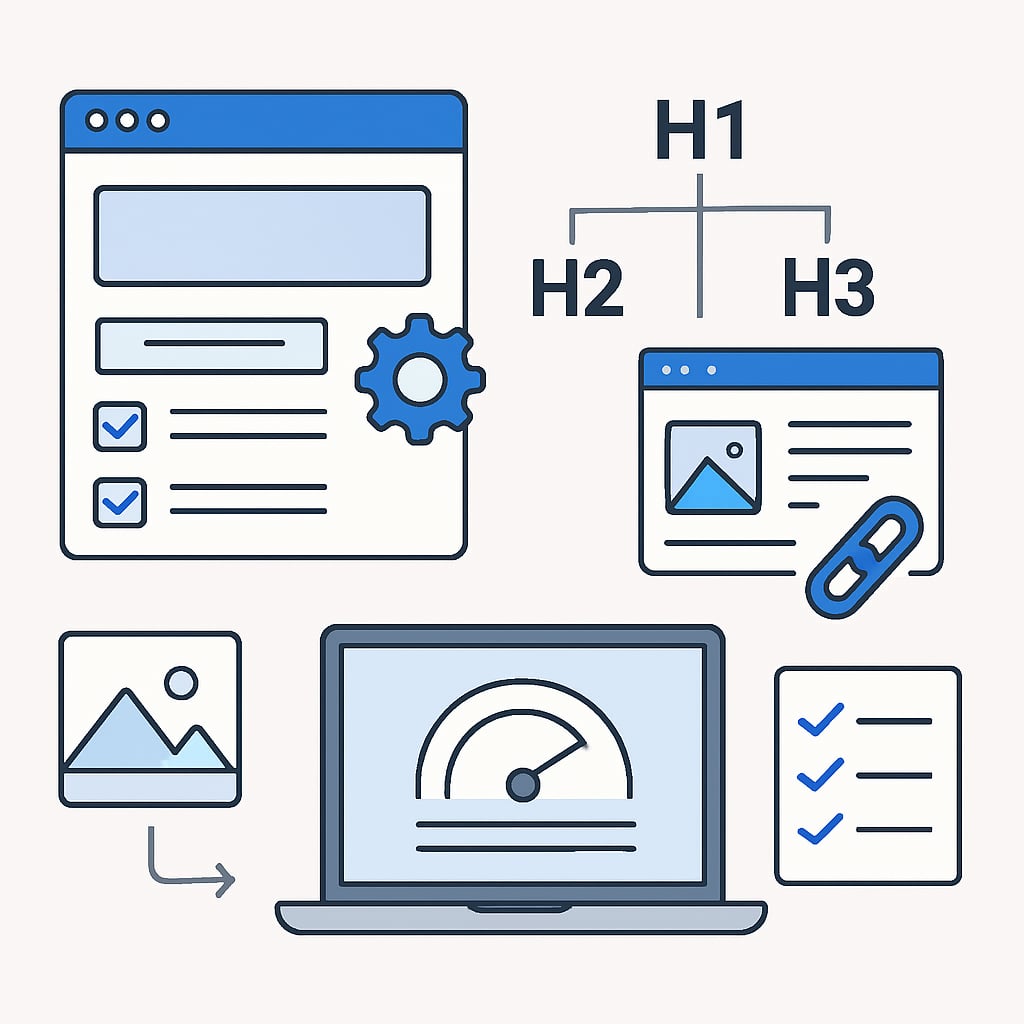
In an SEO fundamentals course, website content optimization and technical SEO are the two core pillars. Content optimization ensures your message is clear and understandable for both users and search engines, while technical SEO provides a solid foundation for this high-quality content to be smoothly crawled and indexed. This section will delve into how to combine these two aspects from a beginner's perspective to build a search-engine-friendly website.
Title and Description Writing Techniques
The Title Tag and Meta Description are key to attracting clicks on the search results page. According to Google's official guidelines, titles should accurately describe the page content and include the primary keyword. However, many SEO practitioners (like Neil Patel) emphasize that titles should also possess the "marketing power" to attract clicks, striking a balance between accuracy and appeal. My analysis is: for content with commercial intent like an "SEO fundamentals course," the title should prioritize including the primary keyword (e.g., "SEO Fundamentals Course Tutorial") and add a call to action or benefit description within the character limit (recommended 50-60 characters).
Practical Examples and Checklist:
- Good Title Example:
SEO Fundamentals Course: A 30-Day Hands-On Guide from Scratch | Boost Your Website Ranking - Good Description Example:
This SEO fundamentals course tutorial is designed for beginners. We'll guide you through keyword research, content optimization, and technical SEO techniques to step-by-step improve your website visibility. Start learning now! - Checklist: 1) Does it include the primary keyword? 2) Is the length appropriate? 3) Is it attractive to users? 4) Is it highly relevant to the page content?
1waySEO Reminder
After writing your content, imagine yourself as a complete novice on the topic and re-read your H2 headings. Do they function like a table of contents, allowing you to quickly grasp the article's key points? If not, it's time to adjust. Clear heading structure not only helps readers but also helps search engines better understand your content hierarchy.
Content Structure and Internal Linking
A clear content structure (using H1, H2, H3 headings) improves user experience and SEO. The traditional view holds that only one H1 should be used, containing the most important keyword. However, in recent years, some content strategists (like HubSpot) believe that using multiple H1s to divide major sections in long, structurally complex articles is also acceptable, as long as the logic is clear. From a practical standpoint, I recommend SEO beginners still follow the classic principle of "one H1 per page" and use H2 and H3 to organize subtopics like "SEO fundamentals course techniques." This is the safest and easiest to manage.
Steps to Build Internal Links:
- Audit Content Assets: List all relevant articles or pages on your website about the "SEO fundamentals course."
- Plan Link Anchor Text: Use descriptive text containing relevant keywords (e.g., "Learn more about technical SEO techniques"), avoiding generic phrases like "click here."
- Insert Links in Relevant Paragraphs: Naturally link to older, related foundational tutorials in new content; add links pointing to new advanced chapters in old content, forming a learning path.
Website Speed and Mobile-Friendliness
Website speed is an important ranking factor and directly impacts user experience. Regarding optimization priorities, Google's PageSpeed Insights tool provides comprehensive technical recommendations, while practical developers often suggest starting with items that offer the "biggest impact for the least effort," such as image optimization. My advice for beginners is to prioritize the following items:
Specific Action Items to Improve Website Speed:
- Image Compression: Use tools like TinyPNG to compress all images before uploading, significantly reducing file size.
- Enable Browser Caching: Configure this via your hosting control panel or a plugin (like WP Rocket for WordPress) so returning visitors can load pages faster.
- Choose a Performance-Oriented Host: This is foundational; a good host is the cornerstone of a fast website.
Furthermore, in the era of "mobile-first" indexing, ensuring your website is smooth to browse on mobile, with readable text and easy-to-tap buttons, is an indispensable part of any SEO fundamentals course. Many themes are responsive by default, but always test on an actual mobile device before going live.
In summary, content optimization and technical SEO complement each other. High-quality "SEO fundamentals course" content needs a clear structure and appropriate internal links to guide both readers and search engines; simultaneously, fast loading speeds and a mobile-friendly design are the technical guarantees that ensure this content can be successfully reached.
Building High-Quality Backlinks and Local SEO

In SEO foundational courses, building high-quality backlinks and optimizing local SEO are two core practical techniques for improving website rankings. For SEO beginners, these tasks may seem complex, but with the right strategies, you can achieve a significant boost in local search traffic for your website within 30 days. This section will provide a step-by-step guide on how to safely build backlinks and optimize local business information to help your website stand out.
Backlink Acquisition Strategies
According to most SEO foundational course teachings, there are two main schools of thought on acquiring backlinks. The first emphasizes "content is king," believing that writing high-quality guest posts to naturally attract citations from other websites is the safest and most sustainable method. For example, you could write an in-depth analysis on "SEO foundational course techniques" and submit it to relevant marketing blogs.
However, another group of practical experts recommends a proactive approach, such as creating "resource page links." You could compile a "Recommended List of SEO Foundational Courses in Taiwan" and contact the websites on the list, inviting them to add your page to their resource section.
My analysis is: For SEO beginners, I recommend starting with guest posts, as this simultaneously hones content creation skills. For website owners with some existing foundation, a dual-track approach is advisable, actively pursuing resource page opportunities. The key is to ensure that link sources are relevant to the "SEO foundational course" topic to avoid irrelevant links harming your ranking.
Optimizing Local Business Information
The starting point for local SEO is completing your Google My Business profile. According to common teachings in SEO foundational courses, filling out the profile requires including business hours, services offered, high-quality photos, etc. However, in practice, many businesses overlook detailed optimization.
I recommend using the following checklist:
- Ensure your business Name, Address, and Phone number (NAP) information is completely consistent.
- Provide detailed descriptions of your core services in the "Products/Services" section, such as "SEO foundational course instruction" or "website health check services."
- Regularly update posts to share course promotions or SEO technique articles.
- Choose the most accurate business category (e.g., "SEO Services" or "Marketing Courses").
Local Advantage
If you operate a physical storefront or local service, be sure to list your featured items in detail in the 'Products/Services' section of your 'Google My Business' profile (e.g., in-person SEO foundational course classes, corporate training packages). This directly attracts local customers with specific needs, such as small business owners searching for "SEO courses in Taipei." Since local search competition is typically less intense than national general searches, precise information allows you to stand out faster, converting online traffic into actual consultations.
Methods to Improve Local Search Ranking
To improve local search ranking, managing your online reputation is crucial. Acquiring positive local reviews is one of the most effective methods. You can proactively invite students who have completed your SEO foundational course to share their experiences, focusing on the course's practicality.
Simultaneously, it's essential to regularly monitor and respond to reviews. Based on experience, timely responses (to both positive and negative feedback) demonstrate to Google that you actively manage your business information, which helps enhance credibility in local search. Furthermore, ensure your website content (like blog posts) also includes local keywords, such as "Recommended SEO foundational courses in Taipei," to strengthen local relevance.
In summary, within the practical guide of an SEO foundational course, backlinks and local SEO need to be pursued simultaneously. Through safe link building and meticulous local information optimization, you will steadily increase your website's visibility in local searches.
In the next section, we will explore how to use data analysis to continuously track the effectiveness of these SEO strategies and make adjustments.
Conclusion
Through the guidance of this SEO Fundamentals Course, we started from the core of "keyword research," learning how to set the right direction for website content. Then, we delved into "content and technical optimization" to ensure the website is not only user-friendly but also effectively crawled and understood by search engines. Finally, we explored how to solidify a website's authority and local visibility through strategies like "building high-quality backlinks" and "local SEO."
Mastering these SEO fundamentals indeed requires time and patience, but the path is clear: systematic learning, consistent execution, and flexible adjustments based on data. As long as you take the first step and persevere, improving your website's ranking is by no means an unattainable goal.
Now is the perfect time to take action! We recommend you start immediately by reviewing your website's core keywords and title tags and creating a three-month practical plan for yourself. If you want a more professional diagnosis, consider using SEO audit tools or seeking expert consultation to make your SEO journey start more precisely and efficiently.
Frequently Asked Questions
1. What is the SEO Fundamentals Course? Is it suitable for a beginner like me?
The SEO Fundamentals Course is a systematic curriculum specifically designed for learners with no prior experience. It starts with core concepts like how search engines work and keyword research, gradually guiding you to master practical website optimization techniques. Through real-world case studies and step-by-step instruction, the course enables you to build a complete SEO knowledge framework within 30 days—even without a technical background—and apply it to your own website or content projects. It is highly suitable for SEO beginners, content marketers, or anyone just starting to manage a website.
2. What practical core skills will this SEO Fundamentals Course teach?
The course covers three core modules: First, in "SEO Fundamentals & Keyword Research," you will learn how to identify keywords with search volume and analyze competitors. Next, in the "Website Content Optimization & Technical SEO" section, you will implement techniques like title tags, meta descriptions, and website speed optimization. Finally, "Building High-Quality Backlinks & Local SEO" guides you on how to acquire quality backlinks through legitimate strategies and enhance local search visibility for local businesses. Each skill is paired with hands-on exercises to ensure practical application.
3. After completing this fundamentals course, can I really improve my website ranking within 30 days?
Yes, the course is designed with a 30-day action plan, focusing on a specific task each day. For example: completing a keyword list on day one, optimizing website content structure in the second week, and starting to build foundational backlinks in the third week. By following the steps, even a new website can see initial results in a short period, such as improved keyword rankings and increased organic traffic. However, please note that SEO is an ongoing process. The 30 days are a critical period for laying a solid foundation and initiating a positive cycle; long-term persistence will yield more significant results.
4. I have no technical background. Can I learn the "Technical SEO" part of the course?
Absolutely no problem! The Technical SEO content in the course is specifically designed for non-technical individuals. We use intuitive tools (like Google Search Console, SEO plugins) and visual step-by-step guides to walk you through tasks such as website speed testing, mobile-friendliness checks, and structured data markup. You don't need to learn programming languages; instead, you'll master "what needs to be done" and "how to use tools to execute it." Many students have reported that the course helped them easily solve technical problems they previously found difficult, significantly lowering the learning barrier.
5. How does this course specifically help content marketers or website managers?
The course will directly enhance your work efficiency: Content marketers will learn how to create content that both search engines and users love, and how to strategically place keywords to increase exposure. Website managers will be able to systematically optimize their website's health, upgrading it comprehensively from technical to content aspects to attract more targeted traffic. We will share how to integrate SEO thinking into daily content planning and adjust strategies through data analysis, ensuring that every piece of content or website update contributes to better rankings, ultimately converting into business results or brand influence.
相關文章

SEO Case Study: Master Search Engine Optimization Techniques to Boost Rankings

The Complete SEO Guide: Practical Strategies and Techniques from Beginner to Expert

SEO for Beginners: A Practical Guide and Key Steps to Get Started
