
SEO Penalty Consequences & Recovery Strategies: Complete Guide from Penalty to Restoration

Consequences of SEO Cheating and Practical Response Strategies
Have you ever considered using SEO cheating tactics to quickly boost your website's ranking? Be careful! This could turn you from a search engine darling into an outcast, causing the traffic you've worked hard to build to vanish overnight.
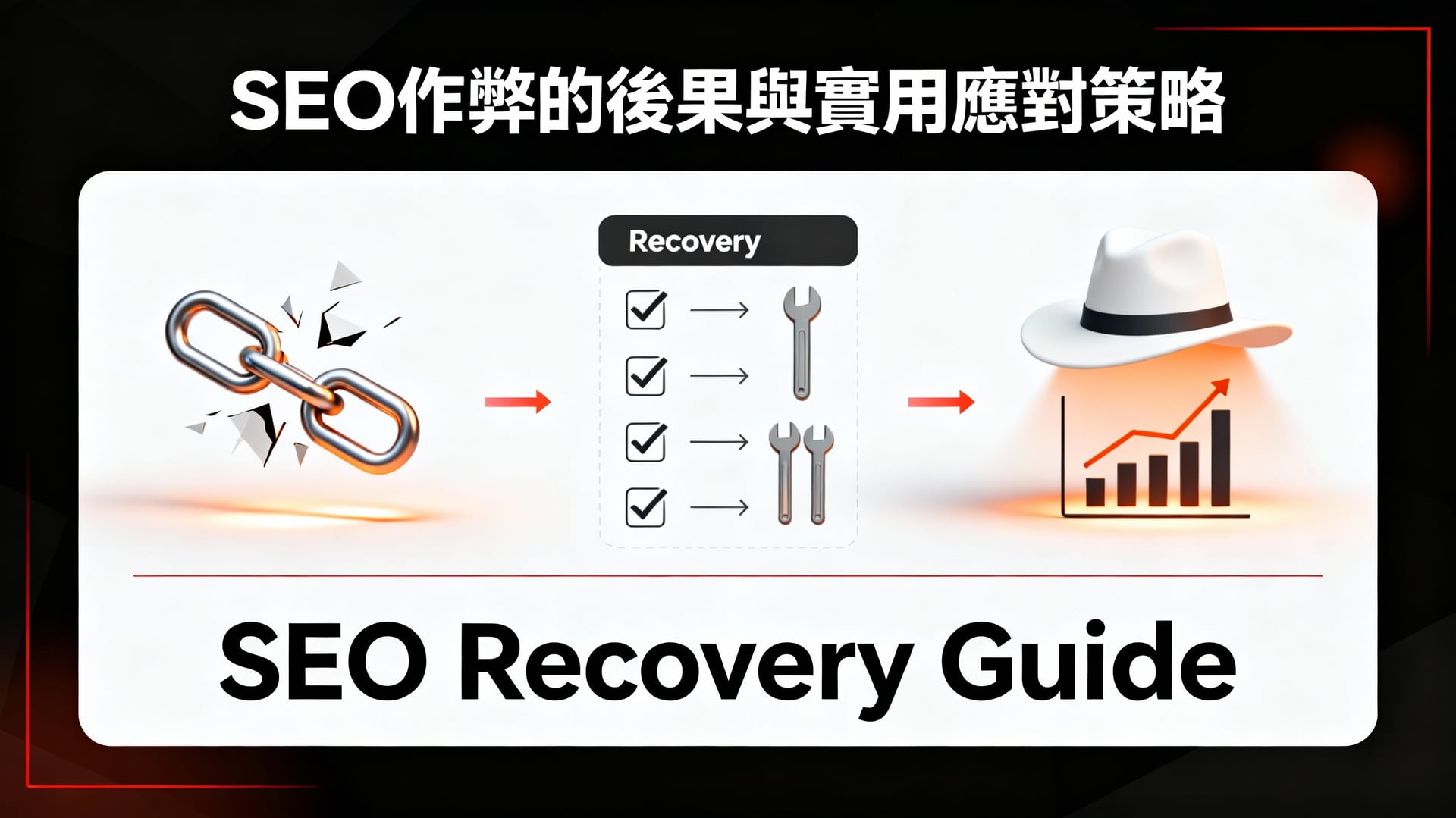
In the fiercely competitive digital marketing landscape, whether you're an SEO beginner, a content marketer, or a seasoned website owner, the pursuit of short-term results can lead you astray into the pitfalls of SEO cheating. Whether it's buying low-quality links, keyword stuffing, or cloaking content, these seemingly quick shortcuts carry far greater risks and consequences than imagined in today's world of increasingly sophisticated search engine algorithms like Google's. Once detected, you could face severe penalties ranging from a sharp drop in rankings to complete removal from search results.
Don't worry, even if you've crossed the line, it's not the end of the world. This article will systematically analyze the actual consequences and impacts of SEO cheating. More importantly, we will provide a clear, actionable set of practical recovery strategies. From diagnosing the problem and cleaning up improper practices to rebuilding credibility and steadily improving rankings, this comprehensive guide aims to help you learn from mistakes and establish a long-term, healthy search ranking that can withstand the test of time. Let's embark on this journey from penalty to recovery together.
Definition and Common Techniques of SEO Cheating

What is SEO Cheating?
SEO cheating, often referred to as Black Hat SEO, refers to the deliberate violation of official quality guidelines set by search engines (like Google) in an attempt to quickly boost a website's ranking through unnatural or deceptive means. According to Google's Webmaster Guidelines, its core principle is to provide content valuable to users. However, some viewpoints suggest that certain "Gray Hat" techniques (such as precise anchor text optimization) operate at the edge of the rules and may offer short-term benefits. My analysis is this: the ultimate goal of search engines is to serve users. Any strategy that prioritizes deceiving the algorithm over user experience is, in essence, SEO cheating and carries extremely high long-term risks. For SEO beginners, I strongly recommend starting with "White Hat SEO," which focuses on building high-quality content; this is the foundation for sustainable growth.
Overview of Common Cheating Techniques
In practice, SEO cheating techniques are constantly evolving, but several core categories remain key targets for search engines:
- Keyword Stuffing: Excessively and unnaturally repeating target keywords on a page in an attempt to "tell" the algorithm the page's topic.
- Hidden Text and Cloaking: Setting text color to match the background or showing different content to users versus search engine crawlers. This is the most direct form of deception.
- Spam Links: Mass-creating low-quality, irrelevant "spam links" pointing to one's own site, or participating in link farms for reciprocal link exchanges.
Some believe that buying a small number of high-authority links is a "shortcut" to rapid ranking improvement; however, other practical experts point out that this is like building a skyscraper on sand—once detected by the algorithm, the penalty can be devastating. From a user experience principle perspective, these techniques do nothing to address the user's search intent.
Why Are These Techniques Considered Cheating?
These techniques are considered SEO cheating because they fundamentally violate the two cornerstones of search engines: Quality Guidelines and User Experience. For example, keyword stuffing makes content difficult to read, and hidden text is outright deception. Based on my experience, search engine algorithms (like Google's Penguin and SpamBrain) have become highly automated in identifying these patterns. Their goal is to reward websites that provide genuine value, not those skilled at "gaming the system." Therefore, websites employing these techniques may face consequences ranging from a drop in rankings for specific keywords to complete removal from search results.
Important Note
Pay special attention to the boundaries of "Gray Hat SEO." For instance, over-optimizing anchor text (using exact-match keywords for all internal and external links) might have been tolerated in the past. However, based on 2025 algorithm update trends, search engines have intensified scrutiny of such deliberately optimized patterns and are likely to categorize them as part of a spam link strategy, carrying the risk of penalties.
In summary, understanding the definition and techniques of SEO cheating is crucial for clearly avoiding these risks and establishing a healthy mindset for website optimization.
Immediate and Long-Term Consequences of SEO Cheating
SEO cheating not only brings immediate technical penalties but also has profound negative impacts on a website. Understanding these consequences is the crucial first step for every website owner and SEO beginner to avoid stepping into dangerous territory.
Search Engine Penalty Mechanisms
Search engine penalties for SEO cheating are primarily divided into two major categories: Manual Actions and Algorithmic Penalties.
- Manual Actions: Manually executed by the search engine's quality assessment team. According to Google's official documentation, when a website is found using severe cheating tactics such as hidden text, large volumes of spam links, or cloaking, it may trigger this type of penalty. The website will receive a clear "Manual Action" notification, and its rankings will plummet sharply until the issue is fixed and a reconsideration request is submitted.
- Algorithmic Penalties: These are triggered by the search engine's automated systems. Taking Google as an example, its famous "Penguin" update primarily targets spam links and link manipulation cheating; while the "Panda" update strictly combats low-quality, plagiarized, or keyword-stuffed content. This type of penalty is automatic and continuous; website rankings will silently drop after an algorithm update without receiving a specific notification.
My analysis is: While algorithmic penalties are more common and automated, the consequences of manual actions are usually more direct and severe. For SEO beginners, understanding the difference between these two is crucial because the response strategies are also completely different. I recommend that website owners should prioritize focusing on creating high-quality content and natural links to fundamentally avoid triggering any penalty mechanisms.
Quick Tip
Using the "Security & Manual Actions" report in Google Search Console is the best way to quickly check if your website has received a manual action notification. Regularly reviewing this report allows you to detect issues early and take action before they worsen. This is the first step in recovering from an SEO cheating penalty.
Devastating Blow to Website Traffic
Once penalized, the most direct consequence is traffic loss. This may manifest as a ranking drop to several pages back, or even worse, the website being completely removed from the search index, resulting in zero traffic.
There are different perspectives in the industry. Some case studies show that websites hit with manual actions can see traffic plummet by over 90% within days. However, another viewpoint suggests that the impact of algorithmic penalties (like the Panda update) may be more gradual but affects a wider range, and the accumulated long-term traffic loss is equally staggering. From a practical standpoint, any type of penalty is devastating for websites reliant on search traffic. I strongly recommend that content marketers, rather than risking the use of SEO cheating techniques for short-term rankings, should invest in robust, compliant SEO strategies to protect hard-earned website traffic.
Long-Term Damage to Brand Reputation
Beyond quantifiable traffic loss, the brand reputation damage caused by SEO cheating is more profound and difficult to repair.
- Loss of User Trust: When users discover that a website's content is hollow, stuffed with keywords, or misleads them through cheating tactics, trust is instantly shattered. This type of damage is far more lasting than a technical penalty.
- Spread of Negative Word-of-Mouth: In the digital age, negative experiences spread rapidly through social media. A brand marked as using black hat SEO tactics can leave a lasting negative impression in the industry and among consumers.
Based on my experience, the time and resources required to rebuild brand reputation are often many times greater than those needed to fix a technical penalty. Therefore, for any serious website owner, maintaining brand integrity and credibility is absolutely more important than the short-term benefits promised by any SEO cheating tutorial.
In summary, the cost of SEO cheating is extremely high, ranging from immediate disappearance from search rankings to long-term collapse of brand trust. In the next section, we will explore practical strategies to help a website recover if it unfortunately faces a penalty.
A Detailed Step-by-Step Guide to Recovering from SEO Cheating
When a website is penalized by search engines due to SEO cheating practices, the recovery process requires a systematic strategy. The following are the three key steps to recover from SEO cheating, combining perspectives from different experts and practical advice to help you effectively execute the recovery steps.
Step One: Comprehensive Diagnosis and Problem Identification
First, you must accurately identify the root cause of the SEO cheating. According to Google's official guidelines, the primary task is to log into Search Console and check for any "manual action" notifications, which directly indicate violations. However, as senior SEO consultant John Mueller has pointed out, many penalties are triggered automatically by algorithms and do not come with explicit notifications. In such cases, you need to analyze abnormal traffic drop patterns to infer the cause.
My Analysis: I believe beginners should prioritize addressing explicit notifications in Search Console, as they provide the most direct direction for correction. For traffic declines without notifications, a more comprehensive website audit is needed to examine all aspects that may involve SEO cheating, such as buying links in bulk or hidden text.
Actionable Advice: Immediately check Search Console and use audit tools (like Screaming Frog) to scan the entire site, identifying all pages and links related to SEO cheating.
Step Two: Execute Specific Cleanup and Correction Actions
After identifying the problems, the next step is thorough cleanup. Mainstream opinions are divided into two schools: one (such as Moz's advice) advocates prioritizing the removal of spam content and fixing technical issues (like hidden elements), as these are direct violations. The other (such as Ahrefs' guide) emphasizes that cleaning up backlinks is more critical, as toxic links are a common SEO cheating tactic that can damage a site's reputation long-term.
From a practical perspective: I find that for beginners, tackling both simultaneously is the safest approach. You can start by removing or correcting all content on the site involved in SEO cheating (e.g., keyword stuffing), then use tools (like the Google Disavow Tool) to clean up backlinks, submitting a disavow file to sever harmful links.
Actionable Advice: Create a cleanup checklist: 1) Delete or rewrite spam content, 2) Submit a disavow links file, 3) Fix all technical SEO cheating issues (like cloaking).
Step Three: Submit a Reconsideration Request and Ongoing Monitoring
After cleanup is complete, you need to submit a reconsideration request to the search engine. According to Google's official requirements, the request must detail what SEO cheating behaviors you discovered and the specific corrective actions you took. However, user experiences from third-party SEO forums (like BlackHatWorld) show that overly brief requests often lead to failure.
My Conclusion: Based on experience, I recommend your reconsideration request should include: 1) An admission of the SEO cheating behavior, 2) A list of all cleanup steps performed (e.g., having cleaned up backlinks), 3) Supporting evidence (like screenshots of modified pages). After submission, establish a long-term monitoring mechanism to regularly check Search Console and traffic reports to prevent the recurrence of SEO cheating issues.
Actionable Advice: Write a sincere, detailed reconsideration request and set up a monthly audit schedule to continuously monitor the site's health.
Summary
Recovering from SEO cheating is a rigorous process requiring diagnosis, cleanup, and ongoing monitoring. By following the steps above, you can systematically correct mistakes and gradually rebuild your website's credibility with search engines.
Practical White Hat SEO Strategies to Replace Cheating

Faced with the risks of SEO cheating, shifting to white hat SEO strategies is not just about avoiding penalties; it's key to building long-term value for your website. This section explores how to achieve, and even surpass, the short-term results that cheating methods might promise, through legitimate means.
Content is King: Creating Truly Valuable Information
Regarding content strategy, there are two main perspectives. According to Google's official guidelines, content should focus on solving user intent, providing in-depth and original information. However, some practical SEO experts believe that in highly competitive markets, originality alone might not be enough; optimizing content structure (like heading hierarchy, keyword density) is also needed to enhance readability and search engine comprehension.
My analysis is that these two are not mutually exclusive. For SEO beginners and content marketers, I recommend starting from the core of "solving user problems," ensuring each article answers a specific search query. Then, use headings (H1, H2, H3), bulleted lists, and internal links to optimize the structure. This can significantly improve the content's SEO performance and user experience. Remember, quality content optimization is the cornerstone of white hat SEO, fundamentally different from the keyword-stuffing practices of SEO cheating.
The Foundation of Technical SEO
Technical SEO is often seen as tedious backend work, but its importance cannot be ignored. On one hand, website speed and mobile-friendliness directly impact user experience and search rankings; on the other hand, correct structured data (Schema Markup) helps search engines understand content more accurately, thereby improving click-through rates.
From a practical standpoint, I find many website owners focus too much on content creation while neglecting the technical side. I recommend regularly using tools (like Google PageSpeed Insights) to test website performance and ensuring the site loads smoothly on all devices. While these foundational elements don't show results as quickly as cheating techniques, they provide long-term protection against ranking drops caused by technical issues.
Natural Methods for Building High-Quality Links
Link building is the area of SEO most prone to abuse for cheating. In contrast, black hat methods might quickly acquire links through buying them or using Private Blog Networks (PBNs), but this carries high risk. Conversely, white hat natural link building emphasizes attracting genuine backlinks through creative content marketing (like creating infographics, in-depth reports), building authentic relationships with industry influencers, or creating resource pages.
Based on experience, I believe the latter, while requiring more time and effort, yields higher-quality, more durable links. For website owners, I recommend starting by "creating content worth linking to," such as writing original research or developing practical tools, then proactively sharing it with relevant communities. This not only aligns with search engine guidelines but also builds brand authority.
Local Advantage
In the Taiwan market, users heavily rely on Google Search, and local search behavior often places greater emphasis on trust and long-term value. Focusing on white hat SEO strategies, such as providing high-quality Traditional Chinese content and optimizing the local technical experience, can help a website consistently capture over 90% of stable organic traffic in the long run. Conversely, if SEO cheating methods are used, once penalized, it's very easy to lose the trust and market share of the local audience. Especially with the growing trend of AI-generated SEO content, authenticity and compliance become even more critical competitive factors.
In summary, white hat strategies to replace SEO cheating encompass three major areas: content, technology, and links. By focusing on user intent, strengthening technical foundations, and building links legally, you can not only avoid penalties but also build a website with long-term competitiveness.
Conclusion
In summary, this article clarifies that "SEO cheating" is a high-risk path of deception. Techniques ranging from keyword stuffing to building spam links ultimately often result in severe penalties from search engines, a sharp decline in website traffic, and even more difficult-to-repair damage to brand reputation.
Rather than expending effort on shortcuts, we should focus our resources on legitimate strategies that yield long-term benefits: thoroughly diagnosing and cleaning up website issues, consistently creating high-quality content valuable to users, solidly optimizing the website's technical health, and building genuine, natural links. These white-hat SEO strategies form the solid foundation for stable growth in website rankings and sustainable business operations.
Take action now! Immediately review your website's SEO practices and resolutely abandon any thoughts of cheating. If you have unfortunately already been penalized, follow the step-by-step guide in this article to begin your recovery journey; if not, use this as a lesson and focus on providing real value for your audience. Steady cultivation will, in time, yield the most just rewards for your website.
Frequently Asked Questions
1. What is SEO cheating? What are the common techniques?
SEO cheating (also known as Black Hat SEO) refers to the use of techniques that violate search engine guidelines, with the intent to deceive algorithms for quick ranking gains. Common techniques include: keyword stuffing (excessive repetition of keywords in content), hidden text (setting text color to match the background), purchasing low-quality spam backlinks, cloaking (showing different content to search engines and users), and creating doorway pages. These techniques might work in the short term but are easily detected and can lead to severe penalties.
2. If my website is penalized for SEO cheating, what are the specific consequences?
Once flagged for cheating by a search engine (like Google), a website may face immediate and severe consequences. The most common are a significant drop in rankings or complete removal from search results, leading to a sharp decline in organic traffic. In the long term, the site's reputation is damaged, and the time and resource costs to recover rankings are extremely high; it may even never return to its previous level. This can have a devastating impact on business visibility and revenue.
3. After a website is penalized for cheating, what are the specific steps to recover?
The recovery process requires systematic handling. First, use tools like Google Search Console to confirm the type and reason for the penalty. Next, conduct a thorough audit of the website to identify and remove all cheating techniques (e.g., deleting spam links, correcting over-optimized content). Then, submit a reconsideration request to the search engine, detailing the corrective measures taken. Simultaneously, begin consistently implementing White Hat SEO strategies, such as producing high-quality content and building natural links, to rebuild credibility. The entire process can take several months to years.
4. What are some safe and effective White Hat SEO strategies that can replace cheating techniques and improve rankings long-term?
The best way to replace cheating is to focus on White Hat SEO, strategies that comply with search engine guidelines and build long-term value. Core strategies include: producing high-quality, original content that genuinely solves user problems; naturally building backlinks from relevant authoritative websites; ensuring technical website health (e.g., mobile-friendly, fast loading speeds); conducting genuine keyword research and naturally integrating keywords into content; and providing an excellent user experience. While these methods require more time, they lead to stable and lasting rankings and traffic.
Further Reading
相關文章

Review SEO Case Study Analysis: Complete Guide to Ranking Improvement for Taiwanese Websites

How to Turn Keyword Rankings into Actual Conversions? Taiwan SEO Practical Strategy Analysis

Practical Strategies to Improve Website Ranking: 3 Key Steps and Success Stories
