
SEO Self-Learning Success Story: Complete Hands-On Guide from Zero to Hero with 30-Day Action Plan

SEO Self-Learning Success Story: A Practical Journey from Zero to One
Have you ever dreamed of mastering SEO through self-study SEO to make your website stand out in Google search results from scratch? An entrepreneur with no technical background managed to grow his website traffic from zero to over ten thousand monthly visitors within six months. How did he do it?

In today's fiercely competitive digital marketing landscape, many have heard of the importance of SEO. However, self-learners often lack systematic guidance and real-world success stories to reference. The market is flooded with theoretical knowledge, but few share the complete, practical process from the ground up with replicable, concrete steps. This leaves many enthusiastic beginners, content marketers, or website owners feeling lost and prone to giving up halfway on their self-learning journey.
Don't worry, this article is written for you. We will break down the complete, practical process from zero to one through a real SEO self-learning success story. You will receive a detailed 30-day action plan covering practical tools suitable for the Taiwan market, the latest AI application trends, and specific operational strategies for each step. Our goal is to help you avoid common pitfalls and build a solid SEO foundation that can consistently bring you organic traffic in the most efficient way. Now, let's embark on this learning journey together.
Starting Point for Self-Learning SEO: Goal Setting and Foundation Building

Self-learning SEO is a journey that starts from scratch, and the key to success lies in establishing clear goals and a solid foundation before you even begin. For SEO beginners, this stage is like the foundation of a house, determining the direction and efficiency of all subsequent optimization work. This section will guide you through three core steps: setting business goals and keyword strategy, checking your website's technical foundation, and planning an initial content structure.
Clear Business Goals and Keyword Strategy
The first step in self-learning SEO is to transform the vague desire to "do SEO well" into specific, measurable business goals. For example, is your goal to increase online inquiries, boost product sales, or establish brand authority? Based on your goals, you can then conduct effective keyword research.
Regarding keyword research, there are different perspectives and tool choices. According to Ahrefs' guide, it's recommended to start with high-search-volume "head keywords" to quickly gain traffic. However, experts like Brian Dean from Backlinko emphasize that for self-learners with limited resources, starting with "long-tail keywords" has a higher success rate because competition is lower and intent is clearer.
My analysis is that these two strategies are not mutually exclusive. For SEO self-learners, I recommend a hybrid strategy: first, target 1-2 core keywords highly relevant to your business model (e.g., "SEO self-learning tutorial") as the main content pillar; simultaneously, explore a large number of related long-tail keywords (e.g., "how to self-learn SEO skills") to plan specific blog posts or FAQs. This approach allows you to build topical authority while steadily accumulating traffic.
1waySEO Reminder
Quick Tip: In keyword research, besides search volume, pay more attention to "user intent." For example, someone searching for "self-learning SEO" might want a step-by-step guide, while someone searching for "SEO course" might be leaning towards a commercial purchase. Using this distinction to plan content can more accurately attract your target audience.
Website Technical Foundation Check and Optimization
Even with great content, if the website's technical foundation is poor, search engines will have difficulty crawling and indexing it properly. Technical SEO is a crucial aspect that many self-learners tend to overlook.
You can immediately use free tools like Google Search Console and Google PageSpeed Insights for a preliminary diagnosis. Search Console helps you understand how Google views your website and if there are any indexing errors; PageSpeed Insights analyzes webpage loading speed, which is an important ranking factor.
From a practical standpoint, self-learners don't need to delve into overly complex technical issues right from the start. I recommend prioritizing the check and handling of a few foundational items: ensure the website is mobile-friendly (responsive design), fix 404 error pages, create a clear sitemap (sitemap.xml), and submit it to Search Console. These actions can significantly improve your website's "health" and pave the way for subsequent content optimization.
Initial Planning of Content Structure
After establishing keywords and completing the basic technical checks, you need a content blueprint. This blueprint is not a detailed list of articles, but a structure that aligns with user intent and search logic.
A common planning method is the "pillar-cluster" model, which involves writing a comprehensive core topic article (the pillar page, targeting core keywords) and then creating multiple in-depth articles exploring subtopics (cluster content, targeting long-tail keywords) around it, all interlinked. Another more intuitive method is planning based on the user journey: from the awareness stage (what is SEO) to the consideration stage (how to self-learn SEO), to the decision stage (recommended SEO tools).
Based on experience, for website owners just starting to self-learn SEO, I recommend starting with the user journey. This helps you produce content more systematically and ensures each article serves a specific stage of a potential customer's journey, thereby enhancing the content's conversion potential. Your content strategy should revolve closely around the main theme of "self-learning SEO," ensuring all content directly or indirectly strengthens your professional image on this topic.
In summary, the starting point for self-learning SEO lies in precise goal setting and solid foundation building. By combining a keyword strategy aligned with business goals, utilizing free tools for technical checks, and planning a user-centric content structure, you have already laid a successful foundation for a 30-day practical plan.
Next, we will move into the implementation phase, exploring how to efficiently produce and optimize your first batch of SEO content.
Practical Steps for Content Creation and Optimization
The core of self-learning SEO lies in mastering the complete process from content creation to technical optimization. This section will guide you through practical steps to transform search intent into high-ranking content.
The Content Creation Process for High-Value Content
Content creation is the cornerstone of self-learning SEO. Based on search intent analysis, there are two mainstream viewpoints: the first emphasizes being "solution-oriented," believing content should directly solve users' specific problems; the second advocates for "storytelling," attracting readers through case studies. My analysis is that for SEO beginners, the solution-oriented framework should be prioritized because it precisely matches keywords and improves click-through rates. In practice, it is recommended to first target long-tail keywords (such as "Taipei cafe SEO tutorial"), then plan the content outline, ensuring each paragraph addresses the user's potential questions.
Specific On-Page SEO Optimization Methods
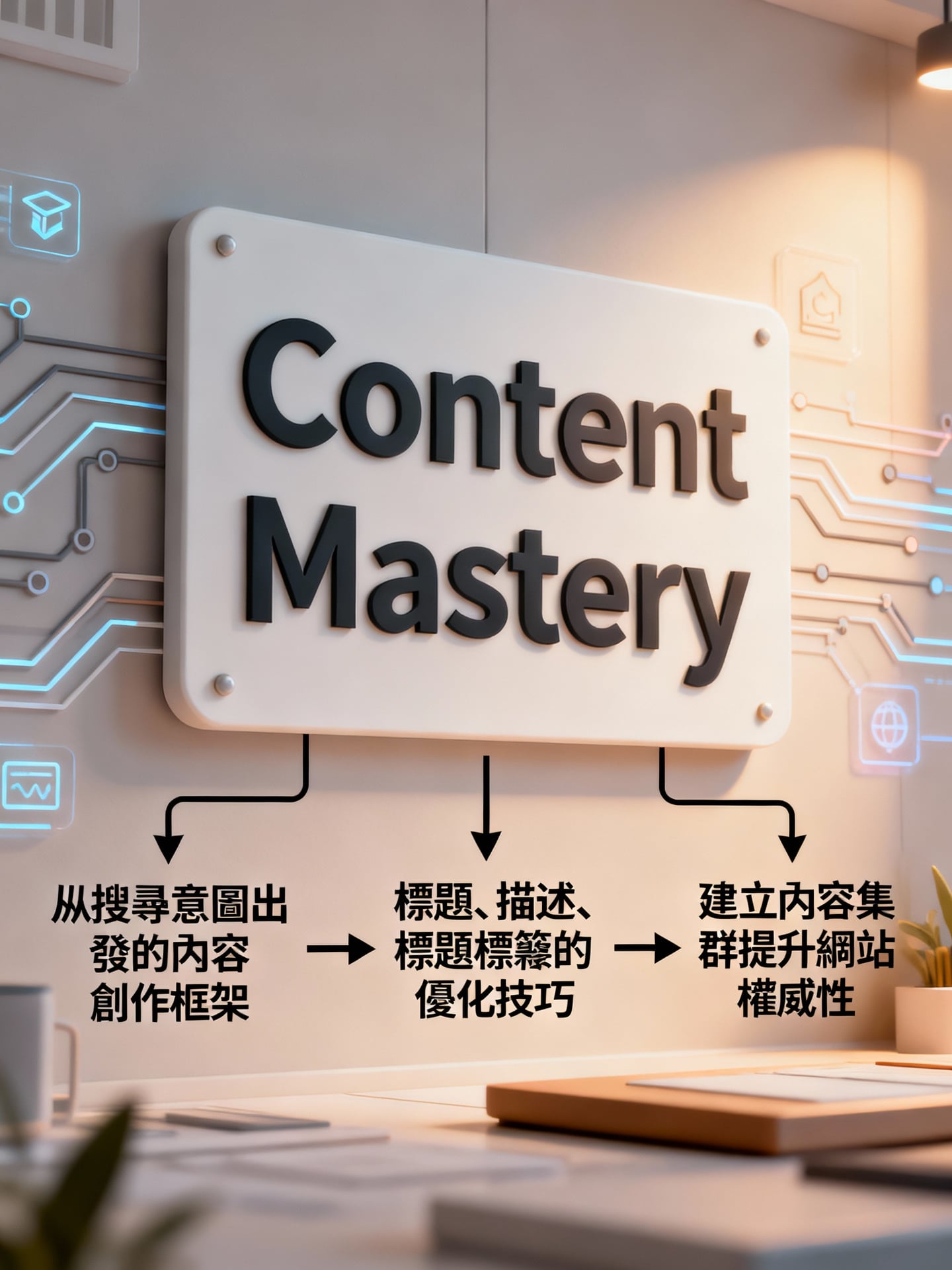
On-page optimization is an area where self-learners can see quick results. Regarding Title Tag optimization, there is a common divergence: one side believes keywords should be stacked to improve relevance; the other advocates for maintaining natural readability. From a practical standpoint, I recommend balancing both—placing the primary keyword (like "self-learning SEO") at the beginning of the title and supplementing it with a click-worthy description in the latter part. Similarly, the Meta Description should not be overlooked; while it doesn't directly affect rankings, it is crucial for improving click-through rates. Try incorporating a call to action in the description, such as "Start your self-learning SEO journey with this guide now."
Implementing an Internal Linking Strategy
Internal linking is often underestimated by self-learners, but it can effectively enhance website authority. Regarding building content clusters, there are two approaches: one centers around a core topic (like "self-learning SEO tutorial") and links to all related sub-articles; the other establishes a hierarchical structure, guiding from basic articles to advanced ones. I believe beginners should start with the first approach because it can quickly strengthen topic relevance. In practice, ensure each new article links to existing relevant content and uses descriptive anchor text (like "Learn more self-learning SEO tips") instead of "click here."
Local Advantage
The Taiwanese market is particularly friendly to self-learning SEO: compared to the international market, local SEO competition is lower, especially for long-tail keywords. Self-learners can prioritize targeting specific Taiwanese industries (like food & beverage, retail) or regional keywords (like "Taichung web design SEO"), achieving first-page rankings with fewer resources. This not only builds an initial traffic foundation but also boosts learning confidence through practical results, making it an indispensable advantage strategy in the self-learning process.
In summary, content creation and optimization must be interlinked: start with search intent to create content, optimize pages through titles and descriptions, and then connect the knowledge system with internal links. Remember, self-learning SEO is a marathon; these practical steps will help you steadily accumulate website authority.
Sustained Optimization of Traffic Growth and Data Analysis
For those engaged in SEO self-study, traffic growth and data analysis are central to validating learning outcomes and adjusting strategies. This process is not a one-way execution but a cycle of "execute, measure, learn, optimize." This section will guide you in establishing a sustainable optimization workflow.
Initial Traffic Acquisition Strategies
In the early stages of SEO self-study, acquiring traffic is the primary challenge. The industry holds two mainstream perspectives on this:
- Breadth-First Strategy: Some experts (such as those in certain content marketing courses) suggest publishing a large volume of content initially, covering a wide range of topics to test market response.
- Depth-First Strategy: More practitioners (e.g., many successful personal bloggers) advocate starting with long-tail keywords. These keywords have clear search intent and lower competition, making it easier for new websites to gain targeted initial traffic and conversions.
My Analysis and Recommendation: For SEO beginners, I strongly recommend the "Depth-First Strategy." Start by creating content around long-tail keywords highly relevant to your website's theme (e.g., "Taipei cafe SEO self-study experience" rather than the generic "SEO tutorial"). This allows you, with limited resources, to quickly receive positive feedback, build confidence, and accumulate valuable ranking and traffic data.
Key Data Tracking and Interpretation
Once traffic arrives, interpreting data is a crucial skill in SEO self-study. You must become proficient with two essential free tools: Google Analytics (GA) and Google Search Console (GSC).
- The GSC Perspective: GSC directly reflects the search engine's viewpoint, telling you which keywords generate impressions and clicks, the ranking positions of your pages, and if there are any technical errors (like indexing issues). This is the core data source for optimizing "search visibility."
- The GA Perspective: GA focuses on user behavior, revealing what happens after traffic lands on your site: dwell time, pages viewed, bounce rate, and whether they ultimately complete a conversion (like filling out a form or making a purchase).
Practical Advice: Cross-reference data from both tools. For example, if you find in GSC that a keyword brings a lot of clicks, but GA shows an extremely high bounce rate for that page, it might indicate that the page content doesn't match the search intent or the user experience is poor. This is a clear signal for sustained optimization.
The Iterative Cycle of Sustained Optimization
Success in SEO self-study relies on the discipline of turning data insights into action. I recommend establishing a "Monthly Review and Adjustment" process:
- Fixed Review Day: Set one day each month to review the previous month's GSC query report and GA behavior flow report.
- Identify Opportunities and Problems: Find your best-performing content (high click-through rate, long dwell time) and worst-performing content (high bounce rate, low ranking).
- Develop an Action Plan: Expand high-quality content or build internal links to it; for problematic pages, hypothesize the cause based on data (poor title? mismatched content? slow loading?) and make adjustments.
- Execute and Document: Implement the changes and briefly record "what was changed" and the "expected effect" in a spreadsheet.
This cycle elevates your SEO self-study from "guessing" to "data-driven decision-making."
Important Notes
Note: SEO self-study is not an overnight success; it requires at least 3-6 months of consistent effort to see significant results. Avoid falling for "quick ranking" myths. Focusing on providing valuable content and a good user experience is the key to long-term success. Data is used to optimize value, not replace it.
Summary: Traffic growth begins with precise long-tail keywords and is driven by a monthly, fixed cycle of sustained optimization, fueled by data interpretation from Google Analytics and Search Console. This process itself is the most valuable SEO self-study experience.
Having mastered data-driven optimization methods, we need to consider how to make content production and optimization more efficient. In the next section, we will explore how to combine AI trends and practical tools to assist your SEO self-study journey.
Conclusion
Through this "Self-Learning SEO" success story, we have clearly validated a feasible path from zero to one. The core of this entire journey is not advanced techniques, but rather systematic execution discipline: starting with setting clear goals and building a solid website foundation, then focusing on creating high-quality content that meets user intent, and finally entering the cycle of continuous optimization through data analysis.
This process emphasizes that the key to success in self-learning SEO lies in maintaining patience, focusing on providing value to your audience, and bravely adjusting strategies based on data feedback. The tools and AI trends in the Taiwan market are precisely your powerful allies in accelerating learning and results during this process.
Now is the best time to start. Begin from the field you are most familiar with, execute your first optimization step today, and personally experience the changes brought by "Self-Learning SEO." If you are eager for more practical guidance, welcome to subscribe to our newsletter. We will share more localized tips and tool recommendations with you, accompanying you on your growth journey.
Frequently Asked Questions
1. Can you really see results from self-learning SEO within 30 days?
Yes, through a structured 30-day practical plan, beginners can indeed establish a foundation and see initial results in a short period. The key lies in focusing on technical SEO basics (such as website speed, mobile-friendliness) in the first week, starting content optimization and keyword research in the second week, building internal links and basic external links in the third week, and then conducting data analysis and fine-tuning in the fourth week. While top rankings may not be achieved within 30 days, you can significantly improve website health and the visibility of certain keywords, laying a solid foundation for future growth.
2. Is self-learning SEO very difficult if you have no technical background at all?
No, modern SEO tools and resources have significantly lowered the technical barrier. Beginners should start with understanding concepts, such as how search engines work and user intent analysis. For the practical part, you can begin with free tools like Google Search Console and Google Analytics, combined with intuitive website platform plugins (like WordPress). Many local Taiwanese SEO communities and online courses also offer instruction in Chinese. As long as you learn the basic operations step by step, even those without a technical background can master over 80% of practical SEO skills.
3. When self-learning SEO, which tools applicable to the Taiwanese market should be prioritized?
It is recommended to prioritize mastering the following three types of tools: 1. Keyword research tools: You can use Google Keyword Planner (free) combined with the Traditional Chinese databases of Ahrefs or SEMrush, focusing on the search habits of Taiwanese users. 2. Website analysis tools: Google Search Console and Google Analytics are essential basics, providing specific data on Taiwanese traffic. 3. Content optimization tools: Such as the Yoast SEO plugin (for WordPress) or Surfer SEO, assisting in optimizing localized content. These tools can be effectively adjusted for the characteristics of the Taiwanese market, enhancing learning efficiency.
4. How can you evaluate your SEO learning progress during the self-learning process?
You can regularly review using the following metrics: 1. Technical aspect: Use Google Search Console to check index coverage and whether website speed has improved. 2. Content aspect: Observe ranking changes for target keywords (even moving from no ranking to 50th place is progress). 3. Traffic aspect: Monitor whether organic search traffic in Google Analytics is growing, especially traffic from Taiwan. 4. Business aspect: If the website has conversion goals, track inquiries or sales generated from organic traffic. It is recommended to review data weekly and keep learning notes to concretely see the cumulative effects of self-learning.
5. What practical help do AI tools offer for SEO self-learners?
AI tools can significantly enhance self-learning efficiency and execution quality: 1. Content Generation: Tools like ChatGPT can assist in brainstorming content topics and outlines localized for Taiwan, saving research time. 2. Keyword Analysis: AI tools can quickly analyze search intent, helping beginners understand which keywords are suitable for the Taiwanese market. 3. Technical Auditing: Some AI tools can automatically scan websites for SEO issues and provide repair suggestions. 4. Data Interpretation: AI can assist in analyzing Google Analytics data, highlighting key areas for optimization. Self-learners should view AI as an auxiliary tool, first establishing foundational knowledge and then using AI to accelerate execution, rather than relying on it completely.