
The Complete SEO Guide: Practical Strategies and Techniques from Beginner to Expert

How to Effectively Improve Website Ranking? Practical SEO Tips and Techniques
Have you ever invested significant time and resources into managing your website, only to find its search ranking remains stagnant? In today's fiercely competitive digital landscape, mastering the right SEO strategy is key to standing out. Many newcomers to SEO, or website owners struggling with traffic, often feel overwhelmed—there's too much information, changes happen too fast. What methods are truly effective?

This is precisely why we created this "Complete SEO Guide". As search engine algorithms continuously evolve, simply stuffing keywords is no longer effective for improving rankings. Modern SEO places greater emphasis on the combined performance of user experience, content quality, and technical optimization. It has become a specialized field requiring systematic learning.
With this in mind, this article will outline a clear, actionable framework for you. We'll start with fundamental concepts and gradually delve into advanced strategies, covering core aspects such as keyword research, content optimization, technical adjustments, and link building. Whether you're an SEO beginner, a content marketer, or a website administrator, you'll find practical tips and specific steps in this guide tailored to your current needs.
Our goal is to help you move beyond random attempts and instead strategically improve your website so it genuinely meets search engine ranking criteria, thereby effectively and sustainably enhancing your site's visibility in search results. Now, let's embark on this SEO optimization journey together.
Basic SEO Optimization: Starting with Website Structure and Content

A comprehensive SEO guide must start with the most fundamental aspects: website structure and content. This is not only the foundation for search engines to understand your website but also the key factor determining the success of all subsequent optimizations. This section will guide you through three core aspects: keyword research, content creation, and internal linking, laying a solid foundation for your SEO journey.
Keyword Research and Strategic Planning
Keyword research is the first step in a complete SEO guide. According to Google's official guidelines, keywords should reflect user search intent. However, many third-party tools (like Ahrefs or SEMrush) emphasize analyzing competition level and search volume. My analysis is: both are indispensable. You should first use tools to analyze the search intent and competition level for keywords like "complete SEO guide tutorial," to identify high-potential keywords such as "complete SEO guide tips" that have existing demand and relatively lower competition. From a practical standpoint, I recommend beginners start with long-tail keywords to gradually build confidence and content assets.
Quick Reminder
When conducting keyword research, be sure to treat "SEO complete guide" as the core theme and expand related long-tail keywords around it. Avoid chasing popular terms unrelated to the core theme, as this disperses content weight and is detrimental to building topical authority. Focus on solving the specific problems your target audience encounters while learning the complete SEO process.
Content Creation and On-Page Element Optimization
After finding keywords, the next step is content creation. One viewpoint holds that content should be extremely focused on keyword density; another (such as content marketing experts) advocates that user needs and originality are king. I believe the latter is more important. You should write high-quality, original content that truly answers questions like "how to learn SEO." At the same time, technical optimization should not be neglected: be sure to optimize the Title Tag, Meta Description, and page heading (H1), naturally incorporating related terms like "keyword research" and "content optimization." This clearly tells search engines the core topic of the page.
Internal Link Structure Design
Finally, a clear website structure is crucial. In theory, internal linking is for helping users navigate; but in SEO practice, it is also a mechanism to help search engine crawlers (like Googlebot) effectively crawl the website and distribute link equity reasonably between pages. I recommend website owners establish a logically clear navigation menu and create contextual internal links between related content (for example, linking from a general "Complete SEO Guide" article to a detailed tutorial page on "Keyword Research"). This structure can strengthen the website's topical relevance and improve overall SEO effectiveness.
In summary, basic SEO optimization is an interconnected system: starting with strategic keyword research, creating user-centric quality content and performing technical optimization, then using intelligent internal link design to connect all pages into a powerful topical network. This is precisely the starting point for the success of any complete SEO guide.
Technical SEO Adjustments: Enhancing Website Performance and Readability

In the "Complete SEO Guide," technical SEO is the cornerstone of website ranking. This section will explore how to make specific adjustments to help search engines better understand and index your website, thereby improving overall SEO effectiveness.
Website Speed and Mobile-Friendliness
Regarding improving website speed, there are primarily two schools of thought in the industry. According to Google's official guidelines, compressing images, enabling browser caching, and choosing high-performance hosting are the three core strategies. However, some practical SEO experts (like Neil Patel) emphasize the importance of code minification and reducing plugins. My analysis is that the two approaches actually complement each other. From a practical standpoint, I recommend beginners prioritize image compression (using tools like TinyPNG) and selecting a reputable hosting provider, as these can yield the most significant improvements in loading speed. Simultaneously, be sure to use Google's "Mobile-Friendly Test" tool to ensure your website displays correctly on mobile devices, as mobile-friendliness is now a key ranking factor.
Structured Data and Sitemap Submission
The timing for using structured data (Schema markup) often sparks debate. The traditional view advocates for widespread use across all pages to provide additional information (like article type, author) to search engines. However, recent voices (from Search Engine Journal analysis) suggest prioritizing the markup of important content (like products, events) to avoid negative impacts from incorrect markup. I believe that learners of the "Complete SEO Guide" should start with the basics: first add appropriate Schema to the homepage and key service pages, and be sure to submit an XML sitemap via Google Search Console. This directly informs search engines of your site's structure and is an indispensable step in technical SEO.
Security and Index Control
Regarding security, enabling HTTPS encryption is an industry consensus. It not only protects user data but is also an explicit ranking signal from Google. Concerning index control, there are subtle strategic differences. One rigorous approach involves using the robots.txt file to comprehensively control crawler access, combined with meta robots tags for page-level fine-tuning (e.g., noindex). Another, more flexible viewpoint suggests that for content websites, crawler restrictions can be relaxed, prioritizing the indexing of important content. Based on experience, I recommend beginners adopt a balanced strategy: first, enable HTTPS site-wide, then use robots.txt to block only unnecessary resources (like admin paths), and use meta tags to handle duplicate or temporary pages.
In summary, technical SEO adjustments require systematic execution. From improving website speed and mobile experience, to leveraging structured data and sitemaps to enhance readability, and finally strengthening security and index control, each step is an indispensable part of the "Complete SEO Guide." I recommend you sequentially check and implement the key points mentioned above to lay a solid foundation for subsequent content and authority building.
External Links and Authority Building: Acquiring High-Quality Backlinks
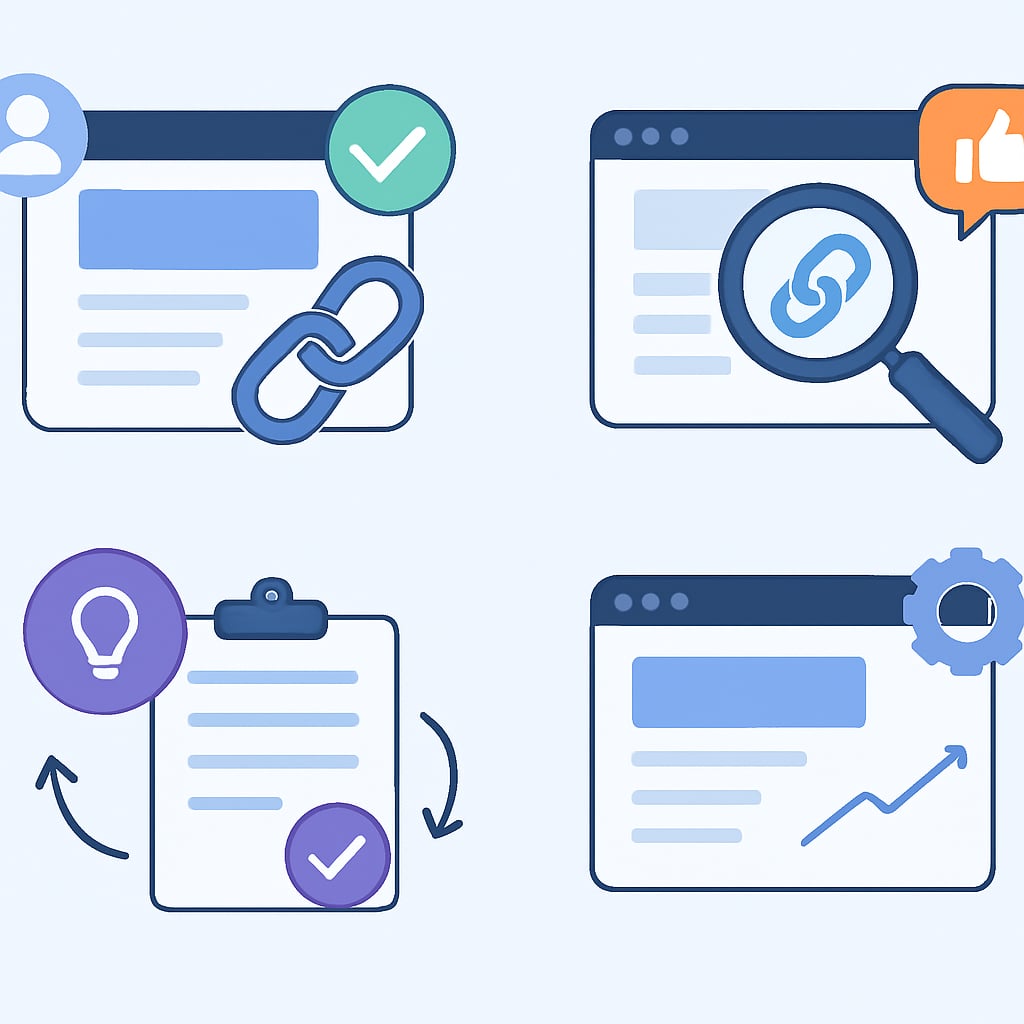
In the "Complete SEO Guide," external link building is a crucial component for enhancing website authority and rankings. High-quality backlinks send trust signals to search engines, while low-quality links can carry the risk of penalties.
Sources and Evaluation of High-Quality Links
Regarding how to identify high-quality backlinks, there are primarily two perspectives in the industry. According to Moz's authoritative guide, high-quality links should come from authoritative websites, within relevant fields, and be placed naturally, such as links from educational institutions (.edu) or government websites (.gov). However, Ahrefs' "Complete SEO Guide" tutorial emphasizes that relevance is more important than absolute authority—a link from a small but highly relevant professional blog might be more valuable than one from a large, unrelated media outlet.
My analysis: For SEO beginners, I recommend prioritizing sources that combine both "authority" and "relevance." Avoid low-quality or spammy links from link farms, forum signatures, etc., which are explicitly listed as risk factors in Google's "Complete SEO Guide" tips.
Link Building Strategies and Implementation Steps
Regarding link building strategies, different experts have different focuses. Traditional "Complete SEO Guide" tutorials emphasize attracting natural links by creating valuable content (such as original research, in-depth tools), which is seen as the most sustainable approach. Modern practitioners, however, place greater emphasis on proactive, customized outreach collaboration—for example, providing target websites with exclusive data or custom charts in exchange for resource page link building.
From a practical standpoint, I recommend content marketers adopt the "80/20 rule": 80% of effort goes into creating link-worthy content, and 20% goes into strategic outreach. Specific steps can refer to the "Link Building Pyramid" model in the "Complete SEO Guide," progressing step-by-step from basic content optimization to establishing collaborative relationships.
Monitoring and Maintaining Link Profiles
Regarding link monitoring, tool choices vary. Google Search Console provides free basic backlink data, suitable for website operators with limited budgets. Professional tools like Semrush or Ahrefs offer more comprehensive link profile analysis, including competitor link source detection.
Based on experience, I strongly recommend regularly (at least quarterly) checking your backlink profile. When harmful links are discovered, they should be cleaned up immediately using Google's Disavow Links tool, which is an explicit maintenance step in the "Complete SEO Guide."
In summary, effective link building requires strategic thinking and ongoing maintenance. In the next section, we will explore the foundational settings of technical SEO, another indispensable part of the "Complete SEO Guide."
Conclusion
Through this guide, we have learned that the "Complete SEO Guide" is not a single technique, but a systematic strategy encompassing content, technology, and authority building. From the most fundamental keyword research and content optimization, to ensuring website health through technical adjustments, and to the long-term accumulation of high-quality backlinks to build authority, each component complements the others, working together to steadily propel your website up the search results.
Remember, SEO is a marathon, not a sprint. The key to success lies in consistent execution and optimization. Now is the best time to start.
We recommend you: Immediately begin reviewing your website's content and technical foundation, and create a three-month SEO optimization plan for yourself. Regularly track changes in key metrics and adjust your strategy flexibly based on the data. As long as you diligently follow these core principles, you will gradually witness significant growth in your website's rankings and traffic. Take action now!
Frequently Asked Questions
1. As an SEO beginner, where should I start learning the "Complete SEO Guide"?
It is recommended to start with basic SEO optimization, which is the foundation of the "Complete SEO Guide". First, focus on website architecture and content: ensure your site has a clear navigation structure, is mobile-friendly, and create high-quality, original content that matches user search intent. Simultaneously, learn how to conduct keyword research to identify the terms your target audience is actually searching for, and naturally integrate them into titles, body text, and meta tags. After mastering these fundamentals, gradually delve into advanced topics like technical SEO and link building.
2. In the "Complete SEO Guide", what specific important steps does technical SEO adjustment include?
Technical SEO is a key component in the "Complete SEO Guide" for improving website performance and crawlability. Important steps include: 1) Ensuring fast website loading speeds, which can be optimized by compressing images and using caching; 2) Making the website search-engine friendly, for example by creating a proper XML sitemap and robots.txt file; 3) Ensuring the website has a responsive design that displays correctly on all devices; 4) Fixing any broken links or 404 error pages; 5) Using structured data markup to help search engines better understand your content. These adjustments lay a solid foundation for subsequent content and link optimization.
3. According to the "Complete SEO Guide", how can one effectively build high-quality external links to enhance website authority?
In the "Complete SEO Guide", building high-quality backlinks is a core strategy for boosting website authority and rankings. Effective methods include: 1) Creating uniquely valuable, share-worthy "link bait" content, such as in-depth research reports, practical tools, or compelling infographics; 2) Performing guest blog posts, publishing quality content on high-authority websites in related fields to earn links; 3) Building relationships through digital PR and industry influencers to secure natural media coverage or referral links. Remember, quality far outweighs quantity; a single high-quality link from a relevant, authoritative website is better than a large number of low-quality spam links.
相關文章

SEO Case Study: Master Search Engine Optimization Techniques to Boost Rankings

SEO for Beginners: A Practical Guide and Key Steps to Get Started

SEO Optimization Practical Guide: 3 Steps to Convert Search Traffic into Business Revenue
