
Zero-Budget SEO Starter Guide: Complete Roadmap from Beginner to Freelancer

SEO Beginner's Practical Guide: Start with Zero Budget
Have you ever thought that SEO requires a huge budget and complex technical skills to get started, which has made you hesitant to take the first step? Dear SEO beginner, please let go of this misconception first. In fact, a zero budget is your best starting point.

In the field of digital marketing, SEO is often portrayed as a professional high wall that requires significant investment of funds and resources, deterring many beginners, freelancers, or micro-business owners. But the truth is, those most core and effective SEO practical techniques can often be implemented starting from zero cost. For you with limited resources, this is not only a powerful tool to increase website visibility but also the most crucial first stepping stone to kickstart a professional freelance career and prove your own value.
This article is tailor-made for you. I will provide a complete "Zero Budget SEO Beginner's Practical Guide", starting from establishing the correct foundational concepts to guiding you step-by-step through practical operations. We will specifically focus on the needs of individuals or micro-businesses, mapping out a clear roadmap—from knowing nothing to successfully landing your first project. You will discover that even without a marketing budget, you already hold all the tools in your hands to launch an SEO project and create opportunities for yourself. Let's get started together.
The Ultimate "Zero Budget" Beginner's Guide: Building SEO Foundations from Scratch
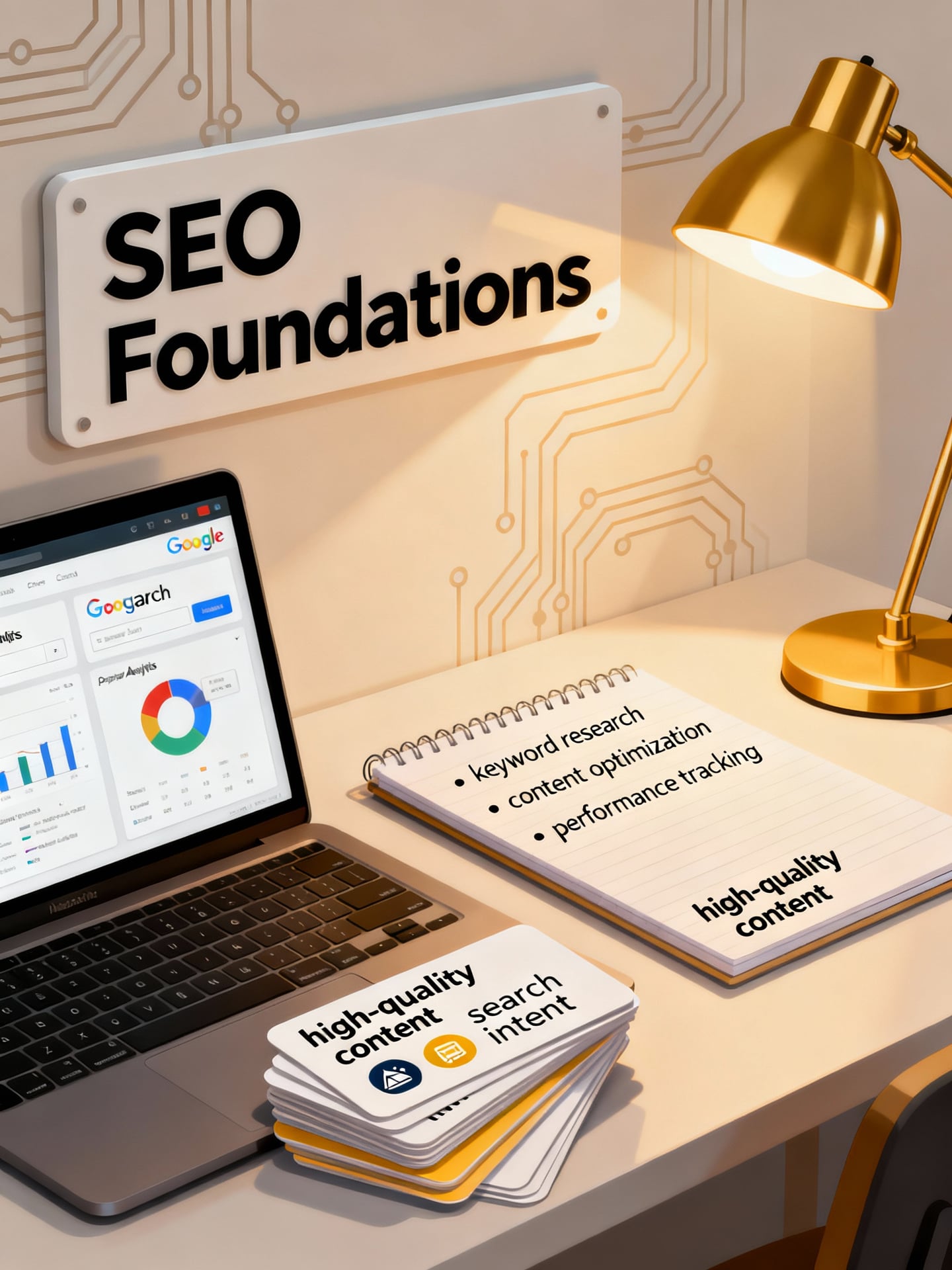
For SEO beginners, the biggest misconception is often that "you need a large budget to get started." In reality, the core concept of zero-budget SEO is to make the most of existing free resources to build a solid SEO foundation. This section will guide you step-by-step, from tools and processes to strategies, to create your own SEO starting point.
Complete Inventory of Free SEO Tools and Resources
Website diagnosis is the first step for an SEO beginner. According to Google's official guidelines, Google Search Console (GSC) is the cornerstone for understanding your website's search performance. It shows your pages' rankings, click-through rates, and indexing status in search results. On the other hand, many SEO experts also recommend Google Analytics (GA), which focuses on user behavior analysis, such as traffic sources and time spent on pages.
My analysis: While GSC and GA have overlapping functions, their focuses differ. GSC connects directly to the search engine and is key to optimizing "visibility"; GA delves into the user journey, helping to optimize "experience." For SEO beginners, I suggest starting with GSC to grasp basic indexing and keyword data, then gradually integrating GA data to form a complete diagnostic perspective.
Quick Tip
A common beginner mistake: monitoring too many keywords leads to anxiety. It's recommended to initially track only 5-10 long-tail keywords most relevant to your goals (e.g., "affordable coffee shop recommendations Taipei" instead of just "coffee"). Focusing your efforts on observing their ranking and traffic changes allows for more effective strategy adjustments.
Establish Your First SEO Workflow
A standardized process helps SEO beginners avoid feeling overwhelmed. The process typically includes three core stages: keyword research, content optimization, and performance tracking.
Regarding keyword research, there are two main schools of thought: one believes in starting with high-search-volume broad keywords to quickly gain traffic; the other (which I recommend more for beginners) advocates starting with "long-tail keywords" because they are less competitive and have clearer intent, making it easier for beginners to achieve early results. You can use tools like Google Keyword Planner (free version) or AnswerThePublic for research.
Next is content optimization. According to reports from the Content Marketing Institute, quality content is the fuel for SEO. You need to naturally integrate your chosen keywords into titles, body text, and meta descriptions. Finally, performance tracking brings you back to GSC and GA, where you regularly review keyword rankings and traffic changes, completing the "research-execute-review" cycle.
Core Principles of a Zero-Cost Content Strategy
The success of zero-budget SEO heavily relies on the quality of your content strategy. The core principle here is "content is king," but it must be content that "matches search intent."
Search intent can be categorized as informational, navigational, transactional, etc. For bloggers or website owners providing information, the focus should be on creating in-depth, problem-solving informational content. For example, instead of writing "What is SEO," provide a detailed guide on a specific question like "How should an SEO beginner choose their first keyword?"
From a practical standpoint, I advise SEO beginners to simulate being a searcher before creating content: What words would I use to ask? What answer do I want? Ensure your content directly and completely satisfies this intent; this is more important than fancy language. Remember, consistently producing valuable content is the most reliable zero-cost way to accumulate website authority and traffic.
In summary, SEO beginners don't need to be held back by budget. By using free tools to establish a diagnostic foundation, designing a simple, repeatable workflow, and adhering to search-intent-driven content creation, you can solidly take your first step in SEO.
Roadmap for Individual Freelancers: From "Knowing Nothing" to "Landing Your First Project"
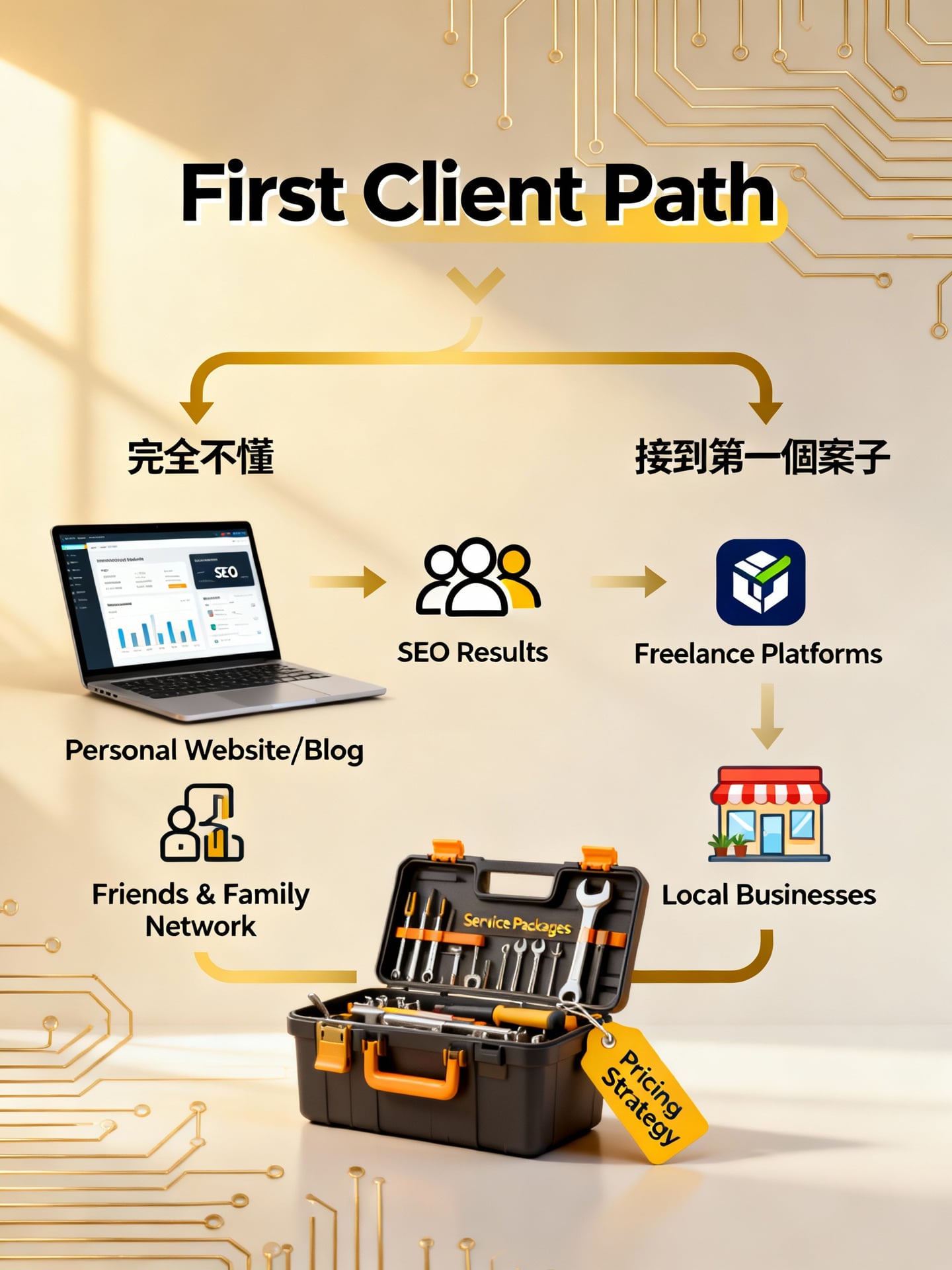
For SEO beginners, building a freelance business from scratch is a viable path. This section provides a clear, actionable map to help you go from establishing a professional image to successfully landing your first client.
Practical Steps to Build Your Personal Brand and Portfolio
Establishing credibility is the first step for individual freelancers. Based on the experience of many seasoned freelancers, the most effective method is to create a personal website or blog dedicated to showcasing your SEO work. For example, you can document how you optimized a website and present before-and-after traffic data comparisons.
However, there is also a viewpoint that for complete beginners, instead of building a website from scratch, it's better to start by publishing case study articles on platforms like Medium or Vocus, which have a lower barrier to entry and allow for quick content accumulation. My analysis is: these two approaches are not mutually exclusive. Initially, you can publish on public platforms to build visibility while gradually creating your own professional portfolio website. This provides the most comprehensive way to build your professional image. I recommend that SEO beginners first choose a small niche website you're interested in (e.g., a cooking blog), conduct actual keyword research and content optimization, and document this entire process in detail with text and images. This becomes your most powerful portfolio piece.
How to Find Your First SEO Client
Client acquisition is the biggest challenge for many SEO freelancers. The mainstream advice often suggests starting on freelancer platforms (like PRO360, Tasker) because there is clear demand there.
However, another practical viewpoint strongly recommends starting with your "personal network" and "local businesses." From a practical standpoint, the latter often has a higher success rate in the beginning because it's built on trust. I strongly recommend that SEO beginners adopt a hybrid strategy: on one hand, create a profile on platforms to reach a broader market; on the other hand, proactively ask friends who own shops or run small businesses if they have any issues with their website's visibility. This is often the fastest way to get your first hands-on opportunity.
The Local Advantage
Conducting client acquisition in Taiwan offers a unique geographical advantage. Owners of local small businesses, such as cafes, plumbing services, or studios, often place great importance on personal connections and word-of-mouth, and they may be unfamiliar with complex web technologies. Your SEO service can be framed from the concrete angle of "helping the owner get found online by more neighbors." For example, optimizing their Google Business Profile so their shop ranks higher in local searches. This approach is more likely to gain their trust and lead to a collaboration than directly discussing complex algorithms or technical jargon. It's an excellent starting market for SEO beginners.
Pricing Strategy and Service Packaging Techniques
Regarding pricing strategy, there are two common approaches: one is to set fixed prices based on market rates, and the other is to quote based on a percentage of the expected value (like potential revenue) you'll bring to the client.
For SEO beginners just starting out, the first method is more feasible and safer. Based on experience, the most common mistakes beginners make are pricing too low or too high. Pricing too low harms your professionalism and leads to burnout; pricing too high can scare away early-stage clients with limited budgets. My specific advice is: Design service packages that match a beginner's capabilities. For example, offer an "SEO Health Check" or a "Basic Keyword Optimization Package." Clearly list 3-5 specific tasks you can confidently complete (like title and meta description optimization, submitting a sitemap, etc.) and set a reasonable fixed price for this package. This lowers the decision-making barrier for clients and makes it easier for you to deliver results and build a reputation.
In summary, the freelance journey for SEO beginners starts with proving your ability through your work, finding your starting point by leveraging local advantages and trust networks, and initiating collaborations with clear, actionable service packages.
Practical SEO Application for Specific Micro-Industries

For SEO beginners, applying foundational knowledge to a specific industry is a crucial step from theory to practice and ultimately attracting potential customers. This section will focus on three common micro-industries, exploring the practical application of SEO basics to help you understand how to translate general principles into concrete actions.
Local SEO Strategies for Local Service Businesses
For local service businesses like restaurants, salons, and plumbing services, their customers heavily rely on geographic location. For these businesses, the core practical focus for SEO beginners is local SEO. According to Google's official guidelines, the primary task is to complete and optimize the "Google My Business" profile, ensuring business hours, address, phone number, services, and photos are 100% accurate. However, in practice, many businesses only complete the basic setup. My analysis is that SEO beginners should go further by helping clients actively solicit and respond to reviews, and naturally incorporate long-tail keywords combining "area name + service" into website content (e.g., "haircut recommendation in Zhongshan District, Taipei"). From a practical standpoint, focusing on local keywords within the service area, rather than chasing nationally popular terms, can bring more targeted and conversion-worthy traffic to these micro-businesses.
Key Product Page Optimization for Micro-Ecommerce
Micro-ecommerce owners often face challenges with limited resources. Regarding product page optimization, two common viewpoints exist: one advocates maximizing keyword density for ranking, while the other prioritizes user experience and conversion. My recommendation for SEO beginners is to adopt a balanced strategy. First, ensure each product page has a unique title and description containing the core keyword. Second, high-quality product images and detailed usage scenario descriptions can significantly reduce bounce rates and increase conversion rates. Based on experience, a page with only a brief title and blurry images is unlikely to drive sales, even if it ranks. Therefore, I recommend SEO beginners start by helping clients optimize 5-10 core product pages, focusing on content depth and originality, which is more effective than a broad but shallow approach.
Content Marketing Entry Points for Professional Services
For providers of professional services like lawyers, accountants, and consultants, establishing authority and trust is paramount. The practical SEO entry point here should be centered on content marketing. One approach is writing in-depth articles analyzing legal codes or tax changes; another leans towards answering common client questions (FAQs). I believe SEO beginners can combine both: start by answering "commonly searched legal questions by the public" to attract traffic with knowledge-based content; as content accumulates, gradually produce more in-depth industry analyses to build an expert image. This type of content not only answers search intent but also naturally incorporates relevant service keywords, making it the best long-term investment for building brand authority.
Important Note
Do not promise results you cannot guarantee (like "guaranteed first-page ranking") just to land your first client. Honestly explain to clients that SEO is a long-term strategy requiring time to accumulate results, and position "improving online visibility and information accuracy" as the achievable initial goal. This builds trust and fosters healthy long-term client relationships, avoiding partnership breakdowns due to unrealistic expectations.
In summary, the key to SEO application for micro-industries lies in "focus" and "pragmatism." Whether it's strengthening local visibility, optimizing product pages, or building professional content, SEO beginners should start from the client's actual needs and industry characteristics to provide tailored entry-level solutions.
Conclusion
In summary, for SEO beginners, starting with zero budget is not a compromise, but a golden path that helps you build the most solid foundation. This article has broken down a complete blueprint for you, from establishing SEO infrastructure and planning your personal learning and freelance path, to focusing on specific micro-industries for practical application. The core of this method is: Through systematic learning and free tools, transform theory into concrete skills, and validate and optimize your strategies in real micro-markets.
This path proves that developing professional SEO skills does not require substantial capital, but rather your initiative and continuous learning. Now, take the most crucial first step: Choose a micro-industry you are interested in or familiar with, and immediately apply the methods in this article to start your first SEO project. Through hands-on practice, you will accumulate invaluable experience and a portfolio, steadily embarking on your professional freelance journey.
Frequently Asked Questions
1. As an SEO beginner with no budget at all, what should be the first step?
The first step is to establish the correct foundational concepts and mindset. SEO beginners should first understand how search engines work, the importance of user intent, and that SEO is a marathon, not a sprint. Then, start with completely free tools, such as Google Search Console and Google Analytics, which can provide insights into your website's health and traffic data. Simultaneously, focus on creating high-quality content that solves user problems; this is the most core and zero-cost SEO strategy. It's recommended to start by optimizing a simple page (like an About Us or service introduction page) to learn basic optimization techniques such as titles, descriptions, and content structure.
2. How can an SEO beginner determine if their optimization is effective? What key metrics should they track?
Beginners should focus on several key free metrics to measure effectiveness. First, use Google Search Console to monitor your website's "Impressions" and "Clicks," which show how often your content appears in search results and its attractiveness. Second, observe changes in "Average Position" to understand the ranking progress of your target keywords. In Google Analytics, you can focus on the growth trend of "Organic Search Traffic," as well as users' "Average Session Duration" and "Bounce Rate" on the site, which reflect the relevance and quality of your content. It's recommended to set up simple monthly reviews, focusing on the ranking improvement of 1-2 primary keywords rather than pursuing short-term spikes.
3. For individual freelancers looking to take on projects, which skills should an SEO beginner focus on first to land their first client?
It is recommended for beginners to first build a "demonstrable micro-project portfolio" and "storytelling ability." In terms of skills, prioritize mastering three core competencies: First, basic website technical health checks (like speed, mobile-friendliness) using free tools like Google's PageSpeed Insights. Second, keyword research and content planning, to identify valuable search topics for specific industries. Third, basic data interpretation and reporting skills, to explain the changes before and after optimization to clients. For practical experience, you can start by performing free SEO optimization for your own personal brand website, blog, or a hypothetical small local business (like a café), and document the process and results as a case study. This will be your best proof when pursuing your first paid project.
4. If I am the owner of a micro-industry business (like an independent studio, local shop), as an SEO beginner, how can I find the most suitable and less competitive keywords for me?
Operators of micro-businesses should adopt a "from near to far, from specific to broad" keyword strategy. First, start brainstorming with the terms you know best: "industry terminology," "local names," and "specific service items," such as "pour-over coffee classes in Zhongshan District, Taipei" or "logo design for personal studios." Next, use Google Search's autocomplete suggestions, related searches, and free tools like Google Keyword Planner (which requires an ad account but can be set to zero budget to view trends) to expand your keyword list. The key is to find "long-tail keywords"—these phrases are usually more specific, have clearer search intent, and face less competition. For example, instead of targeting "web design," focus first on "responsive web design pricing for small restaurants." Creating content around these keywords can more precisely attract potential customers.
相關文章

SEO Case Study: Master Search Engine Optimization Techniques to Boost Rankings

The Complete SEO Guide: Practical Strategies and Techniques from Beginner to Expert

SEO for Beginners: A Practical Guide and Key Steps to Get Started
